-
Why I Ran This Comparison
-
Dimension 1: The Upfront Price Gap
- Dimension 2: Calibration and Maintenance (The Surprising Part)
-
Dimension 3: Documentation, Training, and the Fire Alarm Reset Problem
-
Dimension 4: The Ecosystem Tax
-
Dimension 5: Supply Chain and Support
-
So What Would I Actually Recommend?
-
The Bottom Line
Why I Ran This Comparison
Last November, our safety committee asked me a question I should have answered two years ago: "Why are we paying more for the same hard hats just because they come from one vendor?"
Fair pushback. I've been managing our safety equipment budget ($280,000 annually, roughly 340 employees) for six years, and I've negotiated with more than 40 vendors in that time. Every order gets logged in our cost tracking system. So I pulled 24 months of invoices—Q1 2023 through Q4 2024—and put two sourcing strategies side by side.
Option A: An integrated Honeywell package. Gas detectors, fire system components, North hard hats, Uvex eyewear, Howard Leight earplugs, and gloves. One distributor, one purchase order, one account manager.
Option B: Mixed-brand sourcing. Honeywell gas detectors for the critical detection work (I wasn't going to mess with that), but Milwaukee Bolt hard hats, generic earplugs from a regional supplier, and whatever ANSI Z87.1 eyewear came in cheapest that quarter.
I'm not a certified industrial hygienist, so I can't speak to whether one earplug attenuates sound better than another. What I can tell you, from a procurement perspective, is what each option actually costs once you account for calibration, training, documentation, and vendor management. Five dimensions, one spreadsheet.
Dimension 1: The Upfront Price Gap
The quotes came back like this:
- Honeywell integrated package: $42,800
- Mixed-brand package: $36,400
That's $6,400 cheaper on paper—about 15%. And honestly, that number is real. You will save money on day one if you shop each item separately.
But it's tempting to think you can just compare unit prices and pick the lowest total. That advice ignores how identical specs from different vendors can play out over 24 months. (I learned this the hard way in 2022, when a "cheap" glove order from an alternate supplier resulted in a $1,900 redo because the sizing ran small.)
Dimension 2: Calibration and Maintenance (The Surprising Part)
When I compared the two cost structures side by side, I finally understood why our maintenance team kept complaining about "vendor juggling."
The counterintuitive finding
Calibration costs were identical. We kept Honeywell gas detectors in both scenarios—45 units across the facility—so annual calibration and bump-test expenses didn't change: about $3,150 over 24 months.
The difference showed up everywhere else. In the mixed-brand model, we ended up with three different training sessions for three different hard hat suspension systems (Milwaukee Bolt uses a different adjustment mechanism than Honeywell North—not better or worse, just different). Five vendor accounts to manage instead of one, which added roughly $1,800 in administrative overhead. Compatibility workarounds when accessories didn't fit across brands—like the $1,200 we spent on adapters and return shipping for earplug dispensers that didn't match our existing stations. And support delays when a mixed-brand component failed and the warranty claim bounced between vendors for three weeks.
Total cost of ownership over 24 months: $47,200 for the Honeywell bundle vs. $50,800 for mixed sourcing.
That's right—the cheaper option cost us $3,600 more over two years. Not catastrophic. But it's about $150 a month for the privilege of saving $6,400 upfront. Honestly, I'm not entirely sure why our team tolerated the vendor juggling as long as we did. My best guess is that the savings looked good on the quarterly report, and nobody was tracking the hidden costs in a single place until this audit.
Dimension 3: Documentation, Training, and the Fire Alarm Reset Problem
Here's something vendors won't tell you: the real cost of mixed-brand sourcing isn't in the hardware. It's in the paperwork.
When we ran mixed-brand fire system components, our maintenance team had to remember how to reset a fire alarm differently for each system. Not because one procedure was better—because they were different. That's not a technical problem. It's a training cost, and it shows up as maintenance downtime and mistakes.
Honeywell's documentation is consistent across their product lines. I've noticed this outside industrial gear, too—the Honeywell N100 thermostat manual at home is written the same way as their gas detector calibration guides at work: plain language, consistent structure, fewer phone calls to tech support.
I'm not saying mixed-brand documentation is broken. But when your team is managing 120 hard hats, 45 gas detectors, and roughly 2,400 pairs of earplugs a year, consistency matters more than you'd think. It's the difference between a new hire learning one system in a week or three systems in a month.
Dimension 4: The Ecosystem Tax
This one surprised me. I expected hard hats and earplugs to be interchangeable. They mostly are—but "mostly" has a price.
In our facility, gas detectors connect to the fire alarm panel. Hard hat accessories (face shields, earmuff mounts) need to fit the specific helmet. Earplug dispensers need to match the refill format. When everything comes from one ecosystem, these connections just work. When you mix brands, you get what I call the "ecosystem tax"—the extra time, adapters, and workarounds you need to make incompatible parts play nice.
For us, that tax added about $1,200 over 24 months. Not huge. But it's real, and it's invisible until you add it all up in one place.
Dimension 5: Supply Chain and Support
Managing one vendor relationship is easier than managing five. That's not controversial—it's just arithmetic. Every additional vendor means another account to set up, another invoice format to process, another lead time to track.
In 2024, our generic earplug supplier was backordered for six weeks. We paid premium shipping to get a substitute brand, which cost $850 extra and created a paperwork headache when the original order finally arrived. With our Honeywell distributor, that kind of backorder would have triggered a single phone call and a substitute from the same catalog.
So What Would I Actually Recommend?
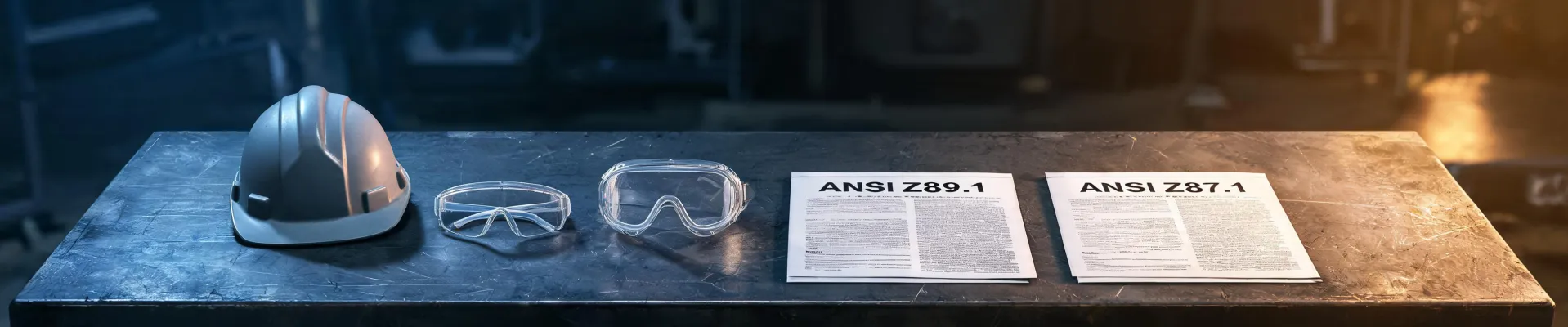
If you're a smaller operation—say, under 50 employees—mixed-brand sourcing can make sense. You probably don't have the volume to negotiate meaningful bundle pricing, and your training overhead is lower because you have fewer people to train. In that case, save the $6,400 and buy the Milwaukee Bolt hard hat if it fits your crew. They're good helmets. I'm not a safety engineer, so I can't tell you which one protects better—just that both meet the same ANSI Z89.1 standard.
If you're managing a facility with 100+ employees, multiple detection points, and a fire system that needs to talk to your gas detectors, the math tilts toward integrated sourcing. Not because Honeywell is magic, but because the hidden costs of fragmentation—training, admin, compatibility, support—add up faster than the upfront savings.
I'd argue the break-even point is somewhere around 75-80 employees, based on our own numbers. But that's a judgment call, and your mileage may vary based on your facility layout and how many systems you're running.
The Bottom Line
The "cheaper" option wasn't cheaper. Over 24 months, mixed-brand sourcing cost us $3,600 more than the Honeywell bundle—and that's before accounting for the time our maintenance team spent chasing warranty claims across five vendors.
Would I do it differently? Yes, but not because Honeywell's products are inherently better. They're good. So is Milwaukee. I'd do it differently because integration has a measurable value, and for our facility size, that value exceeds the upfront discount.
The lesson: compare total cost of ownership, not sticker price. And if you're going to mix brands, do it deliberately—knowing exactly what you're trading away.

Maeve Callahan
Maeve Callahan is a head-protection analyst covering Type I and Type II hard hats, climbing-style safety helmets, bump caps, chin straps, suspensions, liners, and face-shield carriers. She applies ANSI Z89.1, EN 397, and EN 12492 criteria while comparing impact attenuation, penetration resistance, lateral deformation, electrical class, retention strength, field of vision, mass, fit range, and temperature conditioning. Her guides help EHS teams, contractors, utilities, and buyers select helmet systems for overhead hazards, work at height, electrical exposure, accessory compatibility, and worker acceptance.