The Cheapest Safety Gear Is the Most Expensive Kind
I've stopped buying the cheapest safety gear I can find. On purpose.
Not because I like burning budget. Because after four years of managing procurement for a 200-person company, I've learned that the price on the invoice is not the real price. The real price includes whether the boots actually show up before the crew clocks in, whether the FR shirts pass an audit, and whether I have to explain to my VP why a $40,000 line sat idle over a $600 order.
In an emergency, certainty isn't a luxury. It's the whole product.
I'm the office administrator here—which in practice means I run procurement for everything the facility touches. Roughly $180,000 a year across 8 vendors. Safety boots, FR clothing, gloves, fire safety equipment, and yes, even the black iron fence around the loading dock (don't ask—it was a weird quarter). I report to both operations and finance, which means I get squeezed from two directions: operations wants it fast, finance wants it cheap.
Here's my position, and I'll defend it: for critical safety items, you should pay for delivery certainty, not the lowest bid. The savings from a cheap supplier evaporate the moment a deadline slips.
The $1,100 Lesson From My First Year
When I took over purchasing in 2020, I made the classic rookie mistake: I assumed "standard" meant the same thing to every vendor.
I was sourcing steel toe boots for about 40 warehouse staff. One supplier came in way cheaper than our regular guy, so I placed the order. What I didn't check was their sizing chart. It wasn't aligned with Ariat's official spec, and half the boots came back the wrong size. Restocking fees, return shipping, and a rush order from a second vendor to get people back on the floor cost us about $1,100. Not catastrophic. But embarrassing. Finance noticed.
That's where I first ran into ASTM F2413-18—the standard that defines what "steel toe" actually means in terms of impact and compression resistance. It's not optional reading when you buy safety footwear. And it's exactly the kind of detail a cheap vendor glosses over when their spec sheet doesn't match the brand's.
Now I keep a written spec checklist before I place any order. Sizing, certification, invoicing capability. Sounds basic. It took a $1,100 mistake to make it a habit.
The "We've Worked Together for Years" Trap
In 2023, I did something dumber. I knew I should get written confirmation on a delivery date, but I thought, "we've worked with this vendor for three years, a verbal agreement is fine."
It was not fine.
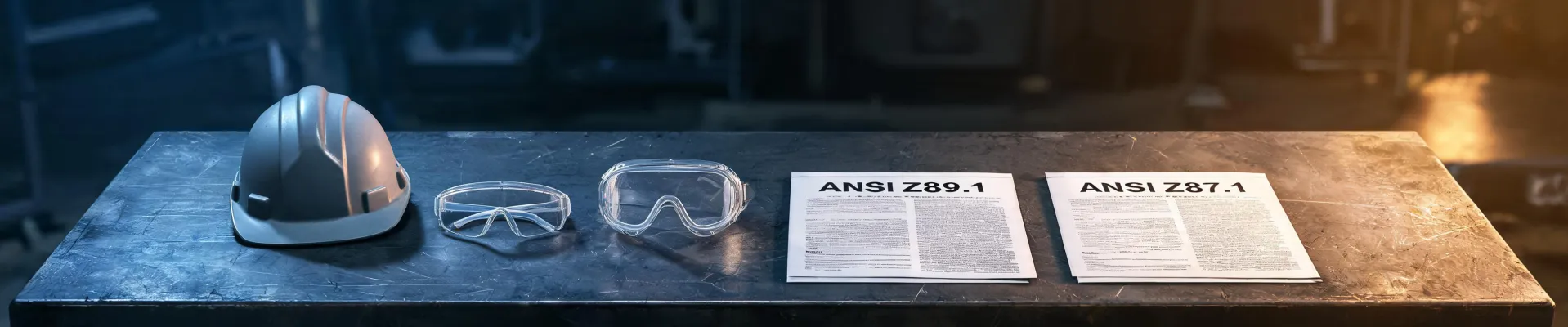
We ordered prescription safety glasses for six employees. These aren't off-the-shelf items—they need an optician's prescription, lens grinding, and ANSI Z87.1 certification on the finished pair. Lead time runs two to three weeks, which is why you order early. I confirmed the date by phone. The vendor said "should be fine."
The glasses arrived three weeks late. One of our electricians got benched because his old pair had a cracked lens and couldn't pass inspection. My safety manager flagged it during a walkthrough, and I got a call from my VP asking why a licensed electrician was standing around without compliant PPE.
I don't have a great answer to that question. "The vendor said it would be fine" is not a sentence you want to say to a VP.
Here's what I do now: for anything with a real deadline—PPE, prescriptions, FR gear before an audit—I get the delivery date in writing, with a penalty clause when I can. And I only buy prescription safety glasses from suppliers who quote a guaranteed in-stock ship date, not a "should ship by." The price difference is usually 5–10%. The cost of a benched electrician is way more than that.
The Expensive Supplier Is Usually the One With Stock
Here's the counterintuitive part, and it's the thing that changed how I buy.
I always assumed premium suppliers were slow because they were busy, and cheap ones were hungry and fast. The opposite turned out to be true more often than not.
The vendors who quote higher prices usually carry inventory. The ones who quote low are often drop-shipping from a regional warehouse or making the order after I place it. That extra 8% I pay the premium supplier isn't a markup on the product—it's the cost of them having ariat women's steel toe boots sitting in a bin when I need them, in the actual size my female staff wear, instead of me waiting two weeks for a restock.
I tested this in 2024. I called three vendors for the same six pairs of women's steel toe boots. Two quoted lower prices and both said two weeks out. One quoted higher and said they had them on the shelf. I paid the higher price. The boots arrived in three days. The crew stayed compliant. Nobody called my VP.
Same story with FR clothing. NFPA 2112 certification matters for our electrical folks, and the suppliers who keep certified stock on hand are almost never the cheapest bid. But they're the ones who can actually prove the garment meets the standard on the day it ships, not "pending certification."
A new admin once asked me, "what are latex gloves?"—turns out her last job didn't use them at all. I've had to explain the difference between latex and nitrile more times than I can count (they are not interchangeable, and no, the food-service kind doesn't count for our shop floor). That's the kind of detail that separates a supplier who knows the product from one who's just moving boxes. Cheap vendors often can't tell you the difference. Premium ones usually can, because their rep has actually been on a job site.
"But What About the Budget?"
I get this pushback from finance every quarter, and it's fair. So let me address it directly.
I'm not saying you should always buy the most expensive option. I still run competitive bids for routine replenishment—cases of gloves, standard safety glasses, cleaning supplies. When there's no deadline pressure and the product is genuinely interchangeable, I buy on price.
The premium is for the critical items. Anything that keeps a worker on the floor, a job site compliant, or an audit clean. For those, I now budget an extra 10–15% and treat it as insurance, not waste.
The math is simple. Let me use a real number from 2023: we had a near-miss where a delivery gap put one production line down for most of a day. Fully loaded, that line costs us about $40,000 a day in lost output. The order that would have prevented it was $600 cheaper from the slow vendor. I don't need to do that math twice.
And yes, I've heard the argument that paying for certainty is "lazy procurement." I don't buy it. Comparing price without comparing the risk of a late delivery isn't thorough—it's just incomplete. A good procurement decision prices the downside, not just the sticker.
My Rule Now
Four years in, this is the rule on the sticky note above my desk:
For routine orders, buy on price. For critical safety gear, buy on certainty of delivery—and expect to pay for it.
That's it. Not glamorous. But it's saved me from at least three VP calls I'd rather not take.
If you're new to this role and reading this because you're about to place your first big safety order, here's the short version: check the certification, get the delivery date in writing, and don't assume the cheapest bid will show up on time. The $400 you save on the invoice is not worth the $4,000 problem it creates—or the conversation with the person who signs your review.
The ariat products we buy now cost a little more than the generic alternatives. But when I order them, they show up. That's the whole point.

Mariko Sato
Mariko Sato is a workplace emergency-response equipment analyst covering industrial first-aid kits, AEDs, eyewash stations, emergency showers, burn kits, spill kits, bloodborne-pathogen kits, and fire extinguishers. She references ANSI Z308.1, ANSI/ISEA Z358.1, IEC 60601-2-4, and NFPA 10 while examining supply class, treatment capacity, activation time, flow rate, tepid-water delivery, shock energy, inspection interval, extinguisher rating, and placement distance. Her guides help EHS managers, facility teams, clinics, warehouses, and buyers plan equipment quantities, locations, maintenance, replenishment, responder access, and compatibility with site-specific emergency scenarios.