-
The Short Version: What I’m Comparing and Why
-
Weight: The Obvious Difference That Actually Matters
-
Compliance: The Thing You Can’t See But Can’t Afford to Miss
-
Durability: The Surprise Nobody Talks About
-
Price: The Real Reason Most People Hesitate
-
User Acceptance: The Soft Factor That Makes or Breaks Compliance
-
Other Products That Complement the Shift
-
My Final Recommendation: Who Should Switch, and Who Should Wait
The Short Version: What I’m Comparing and Why
I review safety gear for a living. Over the past four years, I’ve checked roughly 200 unique PPE items annually—from gloves to goggles to hard hats. My job is to make sure what leaves our warehouse matches what our specs say.
When it comes to hard hats, the biggest shift I’ve seen isn’t about color or style. It’s about material. Specifically, carbon fiber vs. traditional ABS or HDPE. And honestly? I was skeptical at first. I assumed 'carbon fiber' was just marketing.
I was wrong. But not entirely.
Here’s what I learned from rejections, field tests, and a few expensive lessons.
Weight: The Obvious Difference That Actually Matters
The first thing you notice picking up a Pyramex carbon fiber hard hat is the weight. It’s noticeably lighter than a standard ABS model. We’re talking about a difference of 4-6 ounces, depending on the suspension system.
At first, I thought: who cares about a few ounces? You’re wearing it on your head. Not your shoulders.
Then I talked to our crews. A guy who wears a hard hat 10 hours a day, five days a week, with a face shield and ear muffs attached? Four ounces matter. They matter a lot. After about week three of switching, several guys said they didn’t even realize they were wearing it. That’s not a small thing.
Takeaway: Carbon fiber wins on weight. It’s not hype. It’s physics.
Compliance: The Thing You Can’t See But Can’t Afford to Miss
Here’s where I nearly made a costly mistake.
I assumed 'carbon fiber' meant it automatically met the highest impact standards. Didn’t verify that assumption.
Turns out, not all carbon fiber hard hats are created equal. Some are Type 1 (top impact only). Some are Type 2 (top and lateral impact). The Pyramex carbon fiber model I reviewed is rated for Type 2. That’s a significant difference if your work environment involves side impact risks—like confined spaces or maintenance around moving equipment.
I still kick myself for almost approving a batch based on the material assumption alone. If I’d gone with a cheaper carbon fiber model that was only Type 1, we’d have been non-compliant for certain job sites. That could have meant fines, or worse, injuries. A costly re-do would have been the best-case scenario.
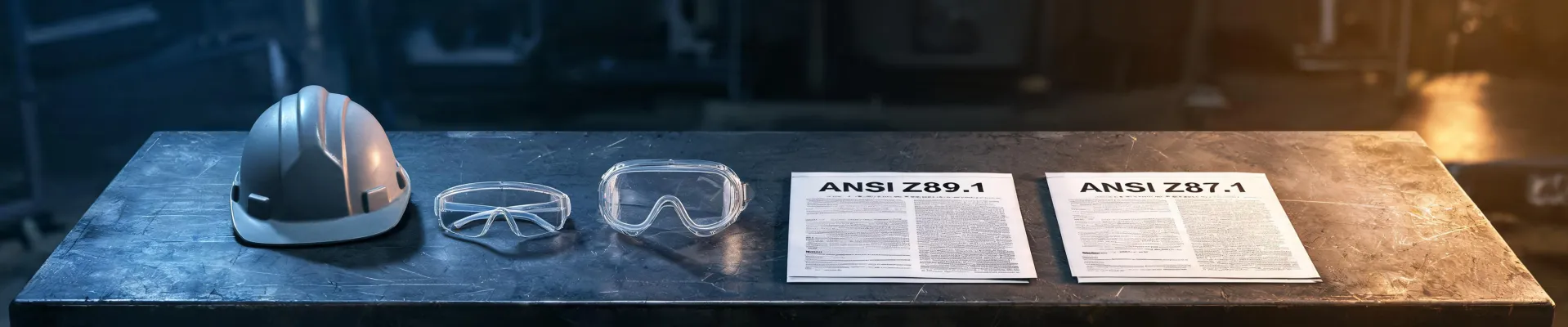
Takeaway: Carbon fiber doesn’t automatically mean safer. Always verify the specific standard (ANSI Z89.1 Type I or Type II). Don’t assume.
Durability: The Surprise Nobody Talks About
Here’s the part that caught me off guard. I expected carbon fiber to be tougher. It’s not.
Traditional ABS hard hats are surprisingly resilient to impacts, but they’re also forgiving. They can take a few dings and still offer protection. Carbon fiber? It’s stiffer. That means it can handle a single high-force impact well, but it’s more likely to crack or show visible damage from repeated low-force bumps.
Does that make it worse? Not necessarily. The key difference is this: with a carbon fiber hat, visible damage is clearer. You know when to replace it. With ABS, the damage might be hidden, and the integrity could be compromised without you knowing.
I’ve seen ABS hats with hairline cracks that were missed during daily inspections. That’s a real risk. Carbon fiber might actually help here—by making damage obvious.
Takeaway: Carbon fiber is stiffer, not tougher. But that stiffness makes damage more visible, which is arguably better for safety.
Price: The Real Reason Most People Hesitate
Let’s be real. A carbon fiber hard hat costs about 2x to 3x more than a standard model. For a 50,000-unit annual order, that’s not pocket change.
If you’re a safety manager with a tight budget, that price difference is hard to justify. But here’s the challenge: the cost of non-compliance or injury is much higher. I ran a quick analysis for our team: upgrading a crew of 50 people to carbon fiber hats cost us about $1,800 more upfront. Compared to the cost of one lost-time injury (easily $10k+), that’s a good bet.
But I won’t pretend it works for every situation. If your work environment has low overhead hazards and standard Type 1 protection is sufficient, traditional hard hats still do the job well.
Takeaway: Carbon fiber is a premium option. Worth it for high-risk or long-wear scenarios. Overkill for low-risk environments.
User Acceptance: The Soft Factor That Makes or Breaks Compliance
The most frustrating part of PPE management: getting people to actually wear the stuff.
We’ve all been there. You buy the best-rated safety glasses. No one wears them because they fog up. Or the gloves are ‘too thick.’ Specs don’t matter if the gear sits in a locker.
With hard hats, I’ve seen the same pattern. Guys complain about weight, heat, or fit. So they take them off when no one’s watching.
The carbon fiber hats changed that dynamic. They’re lighter, which helped with fatigue. And in our climate-controlled warehouse, the reduced weight was enough to stop the complaints. More importantly, our compliance rate—actual wear time—went up.
Is that scientific? No. But I’ll take better real-world compliance over perfect specs on paper any day.
Takeaway: User acceptance is a real factor. A lighter hat that people actually wear is safer than a heavier hat that sits on a shelf.
Other Products That Complement the Shift
When you’re upgrading PPE, it’s rarely a single item change. The hard hat is just one part of the system. If you’re considering a carbon fiber hat, think about what else changes:
- Safety glasses: If you’re already upgrading, Pyramex mirrored safety glasses are worth a look. The anti-fog coatings have improved a lot since 2022. Per ANSI Z87.1, they meet the same impact standards.
- Gloves: For general handling, black nitrile gloves are a solid choice. They’re not the cheapest, but they offer better chemical resistance than standard latex or vinyl. For our crew, switching to a higher-quality nitrile reduced hand fatigue complaints.
- Earplugs: A quick note on a common question: can I sleep with earplugs in? Per OSHA guidelines, yes, with caution. Prolonged use (over 8 hours) can increase the risk of ear infections. Make sure they’re cleaned regularly.
Takeaway: PPE is a system. A lighter hat works better with lighter glasses and gloves.
My Final Recommendation: Who Should Switch, and Who Should Wait
After reviewing hundreds of units, rejecting a few bad batches, and making one costly assumption I still regret, here’s my honest take:
Switch to carbon fiber hard hats if:
- Your crew wears hard hats 8+ hours a day
- You need Type 2 (lateral impact) protection
- You have budget for a 2-3x premium per unit
- User compliance is a current issue (weight/comfort complaints)
Stick with traditional hard hats if:
- Your crew wears hats for short periods
- You only need Type 1 protection
- Your budget is very tight
- You have no complaints about current hats
There’s no single 'right' answer. But after four years, I can tell you this: carbon fiber isn’t a gimmick. It’s a real upgrade for specific situations. Just don’t make the assumption I did. Verify the specs.
That’s the part of quality control that never changes—whether you’re reviewing $12 hard hats or $40 ones.
Per ANSI Z89.1 (the standard for industrial head protection), hard hats must meet Type I or Type II requirements. Always check the specific certification label on the product. If it’s missing, reject the batch. I’ve done it. It’s not fun. But it’s necessary.

Maeve Callahan
Maeve Callahan is a head-protection analyst covering Type I and Type II hard hats, climbing-style safety helmets, bump caps, chin straps, suspensions, liners, and face-shield carriers. She applies ANSI Z89.1, EN 397, and EN 12492 criteria while comparing impact attenuation, penetration resistance, lateral deformation, electrical class, retention strength, field of vision, mass, fit range, and temperature conditioning. Her guides help EHS teams, contractors, utilities, and buyers select helmet systems for overhead hazards, work at height, electrical exposure, accessory compatibility, and worker acceptance.