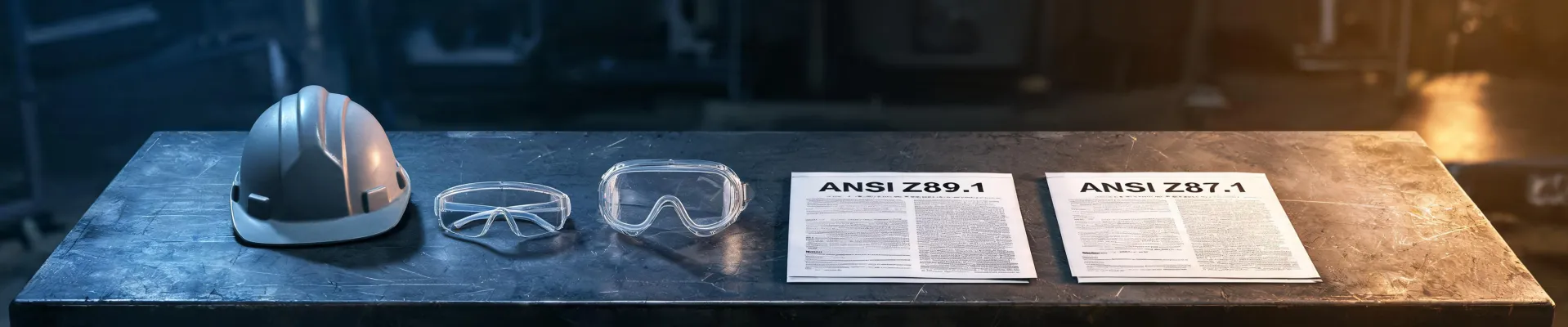
I'm a site safety coordinator for a large industrial contractor. In my role, I'm the one who has to make the call on what gear we stock and what we reorder—and a lot of the time, those decisions are made with a deadline breathing down my neck. Over the past six years, I've handled more rush orders than I can count, including a few where we needed a dozen hard hats overnight for a surprise OSHA visit. So when someone asks me about safety helmets, the conversation usually starts with the same two words: 'Pyramex or generic?'
Let's get this out of the way: this isn't a 'Pyramex is perfect' article. No brand is. This is a practical, side-by-side comparison based on what I've actually seen hold up on a job site—and what's fallen apart.
What We're Comparing and Why
We're looking at two broad categories: Pyramex safety hard hats (specifically their Type 2, full brim and vented models) and what I'll call 'generic branded' hard hats. Think of the unbranded or basic compliance models you see in bulk bins at supply houses. The ones that are just barely under the price of a Pyramex but come with nothing extra.
I've had to choose between them under pressure more than once. Here's what actually matters on the job site.
Dimension 1: Initial Fit & Comfort (The 'First Hour' Test)
This is where I see the biggest difference right out of the box. A Pyramex hard hat suspension system—the ratchet adjustment and the brow pad—is noticeably more refined. The adjustment clicks are precise, and the suspension doesn't dig into your forehead. I've put on a new Pyramex and forgotten it was there after 10 minutes.
The generic hats? They're cheap. The ratchet feels loose, and the brow pad feels like a piece of thin foam board. If I remember correctly, I had one where the suspension slipped after two adjustments. It's not a failure of safety, but it's a failure of comfort. And an uncomfortable hat is a hat that gets left on the truck, which means a worker is unprotected.
The first hour test winner: Pyramex.
Dimension 2: Durability in the Field (The 'Six Month' Check)
This one surprised me. I went back and forth between which category would win here for a while. On paper, hard hats are meant to be expendable—they take one big hit and you replace them. But in reality, hats take small knocks and daily wear for months or even years.
I've seen generic hats with cracked brims after six months of standard use (not a full impact, just daily wear). The shell material seems more brittle, especially in cold weather. The Pyramex shells, specifically their polyethylene and ABS models, hold up better against that daily abuse. They don't get that 'chalky' texture on the shell as quickly.
Every cost analysis pointed to the generic option for a bulk buy. Something felt off about their long-term performance. Turns out that 'feels cheaper' was a preview of 'cracks faster.'
Durability winner: Pyramex.
Dimension 3: Standard Compliance (Type 1 vs Type 2 & Beyond)
Now, the technical bit. Most generic hard hats are Type 1 (protection only from vertical impacts, like a falling tool). Many Pyramex models are Type 2 (protection from vertical and lateral impacts—like hitting your head on a pipe). This is a significant safety difference, not just a comfort feature.
Reference: ANSI/ISEA Z89.1-2014 (American National Standard for Industrial Head Protection) specifies Type 1 and Type 2 classifications. A Type 2 hard hat must pass impact and penetration tests from the top, front, back, and sides of the helmet. This is not a marketing claim; it's a physical testing standard.
If you're working in tight spaces, around low overhead pipes, or on uneven ground, the Type 2 standard is not optional. It's the difference between a helmet that deflects a lateral hit and one that doesn't.
Compliance winner: Pyramex.
Dimension 4: Accessories & Customization (Beyond the Shell)
I only believed in the value of accessories after ignoring them and being stuck with a bare helmet that couldn't hold a headlamp or a faceshield bracket. This is where the Pyramex ecosystem shines.
With a Pyramex hard hat, you easily find Pyramex hard hat accessories like cooling liners (for hot weather), winter liners, earmuff adapters, and faceshield brackets. I was able to equip an entire crew with cooling liners for a summer job last year—all with standard Pyramex hard hat suspension replacement parts. The generics? You're playing a guessing game with fit and availability.
Winner: Pyramex.
So, When Do You Go Generic?
Here's the honest part. You don't always need the premium model. Based on what I've seen, a generic hat is fine for:
- Short-term visitors (a few hours on a walking tour)
- Backup spares (for when someone forgets theirs)
- Very limited budgets (where you have to stretch a dollar for 100+ workers)
But if it's for daily-wear workers, especially in active or tight spaces, the extra $5–10 for a Pyramex safety helmet is the cheapest insurance you can buy. The comfort difference alone pays for itself in worker compliance. The durability saves you on replacements. And the Type 2 rating might just save you a trip to the hospital.
The numbers said go with the cheapest bulk option. My gut said stick with the proven brand. Went with my gut. Dodged a bullet on that one.

Maeve Callahan
Maeve Callahan is a head-protection analyst covering Type I and Type II hard hats, climbing-style safety helmets, bump caps, chin straps, suspensions, liners, and face-shield carriers. She applies ANSI Z89.1, EN 397, and EN 12492 criteria while comparing impact attenuation, penetration resistance, lateral deformation, electrical class, retention strength, field of vision, mass, fit range, and temperature conditioning. Her guides help EHS teams, contractors, utilities, and buyers select helmet systems for overhead hazards, work at height, electrical exposure, accessory compatibility, and worker acceptance.