-
The Day I Realized I'd Been Doing It All Wrong
-
1. Hard Hat Expiration Date: The "Looks Fine" Lie vs. The Date Stamp Truth
-
2. Black Work Boots: "These Look Rugged" vs. Actual Safety Footwear
-
3. Tinted Safety Glasses: Sunglasses vs. The Real Thing
-
4. Foam Lined Safety Glasses: The "Cheapest Wins" Mistake vs. The Comfort Reality
-
5. Can You Buy Loop Earplugs in Store? (And Should You for Work?)
-
So What Should You Do? (My Simple Checklist)
The Day I Realized I'd Been Doing It All Wrong
In my first year as a safety coordinator (2019), I thought I had it all figured out. Buy cheap, buy in bulk, check the boxes. Six months later, I had wasted roughly $3,200 on PPE that either expired, didn't meet standards, or just sat unused because nobody wanted to wear it. I keep a running tally of my mistakes now — seriously, it's a long list.
Here's the thing: most people aren't intentionally buying wrong. They just don't compare the right things. So I'm going to walk you through five common choices you'll face, using the A vs. B framework that finally helped me stop making dumb decisions. Each one comes with a real mistake I made, so you don't have to repeat it.
1. Hard Hat Expiration Date: The "Looks Fine" Lie vs. The Date Stamp Truth
Back in 2020, I found a pallet of hard hats at a discount — same color, same brand (Pyramex, actually), but they were sitting in a warehouse for three years. The shells looked perfect. No cracks, no UV damage that I could see. So I bought 200 of them.
Mistake #1: I ignored the expiration date. Hard hats have a stamped date of manufacture, and most manufacturers (including Pyramex) recommend replacement within 5 years from that date, or sooner if exposed to extreme conditions. Those 200 hats? They were already 3 years old. By the time we issued them and started using them, we had maybe 18 months of life left. Then a safety audit caught it — we had to replace all of them early. Total waste: about $1,100 plus the rush shipping for new ones.
The comparison:
- Option A: Buy old stock hard hats at a discount — you save upfront but risk early expiration and compliance failure.
- Option B: Buy fresh stock with clear date labels (like Pyramex's color-coded suspension system) — you pay a little more but get full service life and easy tracking.
Bottom line: 5 minutes of checking the date stamp beats 5 days of scrambling to replace 200 hard hats. Now I keep a spreadsheet (I know, I know) with expiry timelines.
2. Black Work Boots: "These Look Rugged" vs. Actual Safety Footwear
I once bought a batch of black work boots from a general workwear supplier — they looked tough, had steel toes, and were priced right. I thought I'd saved the company a ton. Then the ASTM rating check came. Turns out those boots met some impact standards but didn't have the puncture-resistant plate or EH rating that our site required. Every pair had to go back. $2,000 order, plus a week of downtime while we sourced compliant boots.
The difference:
- Generic black work boots: Might look like safety boots, might have steel toes, but often lack the full set of certifications (ASTM F2413-18, EH, puncture, etc.).
- Proper safety footwear: Clearly labeled with ratings. Pyramex doesn't make work boots, but when I switched to a brand that lists every standard on the box, I stopped getting rejections.
What I learned (the hard way): Don't assume black leather + steel toe = safe. Verify the actual standard. One verification call takes 10 minutes; reordering takes weeks.
3. Tinted Safety Glasses: Sunglasses vs. The Real Thing
Before I knew better, I wore my favorite pair of Oakley sunglasses to outdoor job sites. Hey, they were tinted, they blocked glare, what's the difference? Then a piece of gravel flew off a grinder and hit the lens. The Oakley didn't shatter — but it wasn't rated for impact. I got lucky.
Comparing the two:
- Regular tinted glasses (fashion sunnies): Might have UV protection, but no Z87+ impact rating. If something hits the lens, it could break into your eye.
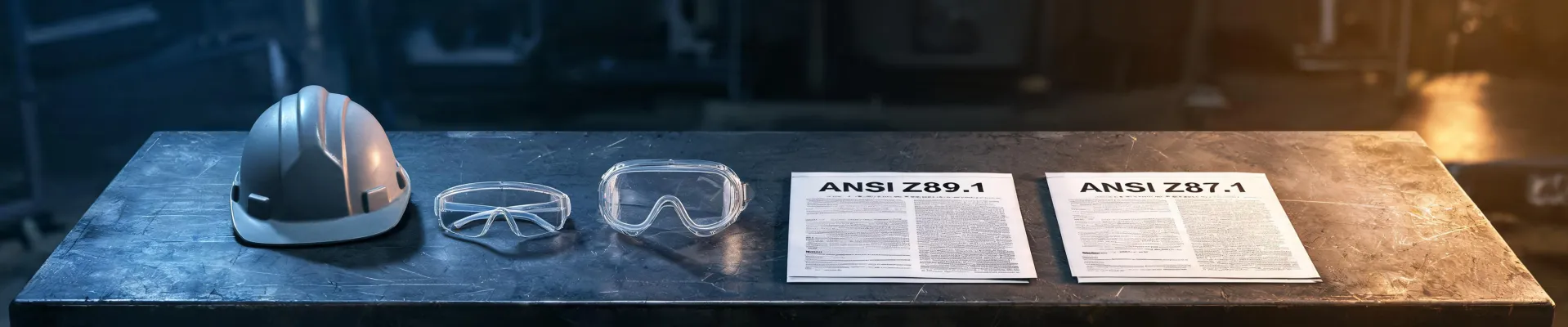
- Tinted safety glasses (like Pyramex Fortress with mirrored or tinted lenses): They meet ANSI Z87.1, often have scratch-resistant coatings, and the tint is built into safety-grade polycarbonate.
I now have a rule: if I'm on any active work site, it's either clear safety glasses or tinted safety glasses with the Z87 mark. Not my personal shades. One pair of Pyramex tinted safety glasses costs less than $15 — cheaper than a trip to the ER (note to self: stop being cheap about eyes).
4. Foam Lined Safety Glasses: The "Cheapest Wins" Mistake vs. The Comfort Reality
When I first ordered safety glasses for a crew of 50, I picked the bottom-price ones — no foam lining, basic temples. They were so uncomfortable that half the workers either wore them loose (not safe) or left them in their lockers. I got complaints, then safety violations.
The comparison:
- Basic safety glasses (no foam): Lower unit cost, but lower compliance. If people don't wear them, they don't protect.
- Foam lined safety glasses (like Pyramex's foam-lined models): Slightly higher cost ($3–5 more per pair), but the foam creates a snug fit, prevents debris from entering from the side, and workers actually keep them on because they're comfortable.
I switched the entire crew to Pyramex foam lined safety glasses after that. Compliance went from about 60% to 95%. That's the kind of return on investment that matters. Plus, fewer dust-related eye irritation complaints (which meant fewer clinic visits — savings I never accounted for).
5. Can You Buy Loop Earplugs in Store? (And Should You for Work?)
One of our new hires asked me, "Can you buy Loop earplugs in store? I saw them online." Loop earplugs are those stylish noise-reducing plugs for concerts and sleep — they are not industrial hearing protection. They don't carry an NRR (Noise Reduction Rating) from ANSI, and they aren't tested for workplace noise levels.
The real choice:
- Loop earplugs (or similar consumer earplugs): Comfortable for casual use, but unrated. Not acceptable for OSHA compliance.
- Proper industrial earplugs or earmuffs (e.g., Pyramex hearing protection): Clearly labeled NRR (typically 25–33 dB), fit-tested, and compliant with workplace safety standards.
Yes, you can buy Loop earplugs in stores like Target or online. But for work? Don't. I explained to that hire that we need rated protection. We gave him a box of Pyramex disposable earplugs (NRR 33) and he was set. One quick comparison saved a potential citation.
So What Should You Do? (My Simple Checklist)
If I could go back to my rookie self, here's the shortlist I'd hand him:
- Check hard hat expiration dates before buying. Ask the supplier for the date of manufacture — don't assume they're fresh.
- Verify certifications on work boots. Don't rely on the word "steel toe" — look for ASTM or CSA labels.
- Only wear tinted safety glasses with Z87+ on the lens. No exceptions.
- Spend the extra $3–5 on foam lined safety glasses. The compliance ROI is huge.
- Use rated hearing protection, not consumer earplugs. NRR matters more than style.
These are the mistakes that cost me real money and credibility. You don't have to make them. A little upfront checking — maybe 15 minutes total — can save thousands in rework, citations, and injuries. That's the whole point of prevention over cure (seriously, I wish I'd listened to myself sooner).
Prices as of April 2025; always verify current standards and pricing with your supplier.

Maeve Callahan
Maeve Callahan is a head-protection analyst covering Type I and Type II hard hats, climbing-style safety helmets, bump caps, chin straps, suspensions, liners, and face-shield carriers. She applies ANSI Z89.1, EN 397, and EN 12492 criteria while comparing impact attenuation, penetration resistance, lateral deformation, electrical class, retention strength, field of vision, mass, fit range, and temperature conditioning. Her guides help EHS teams, contractors, utilities, and buyers select helmet systems for overhead hazards, work at height, electrical exposure, accessory compatibility, and worker acceptance.