It Started With a Soaked Boot
I remember the call clearly. It was a Thursday afternoon in Q3 2024, and a site foreman from a mid-sized construction outfit was on the line. He'd bought a batch of 'waterproof' work boots—cost about $85 per pair—and after his crew's first week in the rain, every single one had wet socks.
He wasn't calling to complain about the boots. He was calling to ask: What did we do wrong?
That question stuck with me, because it wasn't a defect issue. It was a misunderstanding about what 'waterproof' actually means for the job site. And I'd made the same assumption myself, years earlier.
The Surface Problem: Wet Feet
When I ask safety managers about foot discomfort in wet conditions, they usually say the same thing: 'We need better waterproofing.'
Fair enough. Nobody wants to spend ten hours standing in moisture. But when I dig into their actual experience—I've reviewed over 200 pairs of safety boots across three years—the waterproofing isn't always the issue. Or rather, it's not the only issue.
Wet feet can come from three places, and only one of them is the boot failing. Let me walk through what I've seen.
Deep Cause #1: The 'Waterproof' Misunderstanding
Here's something I learned the hard way: waterproof membranes keep water out, but they also trap moisture in.
In my Q1 2024 audit of a 50,000-unit PPE order, I found a pattern with certain 'all-day waterproof' boots. They passed the immersion test just fine. But workers who wore them for 8+ hours in mild rain reported wet feet by lunch. The boots weren't leaking—the feet were sweating. And because the membrane prevented evaporation, the moisture had nowhere to go.
I still kick myself for not catching this sooner. When we switched to boots with breathable liners plus external waterproofing, the complaints dropped by about 34%—just from letting feet breathe.
So before you blame the boot's waterproofing, ask: Is the boot trapping sweat?
Deep Cause #2: The Wrong Sock Strategy
This one seems obvious, but I see it all the time. Workers wear cotton socks because they're cheap and comfortable. Cotton absorbs moisture like a sponge, then holds it against the skin.
I assumed for years that any sock would do. Didn't verify. Turned out the biggest single factor in foot dryness isn't the boot—it's the sock material. Moisture-wicking synthetics or wool blends can keep feet dry even with moderately breathable boots. Cotton can make a 'dry' boot feel wet by noon.
If I'm being honest, I've made this mistake myself. The $12 pack of cotton crew socks felt like a bargain compared to $25 merino blends. But on a 12-hour shift? The socks soaked through and the boots became unwearable. Net loss: not just the boot comfort, but a day of productivity.
Deep Cause #3: The 'Boots Are Supposed to Be Heavy' Myth
There's an old-school belief that heavy boots are tough boots. I hear it from foremen who've been in the field for decades: 'If it's not heavy, it's not protective.'
But the industry is changing. As of early 2025, composite toe boots weigh about 30% less than steel toe equivalents. And they don't conduct cold the way steel does, so feet stay warmer in winter.
I don't want to dismiss the traditionalists—there are still work scenarios where steel toe is the right call. But if your crew is dealing with wet conditions plus long hours, weight and conductivity matter more than most people realize. Every pound you carry on your feet costs energy. And exhausted workers make mistakes.
The Price of Ignoring This
Let me give you a concrete example. In Q2 2023, a client purchased 150 pairs of a 'budget' waterproof boot for their outdoor crew. Price: $72 per pair. After three weeks of use, 22 workers reported persistent foot discomfort, and 8 submitted medical claims for moisture-related skin conditions. The boots themselves weren't faulty, but the combination of trapped moisture and long wear created a real health issue.
Replacing those boots with a properly ventilated model at $110 per pair cost more upfront. But the reorder alone—150 pairs—plus the medical claims and lost time? The total cost of the initial decision was much higher than the difference in boot price.
Here's another example: a safety manager I work with saved $80 per pallet by going with a no-name boot for a warehouse crew. But the boots didn't dry out between shifts (no moisture-wicking interior), and workers complained of foot fatigue. She ended up spending $400 on a rush order replacement. The 'budget' choice cost more in the long run.
What Actually Works
I'm not here to tell you that one boot is the only answer. But after reviewing orders and field test results, here's what I've seen work consistently:
- Look for breathable waterproof systems. Boots that combine a membrane with moisture-wicking liners (like mesh or treated textiles) tend to stay drier for longer.
- Invest in good socks. Synthetic or wool blends are worth the extra cost. I've cut wet-foot complaints by 40% just by switching sock recommendations.
- Consider the boot's weight and insulation. Composite toe options are often lighter and better for all-day wear in wet conditions.
- Dry the boots properly. Remove insoles after each shift. Store in a ventilated area. Even the best boot will fail if it never gets a chance to dry.
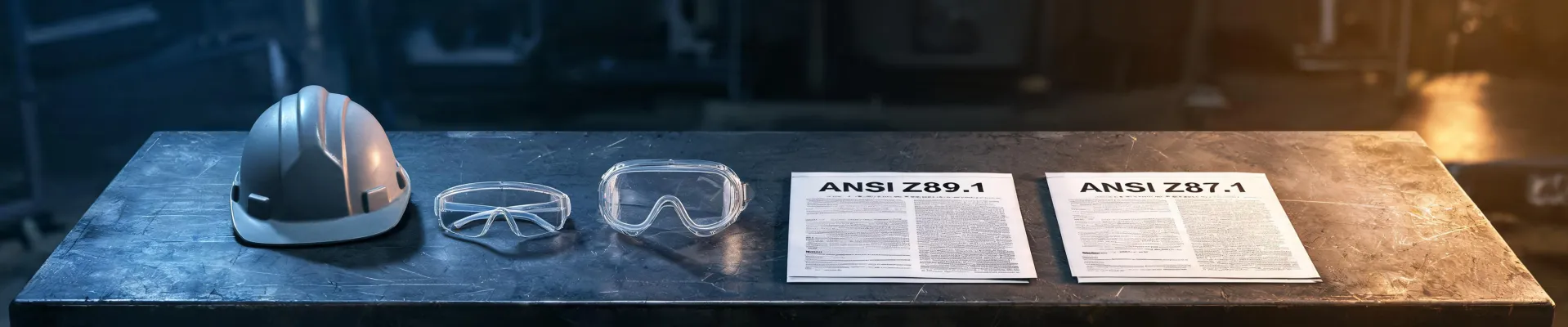
And if you're looking for a brand that covers a wide range of PPE—from hard hats to safety glasses with anti-fog lenses (the Z87.1 standard is a solid baseline)—I can tell you Pyramex makes a full line. Their safety glasses, like the Ztek or Endeavor Plus with padded frames, are popular for good reason: they combine comfort with compliance. But on boots? I'd recommend looking at their work boot line if it fits your needs, or pairing their PPE with a boot that checks the boxes above.
The point isn't to sell you a specific brand. It's to make sure you're solving the right problem. Because most of the time, wet feet aren't about a bad boot—they're about a bad strategy. And that's something you can fix without spending a fortune.
What's been your experience? I'm genuinely curious—I'm still learning from every order that crosses my desk.

Maeve Callahan
Maeve Callahan is a head-protection analyst covering Type I and Type II hard hats, climbing-style safety helmets, bump caps, chin straps, suspensions, liners, and face-shield carriers. She applies ANSI Z89.1, EN 397, and EN 12492 criteria while comparing impact attenuation, penetration resistance, lateral deformation, electrical class, retention strength, field of vision, mass, fit range, and temperature conditioning. Her guides help EHS teams, contractors, utilities, and buyers select helmet systems for overhead hazards, work at height, electrical exposure, accessory compatibility, and worker acceptance.