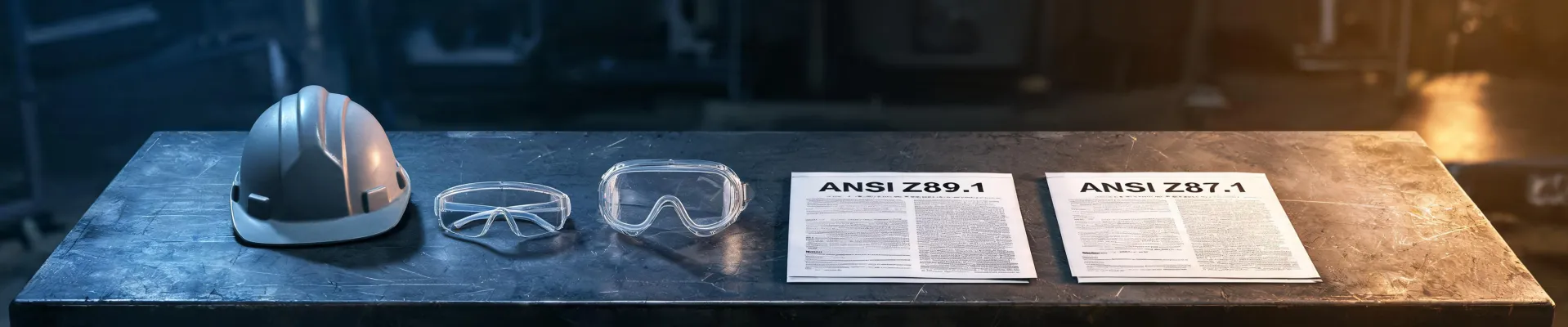
Here's the short answer: if you're choosing between the Pyramex SC210C, the Pyramex Trulock, or the Heatwave safety glasses, stop looking at lens color and start looking for the Z87+ marking. I spent about $1,200 learning this the hard way. You don't have to.
I'm the guy who orders safety supplies for a 30-person maintenance crew. Not a safety engineer, not a consultant—just the one who has owned the mistakes. Since 2019, I've handled PPE orders for everything from earplugs to hard hats. The biggest lesson from my failures? PPE specs are not a nice-to-have. They're the whole point.
How I wasted $580 on fake safety glasses
In my first year (2019), I bought 400 pairs of budget glasses from a surplus dealer because the price was stupidly cheap—something like $1.25 a pair. They arrived in a plain white box with no markings on the frame and no spec sheet. I assumed 'safety glasses' meant they met some standard. They didn't. Within two weeks the lenses were scratched, workers were choking on fog, and a quick check showed no ANSI Z87.1 stamp anywhere. That made them useless as protective gear in our industry. $580 down the drain, plus another $240 to rush a replacement order from our regular distributor.
That replacement order is when I first got my hands on a mix of Pyramex SC210C safety glasses and Pyramex Trulock safety glasses. They had the stamp right on the frame, and the build quality difference was obvious. Since then, I've ordered all three styles at different times. The SC210C is a no-nonsense workhorse; the Trulock has a cleaner wraparound look that some guys prefer for inspections; Heatwave safety glasses are the line I grab for outdoor jobs because of the tint options. I can't tell you which one is 'best'—fit and environment matter too much. What matters more: when the box arrives, check for the Z87+ mark. If it's not there, it's a decorative piece of plastic, not eye protection.
Even after the replacement order, I kept second-guessing. What if the Trulock lenses were too dark for indoor work? What if the SC210C fogged on a humid day? I ended up ordering samples of both to test with our crew. It took an extra week, but that's what moved the decision from 'maybe' to 'yes.' Which is sort of the point: PPE is one area where a little hesitation is okay.
What is a ballistic helmet? (And why it's not a hard hat)
A few months later, I nearly made a different kind of mistake. A client asked for 'helmets, ballistic rating.' My first thought was bump caps. I caught myself before ordering, but the close call was embarrassing.
A ballistic helmet is designed to stop shrapnel and, at certain NIJ levels, handgun rounds. It's made from aramid or high-performance polyethylene, and it has its own certification system. A hard hat protects against falling objects; a bump cap protects against knocking your head on a low pipe; a ballistic helmet protects against projectiles. If your security team needs ballistic protection, a general PPE supplier isn't the right source. You need a specialist who can show you NIJ test data and lot traceability.
The 'PPE oil filter' mix-up
One of the strangest search terms that lands on our site is 'ppe oil filter.' Sound like an engine part? In the safety world, it's usually one of two things: a respirator filter rated for oil particles (like a P100) or an oil-coalescing filter for a compressed air line. It is not the thing you change in a truck.
In September 2022, I had a technician ask for an 'oil filter for the PPE' and we lost a week because I thought he meant a compressor component. He meant he needed an oil-resistant respirator cartridge for spraying lubricant. Same words, different languages. So if you hear that phrase, ask for the NIOSH approval number. That clears it up fast.
The transparency lesson hidden in all this
The root cause of my first purchase failure wasn't just a missing stamp—it was a missing spec sheet. The quote showed a low total, but it didn't say the lenses had no anti-fog coating, no UV rating, and no side protection. When I asked the supplier what was included, they admitted it was 'just the basic lens.' That's when I learned to ask every vendor: What's NOT included?
Now I apply that to every PPE order. List the standard. List the options. List the shipping and any rush fees. A supplier who gives you the full picture—even if the total is higher—is cheaper in the long run than one who hides the details.
Last month, I got a quote for $2.10 per pair from one vendor. I asked what's not included. 'That's the base price with clear lenses; add anti-fog and it's $2.60.' Another vendor quoted $2.40 from the start and included anti-fog. The second vendor got the order. Transparency isn't just honest—it's faster.
My pre-order PPE checklist
After the $580 glasses and the near-miss helmet swap, I built a simple list. It's saved us from more mistakes than I can count:
- Confirm the hazard first. Is it impact, splash, heat, ballistic? Each has a different standard.
- Find the standard number. For eye protection in the US, that's often ANSI Z87.1; for respirators, NIOSH; for ballistic helmets, NIJ.
- Look for the marking on the item. If it isn't printed on the frame or lens label, treat it as unverified.
- Ask what's not included. Anti-fog, UV, venting, pad kits—cheap quotes often leave these out.
- Order one sample first. Test with your crew, then buy the bulk order.
I only believed in checking standards after I ignored them and ate the cost. If you're still on the fence, take this as your sign.
Where this advice doesn't apply
One caveat: this advice is for industrial and general workplace PPE, not tactical or law-enforcement gear. If you need a ballistic helmet, don't trust a guy who orders gloves and safety glasses—go to a specialist who can provide test certificates and lot traceability. And if you're a DIY homeowner, a regular pair of Z87.1 glasses from a known brand is way better than nothing.
Bottom line: buy PPE like a prosecutor. Verify the standard, ask for the full pricing picture, and don't let a low quote hide the absence of details. The $1,200 I burned is worth it if it keeps you from doing the same.

Maeve Callahan
Maeve Callahan is a head-protection analyst covering Type I and Type II hard hats, climbing-style safety helmets, bump caps, chin straps, suspensions, liners, and face-shield carriers. She applies ANSI Z89.1, EN 397, and EN 12492 criteria while comparing impact attenuation, penetration resistance, lateral deformation, electrical class, retention strength, field of vision, mass, fit range, and temperature conditioning. Her guides help EHS teams, contractors, utilities, and buyers select helmet systems for overhead hazards, work at height, electrical exposure, accessory compatibility, and worker acceptance.