-
1. What exactly is a Type 2 hard hat, and why should I care?
-
2. What's the deal with the Pyramex CPH160 cooling hard hat pad? Does it really work?
-
3. Can I use a bump cap insert instead of a hard hat?
-
4. What's the difference between nitrile and latex gloves? Which should I choose?
-
5. Is there a hard hat that looks like a cowboy hat? Really?
-
6. How do I know which hard hat suspension system to choose?
-
7. What about accessories? Are hard hat adapters worth it?
-
8. So, what's the bottom line?
I've been handling safety equipment orders for a midsize manufacturing facility since 2019. Honestly? I've made a ton of mistakes. I once ordered 150 hard hats with the wrong suspension system—$3,200 down the drain, plus a week of delays while we scrambled for replacements. That hurt. But it taught me a lot. So I've put together this FAQ based on the questions I wish I'd asked back then, plus the ones my team asks me every month. I'm not claiming to be an expert, but I've definitely learned what works and what doesn't. Let's dive in.
1. What exactly is a Type 2 hard hat, and why should I care?
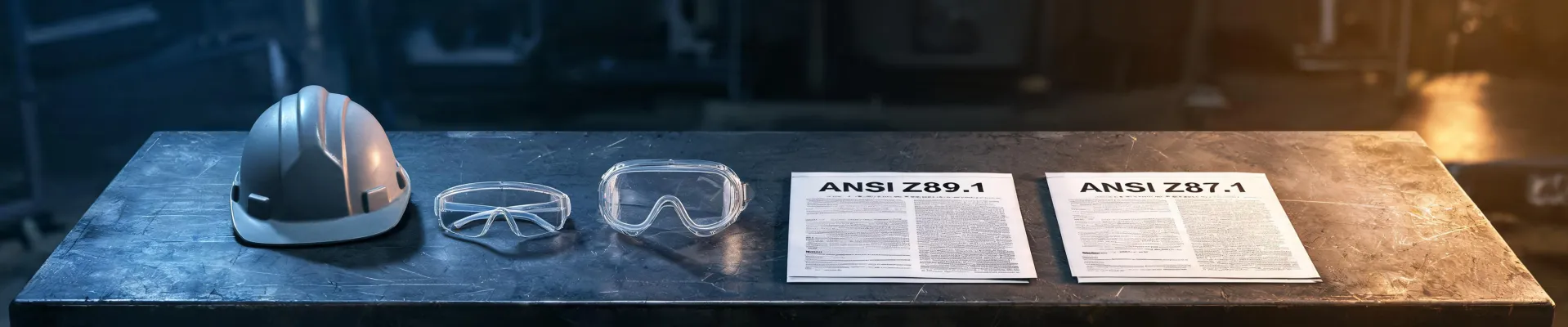
This was my first big mistake. I thought all hard hats were basically the same. They're not. A Type 2 hard hat (like Pyramex's Type 2 lineup) is tested for lateral impact, not just top impact. In a fall or side collision, that extra protection can make a huge difference. I'm not 100% sure about every brand, but Pyramex's Type 2 models meet ANSI Z87.1 and are rated for both top and side impacts. Basically, if your crew works around moving machinery, overhead hazards, or confined spaces where lateral hits are possible, Type 2 is the safer bet. Don't make my mistake and assume Type 1 is enough for every job.
2. What's the deal with the Pyramex CPH160 cooling hard hat pad? Does it really work?
Great question. I was actually skeptical about this one. The CPH160 is a cooling pad that you insert into your hard hat. It's activated by water—soak it for a few minutes, snap it into the hard hat liner, and it stays cool for a few hours. After about three summers of watching guys sweat through their headbands, I tried this on a crew doing outdoor work in July. The feedback was honestly kind of hilarious. Most of them didn't believe it would help, but after a day using it, they were asking for more. The key is that it's not a miracle cure—it works best in moderate heat (80-90°F) with some airflow. For extreme heat, it's not a replacement for a proper cooling vest or frequent breaks. But for a pretty cheap add-on, it's been a solid investment. I've used it on about 50 guys now, and more often than not, they report less sweating and less discomfort.
3. Can I use a bump cap insert instead of a hard hat?
This comes up a lot, and the short answer is: it depends on the hazard. A bump cap (like Pyramex's bump cap with insert) is designed for low-impact hazards where you might bump your head on pipes, beams, or low ceilings. It's not a hard hat. It won't protect you from falling objects, impact from tools, or electrical hazards. I once had a new guy ask if he could just use the bump cap for everything because it's lighter. I had to explain that a bump cap is basically a reinforced baseball cap—it's for comfort in low-clearance areas, not for jobsite safety. For general construction or industrial work, stick with a Type 1 or Type 2 hard hat. The bump cap is a good alternative for warehouse or utility work where the main risk is hitting your head on overhead obstructions, but it's not a substitute for real head protection.
4. What's the difference between nitrile and latex gloves? Which should I choose?
This is one of those debates that gets way more attention than it needs to. Here's my take after ordering thousands of gloves: both have their place, but nitrile is usually the safer choice for most industrial applications. Latex is cheaper and offers better tactile sensitivity, but it's also a common allergen. Nitrile doesn't cause latex allergies, it's more puncture-resistant, and it holds up better against chemicals like oils and solvents. I once ordered a batch of latex gloves for a team working with lubricants. The gloves started breaking down after about 20 minutes. We switched to nitrile, and the problem disappeared. That said, if you don't have any chemical exposure and no one on your team has allergies, latex can be a budget-friendly option for light-duty tasks. The honest answer? For 80% of the work in our facility (handling tools, parts, light chemicals), nitrile is better. For medical or lab work, it's a different conversation. If you're doing heavy chemical handling, you should be looking at something tougher anyway.
5. Is there a hard hat that looks like a cowboy hat? Really?
Yes, this is a real thing, and it's honestly pretty hilarious. Pyramex makes a cowboy hat hard hat (the Ridgeline model, I think?). It looks like a cowboy hat but meets ANSI Z87.1 standards for impact protection. I've seen these used in ranching, construction in rural areas, and even for some themed events. Are they a good idea for serious industrial work? Probably not. The brim is wider, so visibility might be an issue in tight spaces. But for guys who spend all day on a ranch or in open fields and need head protection, it's a fun and functional option. I wouldn't recommend it for a typical construction site, but if you're dealing with a crew that's already wearing cowboy hats for work, it's a pretty solid upgrade.
6. How do I know which hard hat suspension system to choose?
This was the source of my $3,200 mistake, so I've got some strong feelings here. Most hard hats come with a suspension system that is either pin-lock or ratcheting. Pin-lock is simpler and cheaper—you adjust the fit by pushing a pin into different holes. Ratcheting systems let you adjust by turning a knob. Ratcheting is way more convenient if multiple people are sharing helmets, or if you need to adjust the fit while wearing gloves. My mistake? I ordered pin-lock for a crew of 12, but half of them hated it because they could never get the fit right. I ended up buying ratcheting replacements. The lesson: if you can afford the slight extra cost, go with ratcheting. The crew will thank you.
7. What about accessories? Are hard hat adapters worth it?
This is one of those things I overlooked at first. Pyramex makes stuff like hard hat adapters for face shields, ear muffs, and visors. I used to think, "We'll just buy standalone face shields." But then I realized that having a universal mounting system (like the Pyramex adapter) makes life way easier. You can swap between a face shield and ear muffs without having to buy separate helmets. It's not a huge cost, but it's a massive convenience for a crew that needs different protection on different days. Just make sure your hard hat model is compatible with the adapter. I've learned that lesson the hard way too.
8. So, what's the bottom line?
Honestly, I don't think there's a single "best" Pyramex product for everyone. But I've found that for most industrial applications, a Type 2 ratcheting hard hat with a cooling liner (if needed) and a nitrile glove for general tasks is a solid combo. The cowboy hat hard hat is a niche thing. The bump cap is a tool for low-hazard environments. And the cooling pad is a nice perk for summer. The real trick is to think about your specific hazards: what are people hitting their heads on? What chemicals are in the air? How hot is the workspace? Once you answer those questions, you can pick the right gear. Don't be like me and learn the hard way that one size doesn't fit all.

Maeve Callahan
Maeve Callahan is a head-protection analyst covering Type I and Type II hard hats, climbing-style safety helmets, bump caps, chin straps, suspensions, liners, and face-shield carriers. She applies ANSI Z89.1, EN 397, and EN 12492 criteria while comparing impact attenuation, penetration resistance, lateral deformation, electrical class, retention strength, field of vision, mass, fit range, and temperature conditioning. Her guides help EHS teams, contractors, utilities, and buyers select helmet systems for overhead hazards, work at height, electrical exposure, accessory compatibility, and worker acceptance.