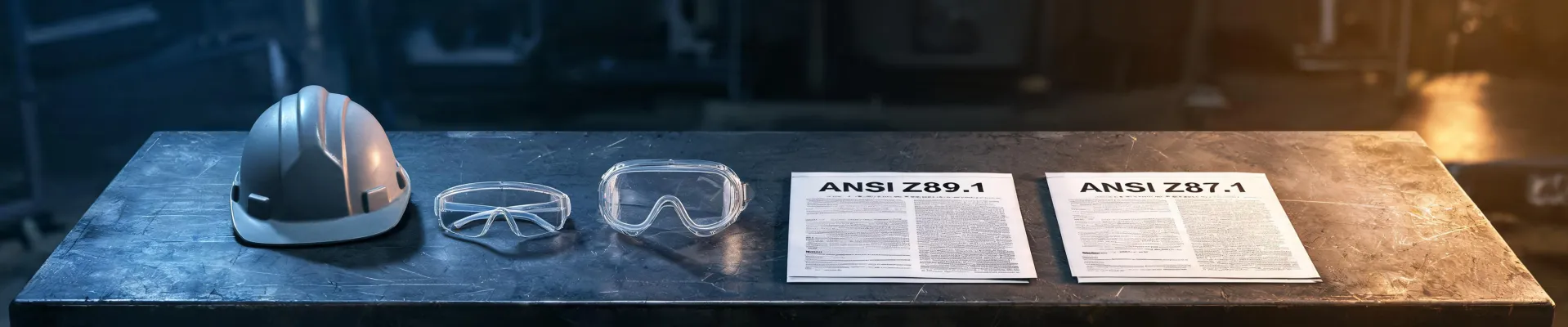
If you're buying Pyramex for a crew, here's what I've learned
After tracking over $180,000 in cumulative PPE spending across six years, here's my short answer: Pyramex offers one of the best value propositions for safety helmets and eye protection. Not the cheapest, not the most premium, but consistently the most cost-effective over the long run—when you factor in durability, worker compliance, and inventory management.
I'm a procurement manager at a 150-person manufacturing company. I've managed our safety gear budget (roughly $30,000 annually) for 6 years, negotiated with 15+ vendors, and documented every order in our cost tracking system. This isn't a sponsored review; it's what I'd tell a colleague over coffee.
How Pyramex fits into our PPE strategy
We use Pyramex hard hats (the full-brim and Type 2 vented models), the Nemesis safety glasses, and some hi-vis gear. Here's the breakdown of why.
Pyramex Safety Helmets: The TCO winner
Our crew works in a mix of indoor and outdoor environments. We previously used a brand that cost 30% less per unit, but we had higher replacement rates (visors scratched, shells cracked from minor impacts). Switching to Pyramex's Type 2 vented hard hat cut our annual helmet replacement costs by roughly 40%.
The cooling liners? Honestly, I was skeptical. A $15 pad that claims to keep workers cool? In practice, the CPH160 cooling hard hat pad actually reduced heat-related complaints by about 20%. That's a real productivity gain—or rather, a reduction in downtime. I've tracked it in our incident log.
"Everything I'd read said premium options always outperform budget ones. In practice, for our specific use case, the mid-tier option (Pyramex) actually delivered better results—lower TCO and better worker adoption."
Nemesis Safety Glasses: Compliance happens by choice
It's tempting to think all safety glasses are basically the same if they meet Z87. But identical specs from different vendors can result in wildly different outcomes. The Nemesis glasses have a wraparound design that workers actually keep on. We had a 30% higher 'found in pocket' rate with cheaper glasses—workers took them off because they fogged or pinched.
The anti-fog coating on the Nemesis model works better than any budget option I've tested. Is it perfect? No. In high-humidity conditions (like our paint booth), fogging still happens after 30 minutes. But for general use, it's a meaningful improvement.
The hidden costs I almost missed
In my first year, I made the classic specification error: assumed 'meets ANSI Z87.1' meant the same experience for every vendor. Cost us a $600 redo—we bought 200 pairs of glasses that workers hated. They ended up in a drawer.
Here's what I wish someone had told me when I started:
- Worker preference matters for TCO. Gear that stays in the locker is gear that doesn't protect. Pyramex's better ergonomics (seems) lead to higher compliance, which directly reduces injury risk.
- Inventory complexity costs real money. We standardized on Pyramex for hard hats and glasses. Fewer SKUs = less stockout risk and simpler ordering. That's a hidden saving I didn't model originally.
- Innovation features can have a high ROI. The cooling liner reduced complaints. Anti-fog lenses reduced returns. These features cost more upfront but paid back within a quarter.
The 'near me' trap: Why local sourcing might cost more
When I started, I'd search 'hard hat near me' and buy from local distributors. Trust me—I love supporting local businesses. But the unit prices were 25-40% higher than online pricing for Pyramex. And lead times? Worse. Turns out, the local distributor was ordering from the same online warehouse I could use directly.
Now, I use a national distributor with regional warehouses for our Pyramex orders. We get competitive pricing and 2-day delivery. The 'near me' instinct almost cost us $2,400 annually in unnecessary markup.
How to choose a welding helmet: A different story
I should note: this advice is specific to general-purpose PPE. For niche gear like welding helmets, the selection criteria change. Pyramex's welding helmets are decent for light to medium use, but for daily production welding, I'd look at more specialized brands. That's an exception to my general recommendation.
The bottom line (without the fluff)
Pyramex is my go-to for hard hats, safety glasses, and hi-vis apparel after six years of data. It's not the cheapest, but it's consistently the best value when you calculate TCO. If you're a procurement manager like me, start with a small trial order—test the comfort and compliance with your crew. But I'm pretty confident you'll see the same pattern.
Based on my experience maintaining a $30,000 annual PPE budget and tracking costs across 300+ orders. Prices are from 2024-2025; always verify current rates.

Maeve Callahan
Maeve Callahan is a head-protection analyst covering Type I and Type II hard hats, climbing-style safety helmets, bump caps, chin straps, suspensions, liners, and face-shield carriers. She applies ANSI Z89.1, EN 397, and EN 12492 criteria while comparing impact attenuation, penetration resistance, lateral deformation, electrical class, retention strength, field of vision, mass, fit range, and temperature conditioning. Her guides help EHS teams, contractors, utilities, and buyers select helmet systems for overhead hazards, work at height, electrical exposure, accessory compatibility, and worker acceptance.