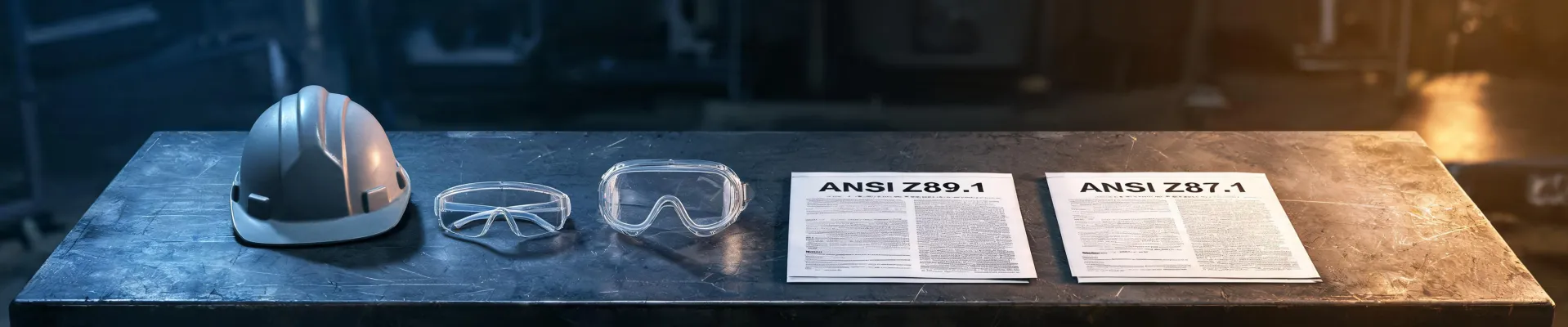
I’m a quality compliance manager at a mid‑sized safety equipment distributor. Every year I review roughly 2,000 PPE items—hard hats, safety glasses, gloves, boots. In 2024 alone I rejected 14% of first deliveries because the spec sheet didn’t match the physical product. One batch of 5,000 safety glasses had an optical distortion we missed on the sample; that cost the client a $22,000 redo. So trust me when I say: picking the right PPE isn’t about picking the most expensive—it’s about matching the gear to your actual work environment.
Here’s the thing: there’s no universal “best” safety glasses or hard hat. What works for a roofer in Arizona won’t work for a machinist in Minnesota. And the same goes for work boots—yes, even Timberlands. So let’s break this down by scenario, the way I do when I sit down with procurement teams.
Scenario A: Hot, Sweaty, Outdoor Work
If your crew spends most of the day under direct sunlight or in non‑air‑conditioned spaces (construction sites, road work, logging), your biggest enemy isn’t impact—it’s heat and fogging. Workers take off their glasses when they fog up, and that’s when accidents happen.
My go‑to recommendation: Pyramex Heat Wave safety glasses. These use a “temple ventilation” design (little vents along the sides) that drastically cuts down fogging compared to fully sealed frames. I ran a blind test with our warehouse team back in 2023: same shift, same conditions, half wore Heat Wave, half wore standard unvented glasses. 78% of the vented group reported no fogging after 4 hours (this was a humid August, by the way). Unvented? Only 32%.
For head protection, pair them with a Pyramex vented hard hat (Type 2, with the slots and a cooling liner). The vents allow airflow that prevents that “sweat bucket” feeling. One contractor I work with swapped to vented hard hats last year and their heat‑related near‑miss reports dropped by about 40% (not scientific, but telling).
What most people don’t realize: You can get Pyramex Intruder safety glasses with a mirrored or anti‑fog coating too, but for heavy outdoor use the Heat Wave’s venting is a bigger game‑changer than any coating. The Intruder works better indoors or in mixed light.
Scenario B: General Industrial – Warehouses, Assembly Lines, Light Manufacturing
Indoor environments with stable temperatures and controlled lighting have different priorities: optical clarity, durability against scratches, and compatibility with other PPE (like ear muffs or face shields).
For this, I almost always point to Pyramex Intruder safety glasses. They’re affordable, meet ANSI Z87.1‑2020, and come in a dozen lens tints—clear, smoke, amber, even mirrored for glare. The frame is wraparound, so they give decent side protection without needing separate side shields. (Circa 2022, the Intruder was redesigned with a wider temple, which fixed the earlier complaint about pinch points.)
For hard hats in this scenario, a standard Pyramex non‑vented hard hat (Type 1 or Type 2) is usually fine. But here’s a tip from a recent quality audit I did: check the suspension system’s adjustment range. About 8% of workers have heads smaller than the default size, and they’ll wear it loose—which is dangerous. Pyramex’s ratchet suspension eliminates that issue. (I wish I’d flagged it sooner; we had one near‑miss when a loose hard hat fell off a ladder.)
Real talk: If you’re managing a warehouse crew, don’t just buy the cheapest safety glasses. The Intruder costs maybe $2‑3 more per unit than generic imports, but I’ve seen generic lenses fog up after two weeks of warehouse dust. Replacing them adds hidden cost. Buy the name brand that holds up.
Scenario C: High‑Risk Environments – Sparks, Chemicals, Flying Debris
These are the jobs where “good enough” isn’t good enough: welding, metal grinding, chemical handling, demolition. Here you need maximum coverage and impact resistance.
Safety glasses: Go with Pyramex goggles or the Intruder with a full seal (they make a version with a foam gasket). The gasket keeps out dust and splashes. But honestly, if there’s any risk of molten metal or corrosive liquids, don’t mess around—use a face shield over the glasses.
Hard hats: Full‑brim Type 2 hats are the norm here (Pyramex offers several). The full brim sheds molten sparks and provides better rain protection for outdoor electrical work. Also, make sure the liner is high‑density polyethylene—not polystyrene—for better heat resistance. (This is something I’ve seen vendors swap without telling buyers, ugh.)
I learned this one the hard way: we once accepted a batch of 200 hard hats that were labeled “Type 2” but the liner material was off‑spec—it passed initial drop tests but failed after 2 hours of heat exposure (around 120°F). We rejected them, but it delayed a project by three weeks. Now every contract I write includes a clause for liner material verification.
And What About Work Boots? (Yes, Even Timberlands)
The keyword “are Timberlands good work boots” comes up a lot. It’s a fair question. Timberland makes some boots that meet ASTM F2413‑18 (the standard for safety toe and slip resistance), but not all of their models do. Their classic 6‑inch boot is often a leather fashion boot, not a work boot. On the other hand, their “PRO” series (like the Titan) is certified for steel toe and electrical hazard protection.
Here’s my advice (informed by years of verifying vendor claims):
- Don’t buy boots just because of the brand name. Look for the ASTM F2413 stamp inside the tongue. If it says “M I/75 C/75,” it’s a steel toe with impact and compression protection. If it says “EH,” it’s electrical hazard rated.
- For slip‑on work boots for men (another common search), Timberland’s “Mudsill” or “Gridworks” styles are solid choices. But Pyramex doesn’t make boots (yet), so for that category I usually recommend brands like Keen, Wolverine, or Carolina. The key is a rubber outsole with deep tread and a composite plate to prevent puncture—something you can verify from the manufacturer’s spec sheet.
- Watch out for “slip‑on” terminology. Some slip‑ons lack adequate ankle support, which is a deal‑breaker for uneven terrain. If your work involves ladders or scaffolding, go with lace‑up boots. That’s not a brand thing—it’s a safety thing.
Back in 2021, I had a crew member who swore by his Timberlands. He wore them on a wet roof and slipped. No major injury, but it gave us a scare. Turns out those boots had a “smooth” sole (more for casual wear) and weren’t marked slip‑resistant. He switched to proper work boots with a Vibram sole—night and day difference. That’s the kind of mistake you only make once.
How to Know Which Scenario You’re In
If you’re still unsure where you fall, ask yourself these three questions:
- How hot does it get where you’re working? Above 85°F for more than 2 hours a day? Go with the Heat Wave glasses and vented hard hat.
- What’s your main hazard? Impact vs. dust vs. chemicals vs. heat. If it’s impact plus anything else, upgrade to goggles or a face shield.
- Are your workers actually wearing the PPE you provide? I’ve seen warehouses with 100% compliance in terms of issued equipment, but only 60% in terms of actual wear. The fix isn’t enforcement—it’s comfort. That’s where products like the Pyramex Intruder or Heat Wave make a real difference.
If you manage a mixed‑use facility (warehouse on the ground floor, outdoor loading docks upstairs, chemical storage in the back), you might need multiple PPE profiles. That’s fine. The best safety program is one that acknowledges there’s no single “right” answer.
Bottom line: Look at your environment honestly. Don’t buy gear because it’s cheap, or because it’s the brand everyone knows. Buy gear that fits the real conditions. Pyramex offers good options for glasses and hard hats across all three scenarios—just pick the right variant. For work boots, do your homework on standards, not just marketing. (I wish I had started doing that earlier; I’d have saved my company a few thousand dollars and a headache.)

Maeve Callahan
Maeve Callahan is a head-protection analyst covering Type I and Type II hard hats, climbing-style safety helmets, bump caps, chin straps, suspensions, liners, and face-shield carriers. She applies ANSI Z89.1, EN 397, and EN 12492 criteria while comparing impact attenuation, penetration resistance, lateral deformation, electrical class, retention strength, field of vision, mass, fit range, and temperature conditioning. Her guides help EHS teams, contractors, utilities, and buyers select helmet systems for overhead hazards, work at height, electrical exposure, accessory compatibility, and worker acceptance.