-
Pyramex SL Series Hard Hat: Is It the Right Pick for Your Crew?
-
Do Pyramex I-Force Safety Glasses Actually Fog Up?
-
Does Pyramex Make a “Charlie Kirk Bulletproof Vest”?
-
Are Lace Up Work Boots Still the Right Match for PPE?
-
Why Is My Fire Alarm Flashing Red?
-
Should You Replace a Hard Hat After an Impact?
I've spent the better part of eight years on the “we need it now” side of the safety equipment business. More than 200 rush orders—hard hats, safety glasses, high-vis clothing, gloves—have taught me one thing: when someone calls in an emergency, they don't need the fastest answer. They need the right answer fast.
This FAQ started as a set of replies I kept typing over and over, so I finally put it in one place. These are real questions from real calls, and the answers are mine, not a script.
What I get asked most:
- Pyramex SL Series hard hat: is it the right pick?
- Do Pyramex I-Force safety glasses fog up?
- Does Pyramex make a “Charlie Kirk bulletproof vest”?
- Are lace up work boots still the right match?
- Why is my fire alarm flashing red?
- When should a hard hat be replaced?
Pyramex SL Series Hard Hat: Is It the Right Pick for Your Crew?
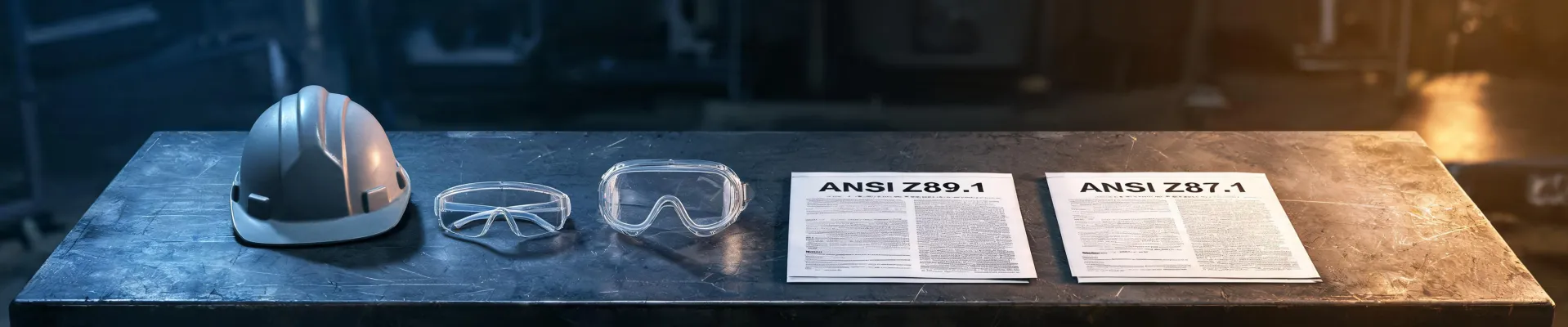
Yes for many crews—but not because it just looks modern. The SL series earns its keep in details: a lower profile that doesn't snag on everything, a ratchet suspension you can adjust while wearing it, and accessory slots for mounting face shields or hearing protection. The vented versions make a real difference in hot environments.
Here's a story. Last March, a plant manager called at 2 p.m. on a Thursday. State audit Monday. His crew had a mix of old hard hats from three different suppliers, and he said, “I don't care what we order—just make it cheap and approved.” So I asked what they actually did. Rooftop work. South Texas. Summer coming. A cheap non-vented hat would have passed the audit and then spent July hanging on a hook because nobody wants to bake under it. Instead, we sent 120 vented SL hats. The audit passed. A few months later, he texted me that workers actually kept wearing them.
That's the piece people miss. The hard hat that protects you is the one you'll actually wear. In 2020, most specs just said “hard hat, ANSI approved.” By 2025, buyers are asking for low-profile shells, vents, and accessories—because the bare minimum is no longer enough for real workdays. That doesn't mean every old-style hat is bad. It means the standard has moved.
Do Pyramex I-Force Safety Glasses Actually Fog Up?
Honest answer: any lens can fog if conditions are severe enough. Anti-fog isn't a force field; it's a resistance. But the I-Force with anti-fog coating is the pair I send first when a client needs eyewear in a hurry.
A few years ago, I compared two models side by side in a humid shop: a standard lens and the anti-fog I-Force, both worn with a mask. The standard lens fogged in under a minute. The I-Force stayed clear through the task. That contrast taught me what I still tell buyers: coating quality matters more than frame style.
I-Force frames are wraparound and low-profile, which means good coverage without feeling like goggles. Look for Z87+ on the temple if you need impact-rated lenses. Clear for indoor work, amber or mirrored for sun. And no, the anti-fog won't last forever—after months of wiping, the coating wears off. When it does, replace the glasses. Don't keep scratching them into safety hazards.
Does Pyramex Make a “Charlie Kirk Bulletproof Vest”?
No. Not now, and no plan to change that.
I mention it because the phrase “charlie kirk bulletproof vest” is a real search term, and occasionally it lands here. I honestly don't know which vest Charlie Kirk wears or what brand he's seen with. That part is outside my lane. What I can tell you is that Pyramex does not make bulletproof vests or ballistic plates.
Pyramex covers industrial PPE: hard hats, safety glasses, bump caps, hi-vis clothing, gloves, and similar gear for workplaces—not firearms protection. A bulletproof vest is a different product category with different standards, usually NIJ-rated, and it should come from a specialist ballistic armor company.
So if you need body armor, buy from someone who lives and breathes body armor. Don't let a “tacticool” look fool you; get the rating you actually need.
Are Lace Up Work Boots Still the Right Match for PPE?
Pyramex doesn't make boots, so I don't have a brand to plug. But I've spent enough time on job sites to have an opinion.
For most work, yes: lace up work boots are better than slip-ons. Laces lock your heel in place, let you adjust as your feet swell through the day, and stay put when you're climbing or walking on uneven ground. Slip-ons are quicker at security checkpoints and in clean rooms, but they tend to move around inside when you need stability.
What actually matters is that the boots meet your site's requirements. Most standards point to ASTM F2413 for impact and compression protection. Then think about environment: composite toe in cold weather, electrical hazard rating if there's live equipment, waterproofing if you're outside in wet conditions. And don't buy a boot that hurts by hour three. Same logic as hard hats—you won't wear what hurts.
Why Is My Fire Alarm Flashing Red?
I'm not a fire alarm technician; I'm the person who gets called when a workplace suddenly needs safety help. But false alarms and red indicator lights come up a lot, so here's a general rule of thumb:
- A quick red blink every 30–60 seconds, with no sound: normal. Many detectors do this just to show the sensor has power. It's the “everything is fine” blink.
- Rapid red flashing, usually with a siren or beep: alarm. Something has triggered the detector—smoke, steam, dust, or actual fire. Treat it like a real alarm until you know otherwise.
- Steady red or red plus yellow, sometimes with a chirp: trouble. Low battery, dirty sensor, or end-of-life.
Different brands use different colors, so the first step is always the manual. In my experience, the most common cause is dust or construction debris inside the detector. Clean it gently, replace the battery if it chirps, and if the unit is near or past ten years old, replace it. NFPA recommends smoke alarms be replaced after ten years. If you can't tell how old it is, that's probably your answer.
Should You Replace a Hard Hat After an Impact?
Yes—even if it looks fine. This surprises people, and I understand why. The shell has no dent, no crack, so it seems wasteful. But hard hats are designed to absorb one significant impact. The energy that would have hit your head goes into the shell and suspension. You don't always get to see that damage.
I'll admit: I used to be casual about this myself. Then I watched a worker walk away from a falling-tool incident that would have been ugly. He wanted to keep wearing the same hat because it “still looked new.” We swapped it from stock instead, and the shell went into the trash. That's the mindset needed.
Other rules: replace after any visible crack, dent, puncture, or chemical exposure, and replace if the suspension is stretched or cracked. Most shells have a date molded into the shell or printed on the label. Hard hats do age—heat and UV break down plastic over time—so don't keep one forever.

Maeve Callahan
Maeve Callahan is a head-protection analyst covering Type I and Type II hard hats, climbing-style safety helmets, bump caps, chin straps, suspensions, liners, and face-shield carriers. She applies ANSI Z89.1, EN 397, and EN 12492 criteria while comparing impact attenuation, penetration resistance, lateral deformation, electrical class, retention strength, field of vision, mass, fit range, and temperature conditioning. Her guides help EHS teams, contractors, utilities, and buyers select helmet systems for overhead hazards, work at height, electrical exposure, accessory compatibility, and worker acceptance.