I did not start out knowing the difference between cap-style and full-brim hard hats. I am an office administrator for a 70-person facility services company, and PPE ordering falls to me. When I took over purchasing in 2020, my approach was simple: find the cheapest thing that looked like what we already bought. Then a supplier let me down in March 2023, and I changed my mind.
We needed replacement safety glasses before an afternoon site audit. I ordered from a vendor that had the lowest quoted price. They arrived four days late, the invoice was a mess, and finance had to call me about it. I looked bad, and the quote ended up costing more than the expensive option would have. That is how I learned to ask what is not included before asking for the price.
The same logic applies to safety products. There is no single best pair of gloves or one universal face shield. The right answer depends on the scenario. Once you sort requests into a few common branches, research gets easier.
Scenario 1: Head, Face, and Eye Protection
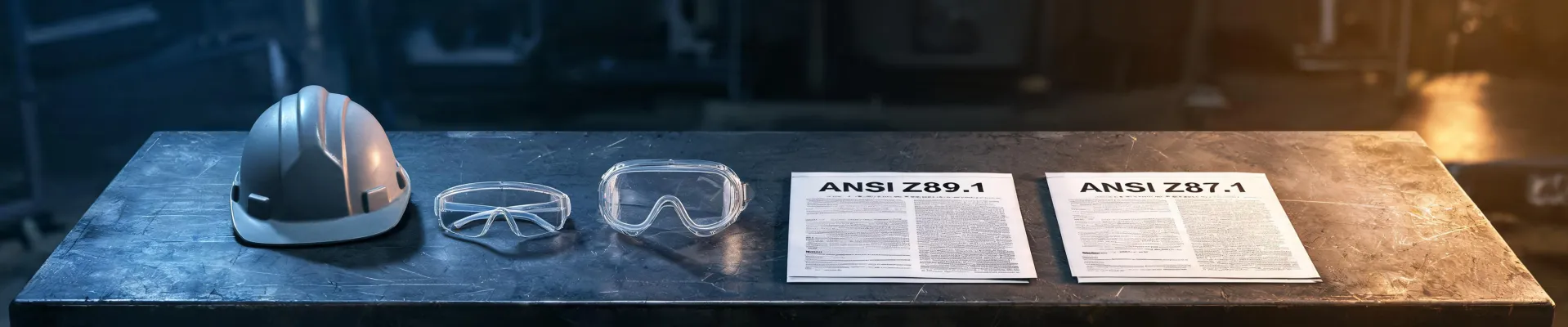
If people work where things can fall, swing, splash, or fly, start with the hard hat. A cap style shell sits closer to the head and works better in tight spaces. A full brim is usually better when people are outside in the sun or rain. For indoor maintenance crews, I keep going back to the Pyramex Ridgeline cap style hard hat because it has a lower profile for equipment rooms and still gives room for accessories like ear muffs or a face shield mount.
When you get to face protection, do not buy blind. I have seen people order a Pyramex face shield for hard hat and then realize it only fits certain hard hat models. Check the shell model and the mounting kit. A shield that meets ANSI Z87.1 on paper will not help if it sits wrong on the hard hat. A face shield should also not replace safety glasses. I order both when the job involves grinding, cutting, or chemicals. The glasses catch impact around the edges; the face shield catches the larger splash or flying debris.
For regular stock, buy enough to keep spares. But for sudden breakage at 7 am, search safety glasses near me before you wait for two-day shipping. Local industrial supply shops charge more, but the cost of a missed shift is way higher. That is not a fun lesson to learn twice.
Scenario 2: The Welding Respirator Request
Another branch starts when someone asks for a welding respirator. This is where I slow down. If a worker is exposed to welding fume above the OSHA limit, a respirator is not just a product to put in a cart. Under 29 CFR 1910.134, a required respirator comes with a respiratory protection program. That means medical evaluation, fit testing, cartridge selection, and training. Even a good respirator will not protect someone if it does not seal, and I do not trust any vendor to know every worker's face.
I also learned to ask what the welder is actually welding. Many welding fumes are particles, and a P100 filter helps with those. But some tasks produce gases like ozone or nitrogen dioxide, and those need chemical cartridges. If you are not sure, ask an industrial hygienist or your safety rep. I am an office administrator, not a chemist, so I do not guess on that one.
Scenario 3: Can I Use Nitrile Gloves for Food Prep?
This question comes up more than you would think. It is not just a home cook question. It happens in facilities where the same person moves from maintenance work to break-room duty. Short answer: nitrile gloves can be fine for food prep, but not every nitrile glove is food-safe.
Nitrile is a material. Food safety depends on the whole glove. Industrial nitrile gloves used for painting, cleaning, or parts washing may contain colorants and additives that are not tested for food contact. The box should state that the gloves meet FDA food-contact requirements. Color is not proof. Blue nitrile is common in food settings because blue makes tears visible and supports color-coding, but I still check the label.
I also keep a dedicated glove bin for food prep. The workshop gloves stay in the workshop. If somebody grabs the wrong pair, a glove that is chemically okay for handling parts is not automatically okay for handling a sandwich. Keep the supply lines separate.
How Do I Know Which Scenario I'm In?
Use this quick filter when a request lands on your desk:
- Is there an overhead, impact, splash, or flying-object hazard? That is the head and face branch. Look for a hard hat, face shield mount, and Z87+ safety glasses.
- Does the task create fume, smoke, vapor, or dust that might exceed exposure limits? That is the respiratory branch. Stop and get fit testing and cartridge selection before buying.
- Will hands touch food, utensils, or food-contact surfaces? That is the food-safe glove branch. Read the label and keep industrial gloves away.
- Is this an emergency because PPE broke today? That is the local replacement branch. Search safety glasses near me, buy what is available, then restock properly.
If you cannot figure out the branch, ask the person doing the job what hazard they actually face. That sounds simple, but it is the step I used to skip. I used to try to make one order cover everyone. Now I ask one question before opening a spreadsheet: what are they doing?
The Pricing Habit That Keeps Me Honest
Last thing: when you compare suppliers, compare the final total, not the line price. I have learned to ask what is NOT included before asking what something costs. Does the quote include freight? Does it include the mounting brackets for a face shield? Is there an order minimum? Will they split shipments and add a charge later?
During our 2024 vendor consolidation project, I realized I was paying three different freight fees for the same types of products. Consolidating orders cut our ordering time and made pricing easier to audit. A supplier that shows a clear total up front, even if it is not the absolute lowest price, usually costs less in the end.
I am not saying I never try a new safety vendor. I treat the first order as a test. I pay attention to whether the invoice matches the quote before I send a bigger purchase order later. Safety gear is not a place to guess, and it is not a place to hide fees. Pick the branch, verify compatibility, confirm the compliance paperwork, and then compare the total cost. You can buy hard hats, face shields, glasses, respirators, and gloves without feeling like a safety expert.

Maeve Callahan
Maeve Callahan is a head-protection analyst covering Type I and Type II hard hats, climbing-style safety helmets, bump caps, chin straps, suspensions, liners, and face-shield carriers. She applies ANSI Z89.1, EN 397, and EN 12492 criteria while comparing impact attenuation, penetration resistance, lateral deformation, electrical class, retention strength, field of vision, mass, fit range, and temperature conditioning. Her guides help EHS teams, contractors, utilities, and buyers select helmet systems for overhead hazards, work at height, electrical exposure, accessory compatibility, and worker acceptance.