-
Why My First Big Hard Hat Order Was a Disaster
-
What the Total Cost of Compliance Actually Looks Like
- Pyramex Ridgeline vs. SL Series: They Solve Different Problems
-
Mens Leather Gloves: The Silent Budget Killer
-
How to Find Hard Hats and Work Boots Near You
-
When the Budget Option Is Actually Fine
-
A Note on Marketing Claims
The most expensive hard hat you'll ever buy is the one your crew leaves in the truck. I learned that the hard way in 2018, when I saved $2,800 on a bulk order of budget helmets—and the decision ended up costing us about $6,400 in replacements, lost inventory, and my time. So if you're comparing a pyramex ridgeline vented full brim hard hat against a pyramex sl series cap style hard hat, stop looking at price tags first. Buying PPE on unit price alone is the quickest way to waste your safety budget.
I'm a safety manager for a 60-person construction crew in Tennessee, and I've been handling PPE orders for seven years. I've personally made—and documented—11 significant buying mistakes, totaling roughly $15,000 in wasted budget. Now I maintain our team's purchasing checklist so the next person doesn't repeat my errors. This is that checklist, minus the tuition.
Why My First Big Hard Hat Order Was a Disaster
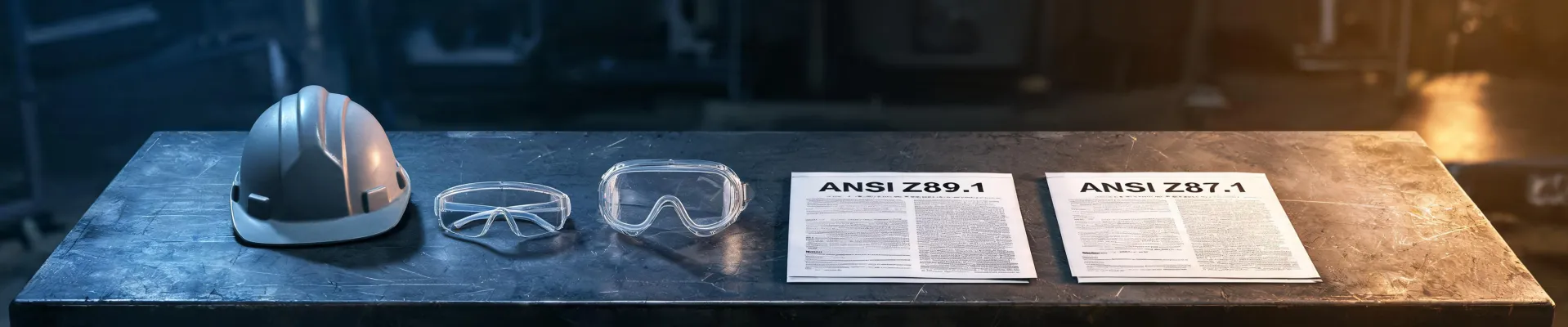
The 2018 order seemed fine on paper. Two hundred cap-style helmets, ANSI Z89.1 compliant, and the quote beat every comparable bid by about 30%. I checked the specs, confirmed the certification, and placed the order. What I didn't check was whether my crew would actually wear them.
The shells were stiff, and the suspension ratchets stripped after a few weeks of daily use. My roofers and framers started leaving them in their trucks. I'd walk a job site and see four guys in baseball caps. That's not a conversation you want to have with an OSHA inspector.
By the six-month mark, we'd bought 60 replacement helmets, "lost" another 30 (translation: abandoned in vehicles), and burned roughly 40 hours of my time on reorders and compliance documentation. The $2,800 I saved upfront was gone, and the real damage was closer to $6,400 when I counted everything. That's when I started calculating total cost of ownership on every PPE purchase.
What the Total Cost of Compliance Actually Looks Like
Here's what I now call the Total Cost of Compliance. It includes the unit price, plus replacement frequency, plus the hidden costs of non-compliance, plus the time your supervisors spend chasing equipment. It took me three years and about $15,000 in bad purchases to understand that these hidden costs matter more than any line item. The $500 hard hat that lasts five years and gets worn daily is cheaper than the $8 hard hat that gets left in a truck after a week.
Pyramex Ridgeline vs. SL Series: They Solve Different Problems
After the 2018 disaster, we moved most of the crew to Pyramex. The two lines that have earned the bulk of our orders are the Ridgeline vented full brim and the SL series cap style. Both meet ANSI Z89.1. But they're not interchangeable, and knowing which workers get which model is where the real savings are.
Pyramex Ridgeline Vented Full Brim: Our Outdoor Default
We're in Tennessee, which means eight months of the year are hot enough to make workers hate wearing head protection. The Ridgeline's ventilation plus full brim makes a real difference in that climate. The brim keeps sun and rain off the neck—something I didn't appreciate until a supervisor pointed out that rain had been running down his collar on his old cap-style helmet. And on 90-degree days, the vented shell is noticeably cooler than a solid one. I've seen fewer workers pulling their helmets off during breaks and "forgetting" to put them back.
One caution: vented helmets may not be suitable for work near energized electrical equipment. Check the ANSI class rating before choosing a vented model. It's one of those details that can turn a "great value" into a "serious violation."
Pyramex SL Series Cap Style: Not Just the Budget Pick
I initially assumed the SL series was just the cheaper alternative because it's a cap-style design. I was wrong. It's lighter and lower-profile, which makes it the better choice for confined spaces, for workers who need a welding hood over their helmet, and for anyone who wears earmuffs alongside their head protection. The ratchet adjustment is also easier to dial in than the fixed-position suspension on some other helmets, which means workers actually fit it properly instead of letting it wobble.
We keep about a third of our crew in the SL series, mostly welders and guys doing tight-space work. If I'm honest, putting everyone in a full-brim Ridgeline would have been a mistake—it's that kind of crew-by-crew variation that drives the total cost down.
And here's the frustrating part: there's no single "best" Pyramex hard hat. The answer depends on your site, your climate, and your workers. You'd think premium features would mean higher compliance, but some guys swear by the wide brim and others call it a mushroom and refuse to wear it. Trial runs with a few sample units are worth more than any spec sheet.
Mens Leather Gloves: The Silent Budget Killer
"Mens leather gloves" is one of those searches that usually ends with someone grabbing the cheapest multi-pack online. I get it—gloves are consumables, and nobody wants to blow the budget on something that'll be soaked in oil by Friday. But the math works against the cheap stuff, and it took a 300-pair order in 2023 to fully learn it.
I ordered budget split-leather gloves at about half the price of the grain-leather pairs we'd been using. My logic: same protection, lower cost, why not? The answer showed up in our supply cabinet. Those budget gloves lasted about a week. The better gloves lasted three to four times longer. When I started tracking it per worker:
- Budget gloves: $4 per pair × roughly 25 pairs per worker per year = about $100 per worker per year
- Quality gloves: $9 per pair × roughly 8 pairs per worker per year = about $72 per worker per year
That's $28 per worker saved per year with the higher-quality glove—around $1,700 across our crew. Plus fewer hand lacerations, which made our workers' comp numbers look better. (Oh, and I should add: reordering 25 times a year instead of 8 times meant more of my own time wasted too.) Same trap as the hard hats, just with smaller numbers.
How to Find Hard Hats and Work Boots Near You
I get asked about local sourcing a lot. People type "hard hat near me" or "who sells brunt work boots near me" into Google and click whatever comes up first. That works in a pinch, but it's not the full solution.
My advice: build a relationship with one dedicated safety supply house. Not a big-box store—a place that specializes in PPE. The counter staff at those shops know the difference between a Type 1 and Type 2 hard hat, stock suspension replacement parts, and will talk you through a compliance question. One owner told me:
"If you want the cheapest hard hat, there are plenty of places online. If you want one your guys will keep on their heads, come talk to me."
He wasn't wrong. And the same logic applies to work boots. When someone asks me where to get Brunt boots locally, I send them to the workwear outfitter we use. They carry multiple boot brands, they can properly size people, and they actually stock replacements. Buying work gear from a specialist instead of a generalist is a total-cost decision, not a convenience one.
When the Budget Option Is Actually Fine
I don't want to be the guy who tells you every PPE purchase needs to be premium. There are legitimate cases where the cheapest hard hat is the correct choice:
- Visitor helmets for a one-day site tour
- Short-term projects in low-risk environments
- Spare helmets kept for rare operations
But if your crew wears it every day, cheap won't stay cheap for long. That's been the most consistent lesson of my purchasing career.
A Note on Marketing Claims
One last thing. Ignore absolute claims like "never fogs" or "indestructible." Per FTC guidelines (ftc.gov), advertising claims need to be truthful and substantiated—but that doesn't mean every slogan holds up on a real job site. No hard hat survives a 20-foot drop onto rebar. No safety lens stays fog-free forever. Buy gear with the right ANSI ratings and comfort level for your crew. That combination is what actually drives the total cost down.
Don't hold me to the exact math in this article—those savings numbers are estimates, not audited figures. But the direction is right: the cheapest option upfront is rarely the cheapest option overall. It took me $15,000 to learn that. Hopefully it doesn't cost you the same.

Maeve Callahan
Maeve Callahan is a head-protection analyst covering Type I and Type II hard hats, climbing-style safety helmets, bump caps, chin straps, suspensions, liners, and face-shield carriers. She applies ANSI Z89.1, EN 397, and EN 12492 criteria while comparing impact attenuation, penetration resistance, lateral deformation, electrical class, retention strength, field of vision, mass, fit range, and temperature conditioning. Her guides help EHS teams, contractors, utilities, and buyers select helmet systems for overhead hazards, work at height, electrical exposure, accessory compatibility, and worker acceptance.