-
Who is responsible for buying PPE? Let's settle this first
-
The problem with being a small PPE buyer
-
Pyramex Ridgeline cap style hard hat reviews: what I kept finding
-
Pyramex safety vests: high visibility only works if people wear it
-
A quick note on BOA work boots
-
The pushback I always get: isn't meets standard enough?
-
Bottom line
Let me get the controversial part out of the way first: if you're a worker, your employer is responsible for buying PPE. If you're the one who actually writes the purchase order, the responsibility lands on you. And if you're a small operation like ours, you quickly find out that not every PPE supplier is willing to take a small customer seriously. That last point is a big part of why I've become a repeat Pyramex buyer—and why I wanted to put this in writing for anyone stuck in the same position.
I manage safety purchasing for a 130-person industrial services company. I'm not a safety engineer. I'm the office administrator who orders about $50,000 a year in PPE, processes 60-80 orders annually, and answers questions like 'what kind of safety vest do we need?' From the first time I had to research Pyramex safety vests, read Pyramex Ridgeline cap style hard hat reviews, and settle a request for BOA work boots, I learned that the real question underneath all of it is 'who is responsible for buying ppe?'
Here's my opinion, stated up front: the supplier you pick matters as much as the regulation you quote. A $15 hard hat that workers refuse to wear is worthless. A compliance box that treats small buyers like an inconvenience is a red flag. And the person who says PPE is just common sense is usually not the person who has to replace it after someone gets hurt.
Who is responsible for buying PPE? Let's settle this first
The legal answer is straightforward enough. OSHA's general PPE standard, 29 CFR 1910.132, says employers have to assess workplace hazards and provide the protective equipment that comes out of that assessment. OSHA's PPE payment rule goes one step further: the employer generally has to pay for required PPE, not the employee. There are some exceptions for everyday clothing and non-specialty footwear, so don't quote that rule for every scenario. But for things like hard hats, safety glasses, and high-visibility safety vests required by company policy, the answer is clear.
Employers must provide PPE at no cost to the employee, with limited exceptions for ordinary clothing and non-specialty footwear. (OSHA, 29 CFR 1910.132(h))
In practice, though, the person responsible is whoever gets assigned to place the order. That's often someone like me, not an EHS director. The deeper question is less about liability and more about whether anyone will notice when a cheap version of a hard hat or safety vest sits unused on a shelf. I try to be that person.
The problem with being a small PPE buyer
Here's the thing that most safety content doesn't talk about: small buyers get treated differently. Our first Pyramex order was a few hundred dollars. I still got a real inventory check, a realistic ship date, and the ANSI certification sheets without asking three times. I've had other suppliers ignore me until I could quote a bigger annual volume. I don't trust that kind of response; I assume they'll ignore me during an emergency too.
When I started out, the vendors who treated my $300 orders seriously are the same ones I use now even as our spend has grown. Small doesn't mean unimportant—it means potential. That idea shapes how I buy nearly everything.
In our 2024 vendor consolidation project, I moved most PPE lines to one distributor that stocks Pyramex. It cut a full afternoon of ordering down to about an hour a month. That doesn't sound huge, but it means the orders actually get done on time instead of getting pushed to Friday afternoon. The main reason I chose them wasn't a fancy sales pitch; it was that they treated a mid-size order the same way they treated the first small one.
Pyramex Ridgeline cap style hard hat reviews: what I kept finding
Before I bought Ridgeline hard hats, I read what felt like every Pyramex Ridgeline cap style hard hat review I could find. Actually, more than I'd like to admit. The pattern in the reviews matched what I wanted: workers liked the lower profile, the ratchet suspension was easy to turn with gloves on, and the accessory slots lined up with common hearing protection and faceshields.
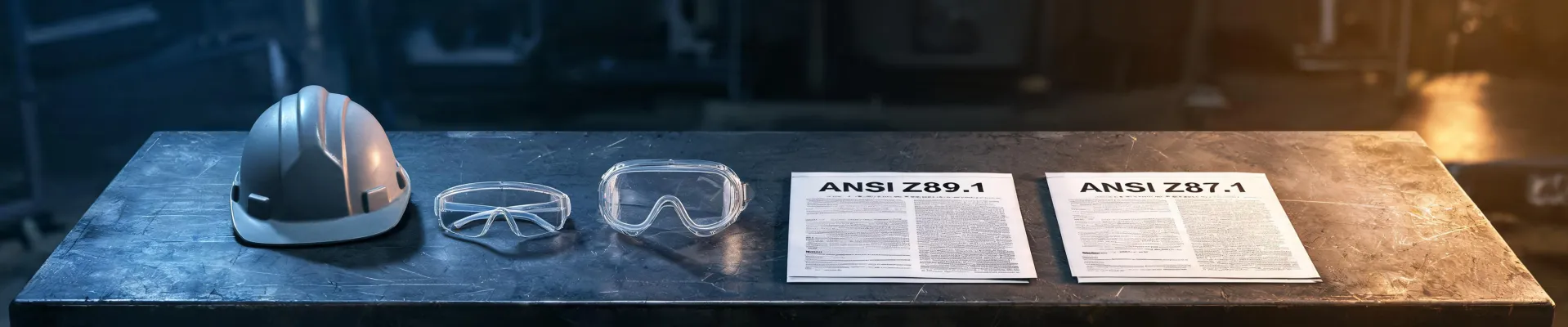
The Ridgeline is a cap-style hard hat, not a full-brim, which makes a difference in tight spots. It's also a Type 1 helmet under ANSI Z89.1, meaning it's tested for impacts to the top of the head. If you need lateral impact protection, you need a Type 2 model. That was my first lesson in buying hard hats: the certification details matter more than the color chart.
Why did the Ridgeline win? The six-point suspension. It spreads the weight of the helmet better than a four-point does, and the ratchet adjustment means I don't need to order a bunch of separate head sizes. The low profile also means fewer bumps on low pipes, which was the biggest complaint with the old full-brims we used before.
One review warning stuck with me: don't buy 30 hard hats after reading reviews alone. Buy one, pass it around, let the pickiest worker adjust the suspension, and see if it works with the rest of your safety gear. We did that. The test helmet came back with a 'this is fine' from a guy who complains about everything, which is basically a glowing review.
Pyramex safety vests: high visibility only works if people wear it
Now for the Pyramex safety vests part of the conversation. I'll be blunt: a stiff, swampy safety vest gets thrown under a truck seat and forgotten. That's how mandatory visibility becomes optional. We buy ANSI/ISEA 107-rated vests, usually Class 2 or Class 3 depending on the job, but the class on the label doesn't help if the vest is too hot to wear in July.
The breathable mesh Pyramex vests solved that problem for us. They're light enough that workers stopped treating them as a punishment. I also prefer vests with a zipper instead of snaps, because the front stays flat and doesn't catch on equipment. Pockets matter too, but you have to set limits. We had to stop workers from turning a safety vest into a mobile toolbox, but that's a management issue, not a vest issue.
The biggest lesson came when I compared two almost identical-looking safety vests side by side. One was a $15 generic model; the other was a Pyramex vest at about twice the price. On paper they were both ANSI Class 2. In real use, the differences showed up in the fabric, the strap placement, and how easy the zipper was to grab with gloves. Seeing that contrast made me realize that 'meets standard' and 'actually worn' are two different things. The cheaper version was not the cheaper overall option once I counted the cost of buying replacements and nudging people to wear them.
A quick note on BOA work boots
BOA work boots are not a Pyramex product, and I'm not going to pretend to be a boot reviewer. But they show up in every PPE buying conversation eventually. If your company requires composite toe or steel toe boots, someone has to decide who pays for them. In my reading of the OSHA payment rule, the employer generally pays for required safety footwear too, with some exceptions. So leaving the footwear policy vague is how you end up with a purchase request for $300 BOA boots and a 'the website said I need these' conversation.
The BOA dial system is genuinely popular. It's easy to adjust and there are no laces to catch on equipment. But the cost difference is real. A clear policy works better: the company covers the required safety-toe boot up to a defined amount, and if someone wants the premium BOA version, they can pay the difference. I'm not a lawyer, so have someone in compliance check that, but at least have the conversation before the reimbursement form shows up.
The pushback I always get: isn't meets standard enough?
Sure, you can buy the cheapest product that meets the standard. I've been tempted. The regulations are a floor, not a ceiling. A hard hat that meets ANSI Z89.1 is still compliant even if it feels awful. A safety vest that meets ANSI/ISEA 107 is still compliant even if it's too hot. But compliance is not protection when the gear is sitting on a hook in the break room.
The conventional wisdom says to buy to the standard and let workers pick what they like. My experience with hundreds of orders says the standard is just the starting line. Uncomfortable PPE is abandoned PPE. Abandoned PPE causes injuries, and injuries are expensive. That's why I would rather spend a little more on a hard hat or safety vest that people will actually wear.
The most frustrating part of this job is the repeating conversation: a manager asks for PPE without a spec, a worker asks for the good stuff without defining what that means, and accounting wants a price that stopped making sense back in 2020. You'd think the process would get easier after a few years. It doesn't. But a supplier who speaks plainly makes it less exhausting.
Bottom line
So who is responsible for buying PPE? Legally, the employer. Practically, the person who writes the purchase orders. And rightly, the supplier who decides whether a small order is a nuisance or a future account. Pyramex is not the only brand that gets this right, but they are one of the few that made my life as a small buyer easier. The Pyramex Ridgeline cap style hard hat reviews matched what we saw in real use, the safety vests actually get worn, and the vendor relationship has been consistent.
Bottom line: buy from suppliers who take small customers seriously, choose PPE that workers will wear, and settle the responsibility question before someone gets hurt—not after. That's the part of the job that won't show up on an invoice.

Maeve Callahan
Maeve Callahan is a head-protection analyst covering Type I and Type II hard hats, climbing-style safety helmets, bump caps, chin straps, suspensions, liners, and face-shield carriers. She applies ANSI Z89.1, EN 397, and EN 12492 criteria while comparing impact attenuation, penetration resistance, lateral deformation, electrical class, retention strength, field of vision, mass, fit range, and temperature conditioning. Her guides help EHS teams, contractors, utilities, and buyers select helmet systems for overhead hazards, work at height, electrical exposure, accessory compatibility, and worker acceptance.