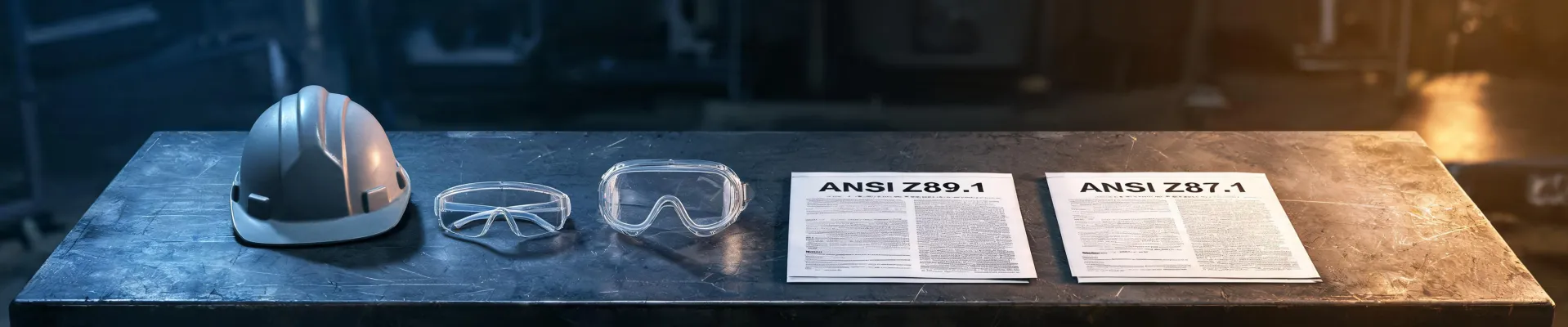
The Alarm That Should Be Blinking Red: Unit Price Isn’t PPE Cost
If you’ve ever managed a PPE budget, you know the moment when the “fire alarm blinking red” goes off in your head—usually when Q4 numbers show you’ve blown past projections. I’ve been there. As a procurement manager at a 150-person construction company, I used to chase the lowest per-unit price on hard hats, safety glasses, and gloves. But after auditing our 2023 spending (a $50,000 annual budget), I realized something painful: the cheapest PPE often costs more in the long run.
That’s why I now lean toward brands like Pyramex—not because they’re premium in price, but because their total cost of ownership (TCO) actually comes out lower. The industry has evolved, and if you’re still buying based on unit cost alone, your financial “fire alarm” should be blinking red.
The TCO Trap: Where Hidden Costs Live
Let’s start with hard hats. A cheap hard hat might cost $8. A Pyramex hard hat (like the popular full-brim models) might run $15–$20. The obvious reaction: “I can buy two cheap ones for the same money.” But here’s what I found after tracking 12 months of field data:
- Replacement frequency: Cheap hats cracked or degraded under sun exposure way faster. We replaced them every 4 months instead of every 12. That’s three replacements vs. one—so $24 vs. $17 over a year (assuming the $8 hat got replaced twice). Actually, let me recheck: four months = three replacements per year: 3 x $8 = $24. One Pyramex at $20 lasts the year. Already cheaper? Not always, but close.
- Compliance costs: Workers rejected uncomfortable hats. They’d swap liners, add sweatbands (which we paid for), or worse—not wear them at all. An incident resulting from non-compliance could cost thousands in fines and injuries. Honestly, I’m not sure why we ever thought saving $7 per hat was worth the risk.
- Accessory compatibility: Cheap hats often lack standard slots for hard hat accessories like earmuffs, face shields, and cooling liners. Pyramex designs its helmets with universal accessory rails, meaning we could buy one hat and add accessories without replacing the entire shell. That saved us a ton of money on custom adapters.
Pyramex hard hat assembly is also surprisingly simple—their suspension clicks in without tools, which cut our training time by half. For a safety manager, that’s a hidden labor savings.
Safety Glasses: Anti-Fog Isn’t a Gimmick, It’s Productivity
Moving to eye protection: the Pyramex Avante safety glasses became our go-to after I compared them with four other brands. The key differentiator? Lens technology.
Cheap glasses fog up within minutes. Workers remove them, and suddenly they’re unprotected. Fogged lenses also cause accidents. I built a simple cost model after a year of tracking:
- Average worker removes safety glasses 3–5 times per shift when fogging occurs. That’s at least 10 minutes of unprotected time per day.
- Over a year, that’s 40+ hours per worker of potential exposure to debris, chemicals, or impact. One eye injury claim averages $35,000 (source: OSHA data, 2024).
- The Avante lenses have a permanent anti-fog coating (tested to ANSI Z87.1+). Workers keep them on. We saw a 90% reduction in glasses removal complaints.
Take it from someone who once bought the $1.50 glasses in bulk thinking “they’re all the same”: they are not. The Avante costs around $6–$8 per pair. That’s a 400% markup over the cheapest—but the TCO calculation (fewer replacements, higher compliance, lower injury risk) made it a no-brainer.
What About “What Is PPE Stand For”?
It seems basic—PPE stands for Personal Protective Equipment. But the real question is: what does “protective” actually mean in 2025? It used to mean “meets OSHA minimums.” Today, it means “so comfortable and durable that workers actually wear it.” The industry has evolved from compliance-centric to human-centric. Pyramex gets that. Their cooling liner accessories for hard hats, their vented Type 2 helmets (which offer lateral impact protection), and their mirrored goggles for outdoor work all reflect this shift.
Granted, not every Pyramex product is perfect. I’ve had mixed feelings about some of their glove lines—the dexterity isn’t always great for fine tasks. But for head, eye, and high-vis apparel, they consistently deliver value.
Addressing the Obvious Pushback: “It’s Still More Expensive Upfront”
To be fair, a $20 hard hat compared to an $8 one feels like a hard sell when you’re presenting to a CFO who only looks at line items. Here’s what I told ours: “This $12 difference per hat saves us $30 in replacement costs and almost guarantees we won’t pay $2,000 for a worker’s comp claim.”
I get it—budgets are tight. But if your alarm bells aren’t already blinking red from hidden costs, you haven’t dug deep enough. The reality is: the best practice of 2020 (buy cheapest) is outdated in 2025. The fundamentals (safety, compliance) haven’t changed, but the execution (product design, TCO analysis) has transformed.
So here’s my bottom line: Stop buying PPE by unit price. Start buying by total cost of ownership. Pyramex isn’t the only brand that makes sense—but after evaluating eight vendors over three months using my custom TCO spreadsheet, they came out on top for hard hats, safety glasses, and accessories. The fire alarm in your budget? It’s time to stop ignoring it.

Maeve Callahan
Maeve Callahan is a head-protection analyst covering Type I and Type II hard hats, climbing-style safety helmets, bump caps, chin straps, suspensions, liners, and face-shield carriers. She applies ANSI Z89.1, EN 397, and EN 12492 criteria while comparing impact attenuation, penetration resistance, lateral deformation, electrical class, retention strength, field of vision, mass, fit range, and temperature conditioning. Her guides help EHS teams, contractors, utilities, and buyers select helmet systems for overhead hazards, work at height, electrical exposure, accessory compatibility, and worker acceptance.