The Budget Blowout That Made Me Rethink Everything
I remember the Q2 2024 audit like it was yesterday. We'd already spent $15,000 on safety glasses for the year—double the budget. And the emails from the site foreman kept coming: 'These fog up before lunch.' 'The frames are already cracked.' 'Can we go back to what we had before?'
This is the problem most buyers don't see coming. You pick a product based on price, it passes the initial check, and then the hidden costs start piling up. Replacement orders. Productivity loss from fogged-up lenses. Compliance headaches when workers won't wear what you bought.
I've been managing PPE procurement for a mid-sized construction firm for about 6 years now. We spend roughly $45,000 annually on head-to-toe protection. And I've made just about every mistake you can make—especially the one where I thought a lower unit price meant a lower total cost.
Let me walk you through what I've learned. It might save you a similar headache.
I'm a procurement manager at a 40-person construction company. I've managed our PPE budget ($45,000 annually) for 6 years, negotiated with 15+ vendors, and documented every order in our cost tracking system. (Should mention: I'm not a safety engineer, so I can't speak to all the technical standards—I focus on the procurement side.)
The Surface Problem: Your Budget Is Bleeding, But Why?
The obvious sign is budget overruns. You allocated $12,000 for eyewear, and you're at $18,000 by mid-year. The easy conclusion? 'We need cheaper products.'
But that's not the full picture. What's really happening is a mismatch between what you're buying and what your crew actually needs.
Most buyers focus on unit price and completely miss the costs that add 30-50% to the total: shipping, setup fees, and quality failures. I call this the iceberg model—the unit price is what you see above water; everything else is below.
For instance, with safety glasses, the 'budget' option might be $3.50 per pair. But if half your crew complains they fog up and stop wearing them, you're reordering within 60 days. That's not a $3.50 cost—that's $7.00 plus the downtime from workers not wearing protection.
The Real Cost of 'Cheap'
In 2023, I compared two vendors for our quarterly order of 200 pairs of safety glasses. Vendor A quoted $3.25/pair with free shipping. Vendor B quoted $5.80/pair including anti-fog coating and a scratch-resistant lens. I almost went with Vendor A until I did the math:
- Vendor A: 200 pairs at $3.25 = $650. Plus we'd need reorders when they scratched or fogged—roughly 2x per year. Total: $1,950/year.
- Vendor B: 200 pairs at $5.80 = $1,160. But we only reordered once (for lost pairs, not quality issues). Total: $1,160/year.
The 'cheap' option cost $790 more annually. That's a 40% premium hidden in fine print.
The Deep Cause: Why We Keep Making the Same Mistake
Here's the thing—most procurement professionals aren't stupid. We know total cost matters. So why do we keep falling for the lowest unit price?
What most people don't realize is that procurement systems are often set up to reward the lowest initial quote. Quarterly performance metrics track 'cost per item,' not 'cost per month of useful service.' You're essentially being incentivized to make the wrong call.
Everything I'd read about PPE procurement said to focus on the upfront cost per unit. In practice, I found the exact opposite: the products with higher upfront costs but better durability and worker acceptance always win on total cost.
The conventional wisdom is that workers will wear whatever you give them if it meets safety standards. My experience with 200+ orders suggests otherwise. If the glasses fog, if the hard hat is uncomfortable, if the gloves reduce dexterity—they'll find ways around it. And that's where real costs mount: injuries from non-compliance.
The Cost of Not Fixing This (It's Worse Than You Think)
Let me give you a concrete example from Q2 2024. We switched to a lower-priced hi-vis vest to save $2 per unit. Within 3 months, we had:
- 14 vests returned for tearing at the seams
- 8 replacements ordered (rush shipping, +55% premium)
- 2 near-miss incidents because the reflective tape peeled off
- 1 safety audit flagged for non-compliant vests in inventory
The $200 we saved on the initial order cost us roughly $1,400 in reorders, rush fees, and audit remediation. That's a 7x multiplier on the 'savings.'
I've only worked with mid-sized construction firms, so I can't speak to how this applies to large industrial operations. But the principle is universal: the hidden costs of poor-quality PPE aren't just financial. They include worker safety, compliance risk, and productivity.
To be fair, I get why people go for the cheapest option. Budgets are tight, and the person making the purchase isn't always the person wearing the gear. But that disconnect is exactly where the hidden costs live.
What Actually Works (From Someone Who's Tried It)
So what's the alternative? It's not about buying the most expensive option either. It's about shifting your focus from 'cost per unit' to 'cost per month of use.'
Here's what I've found works after 6 years of trial and error:
1. Get samples first. Don't order 200 pairs of anything without testing 5-10 pairs on your actual crew for a week. Their feedback will tell you more than any spec sheet.
2. Calculate total cost with a 12-month horizon. Factor in expected replacement rate, shipping for reorders, and the cost of any compliance issues. Most vendors will help you do this if you ask.
3. Choose vendors who specialize. The vendor who said 'this isn't our strength—here's who does it better' earned my trust for everything else. I'd rather work with a specialist who knows their limits than a generalist who overpromises.
4. Build relationships, not transactions. When you find a supplier who consistently delivers quality, stick with them. The marginal savings from switching vendors rarely outweighs the risk of quality issues.
At this point, you're probably wondering about specific products. I've had good experiences with Pyramex for safety glasses—their anti-fog options saved us about 3 reorder cycles per year. And their hydro dipped hard hats actually get worn because workers like the look. But I'm not saying they're perfect for everyone. What works for my crew might not work for yours.
One Last Thing
I should add that none of this matters if you don't track it. I built a simple spreadsheet that tracks every order by product type, price, date of first complaint, and date of replacement. It took about 2 hours to set up, and it's saved me thousands in bad purchasing decisions.
That Q2 2024 audit I mentioned? It was the wake-up call. We now have a policy that any new PPE order over $500 requires a 10-unit field test first. In 2024, we cut our reorder rate by 60% and our total PPE spend by 22%. Not because we bought cheaper—because we bought smarter.
If you're tracking similar numbers and seeing budget overruns, take a hard look at the product quality, not just the price. The answer might surprise you.
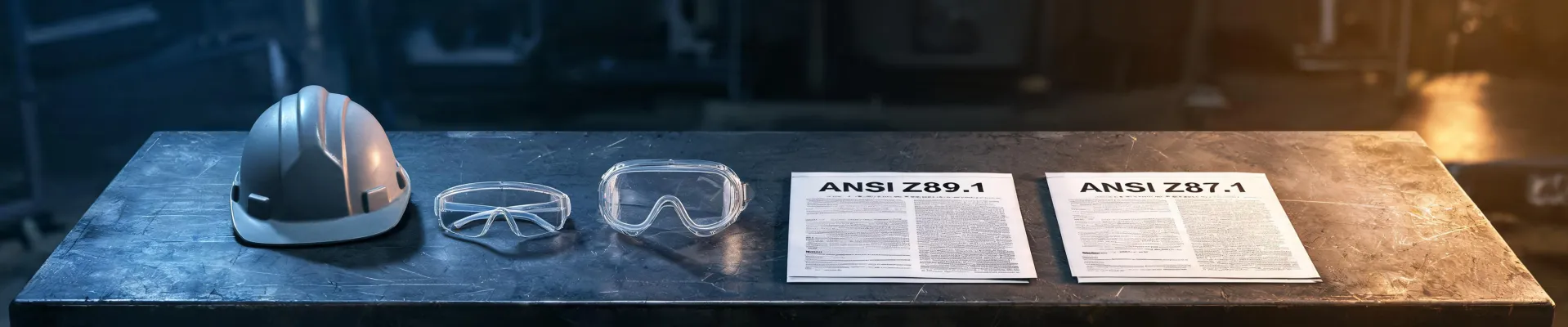
Standards cited: ANSI Z87.1-2020 for eye and face protection. Test methods and performance requirements. Referenced for compliance verification purposes.

Maeve Callahan
Maeve Callahan is a head-protection analyst covering Type I and Type II hard hats, climbing-style safety helmets, bump caps, chin straps, suspensions, liners, and face-shield carriers. She applies ANSI Z89.1, EN 397, and EN 12492 criteria while comparing impact attenuation, penetration resistance, lateral deformation, electrical class, retention strength, field of vision, mass, fit range, and temperature conditioning. Her guides help EHS teams, contractors, utilities, and buyers select helmet systems for overhead hazards, work at height, electrical exposure, accessory compatibility, and worker acceptance.