-
Hard Hat vs Safety Helmet: The Label Matters More Than the Name
-
Why Pyramex Ridgeline Hard Hats Stayed on Our Crews
-
Pyramex Full Brim Hard Hat Accessories Keep Reordering Simple
-
The Math Behind Spending a Few More Dollars
-
SRL Fall Protection and Work Boots Follow the Same Rule
-
Isn't This Just Overbuying?
Let me state my position up front: I don't treat a hard hat as a commodity. I know that sounds strange from a procurement manager, but after six years of buying PPE for a construction company with about 140 field employees, I've learned that the cheapest head protection often costs the most in the end.
The problem isn't only the shell. It's what happens when workers don't like the fit and leave the hat in the truck. A hard hat only protects when it is worn. That simple fact changed how I buy everything, not just helmets.
Hard Hat vs Safety Helmet: The Label Matters More Than the Name
I get asked about the hard hat vs safety helmet debate more than I expected. A lot of the conversation treats it like one style is outdated and the other is the future. That misses what matters. According to OSHA's construction standard, 29 CFR 1926.100, employees must wear protective helmets when they face possible head injury from impact, flying or falling objects, or electrical hazards. OSHA doesn't care whether you call it a hard hat or a safety helmet; it cares that the hazard is covered.
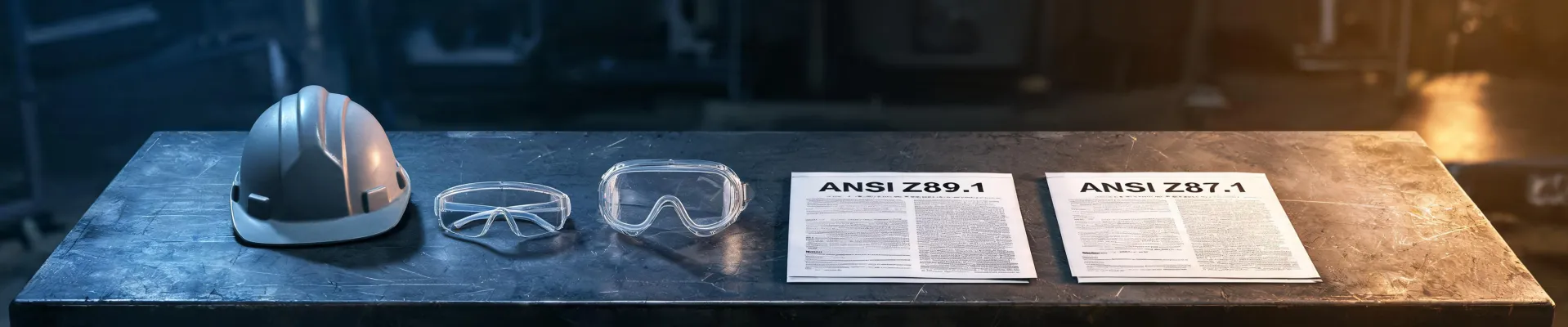
In the U.S., the practical measuring stick is ANSI/ISEA Z89.1. A Type I helmet is tested for impact to the top of the head. A Type II helmet is tested for impact to the top and side of the head. If the product doesn't carry that label, the name is just marketing.
So for us, the real question was never hard hat vs safety helmet. It was: does this product fit the work and will crews actually keep it on? That's what got me looking at Pyramex Ridgeline hard hats.
Why Pyramex Ridgeline Hard Hats Stayed on Our Crews
In the spring of 2023, we ran a small pilot with Pyramex Ridgeline hard hats on two crews. The crews didn't ask for a different brand. They asked why we hadn't ordered them sooner.
The feedback started with the full brim. It shades the ears and neck, which matters on open sites in the South. It also sheds rain instead of letting it run down someone's collar. That might sound like a small detail until you've been on a wet site with a cap-style hard hat for six hours.
The ratchet suspension was the other thing crews noticed. Workers can adjust it in a few seconds, even with gloves on. A loose hard hat gets shoved into a truck's rear window; a hat that fits stays where it belongs.
Pyramex Full Brim Hard Hat Accessories Keep Reordering Simple
From a buyer's perspective, I care about what happens after the first order. Pyramex full brim hard hat accessories are available through our regular safety distributors, which means I don't have to chase odd sizes. We order chin straps for workers at height, winter liners for cold mornings, and replacement suspension parts for damaged hats. Since they fit the same shells, our stock stays consistent.
For a company our size, that consistency is worth real money. If we used five different helmet models, every new hire would need a different liner or chin strap. Standardizing on one full-brim line reduces mistakes and keeps the equipment room organized.
The Math Behind Spending a Few More Dollars
Here is where my inner accountant wants to interrupt. If you compare only unit price, a cheap cap wins. I've made that mistake. Total cost includes replacements, returns, and the behavior of the person wearing the hat.
Before we switched, I bought a batch of bargain caps. They looked fine in the product photos. When we opened the boxes, the suspension clips felt brittle, and the safety manager rejected most of the order. That money was gone. No injury, thankfully, but the lesson stuck: a hard hat that gets rejected isn't a bargain.
The conventional wisdom says hard hats are commodities once they meet ANSI. On paper, that's true. In practice, the fit and the design decide whether that commodity sits on a head or in a bin.
SRL Fall Protection and Work Boots Follow the Same Rule
Head protection is not the only place I apply this logic. When I buy SRL fall protection, I don't choose a unit based only on the discount. I look at how easy it is to inspect, how clear the status indicators are, and whether the crew will actually connect it. A self-retracting lifeline that is hard to check becomes a piece of equipment that sits in a bag until an auditor asks for it. Prevention means choosing equipment that gets used.
Work boots work the same way. We've used Avenger work boots for some of our crews, and they've done well on the right sites. But I don't buy boots because of the brand alone. I buy a model that fits the surface, the weather, and the person wearing it. If a boot hurts or slides, it gets replaced early or ignored, and the total cost goes up.
Isn't This Just Overbuying?
People push back and say I've convinced myself to overspend. I don't think so. I'm not telling anyone to buy the most expensive option on the shelf. I'm telling you to buy the option that meets the hazard and will actually be worn every day. Sometimes that is mid-priced. Sometimes it isn't. For us, Pyramex Ridgeline hard hats hit that point.
I should also be honest: brand loyalty isn't the reason I reorder. If another manufacturer makes a full-brim hard hat with the same ratings, a ratchet suspension, and accessories that fit our stock, I'll compare it. Pyramex made this decision easier because they offer a wide range of PPE and their accessories have been simple to source. But the logo is not the point. Keeping the hat on someone's head is the point.
Bottom line: the hard hat vs safety helmet debate only helps if it pushes you to check labels and think about the actual hazard. What matters is whether the helmet is rated for the exposure, fits the site, and stays comfortable enough to stay on the worker's head. I'd rather spend a little more on prevention than pay for the consequences of not doing it.

Maeve Callahan
Maeve Callahan is a head-protection analyst covering Type I and Type II hard hats, climbing-style safety helmets, bump caps, chin straps, suspensions, liners, and face-shield carriers. She applies ANSI Z89.1, EN 397, and EN 12492 criteria while comparing impact attenuation, penetration resistance, lateral deformation, electrical class, retention strength, field of vision, mass, fit range, and temperature conditioning. Her guides help EHS teams, contractors, utilities, and buyers select helmet systems for overhead hazards, work at height, electrical exposure, accessory compatibility, and worker acceptance.