The Day the Samples Didn't Match
I'm the office administrator for a mid-sized construction outfit—about 150 guys across three job sites. I manage all our PPE ordering, roughly $80,000 annually across 8 different vendors. When I took over purchasing in 2021, I thought I had it all figured out. I'd find the best price, place the order, and move on. Simple, right?
Last spring, I got a rush request from a foreman: we needed 60 pairs of safety glasses with a specific shade, 40 hi vis shirts with FR ratings, and 120 chin straps for our hard hats. The crew was starting a new project near a highway, and the client's safety spec was strict. I knew we could get it all from our main supplier, but I figured I could save a few hundred bucks by shopping around. That was my first mistake.
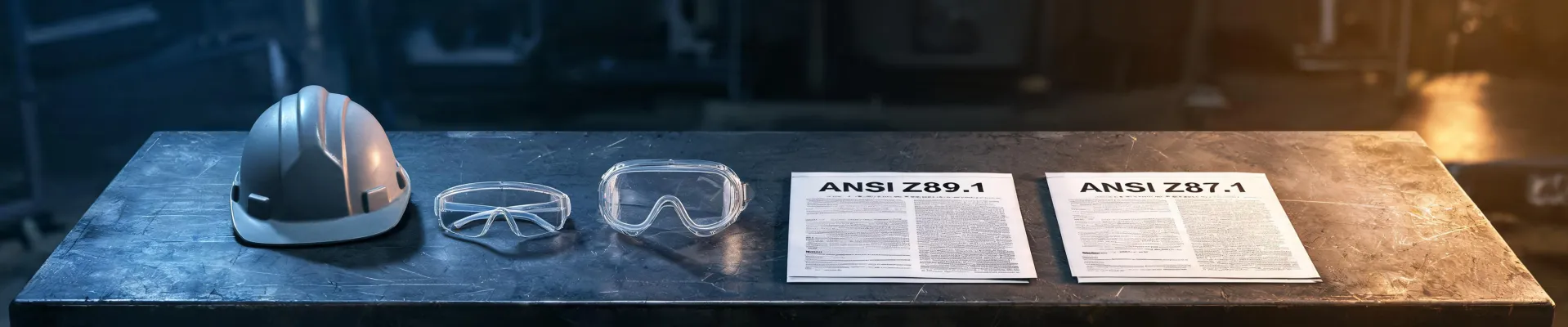
I found a new online vendor that beat our regular prices on everything. The glasses were listed as 'Z87.1 compliant,' the shirts were 'hi vis orange,' and the chin straps were 'standard fit.' I placed the order without a second thought. Three weeks later, the samples arrived—and nothing matched what we needed. The glasses had the wrong tint for outdoor work, the shirts were a different shade of orange than our company's approved color, and the chin straps didn't fit our hard hat models. I'd just wasted $3,200 of the department budget.
What Went Wrong?
Look, I'm not saying the vendor was trying to cheat me. They had the products listed, but the specs were either vague or just plain wrong. The glasses said 'Z87.1' but didn't mention the specific shade rating we needed for highway glare. The shirts said 'hi vis' but didn't reference ANSI 107 for the exact orange hue. And the chin straps? They were labeled 'universal,' but universal doesn't mean it fits every brand's hard hat slot system. I learned the hard way that a hard hat chin strap needs to be matched to the helmet's suspension slots, not just the clip style.
Everyone told me to always check specifications before approving. I only believed it after skipping that step once and eating a $3,200 mistake. That was the reverse validation I needed.
Fixing the Mess
I had to call the foreman and explain the delay. He wasn't happy. The project manager was less happy. My VP? Let's just say I won't forget that conversation anytime soon. We had to get the right gear, fast. I turned to a vendor I knew I could trust: Pyramex. I'd used their gear before, but I'd never ordered from them directly in bulk for an entire crew. I called their rep, explained the situation, and asked for help.
Their process was night and day different. They didn't just send me a price list—they asked me for the exact spec sheet from the client. They confirmed the Z87.1+ rating for the glasses, checked the ANSI 107-2020 standard for the hi vis shirts, and even matched the chin strap model numbers to our specific hard hat models (we use a mix of their vented and non-vented helmets). I ordered 60 pairs of Pyramex safety glasses z94 3 for the outdoor crew, a batch of their hi vis shirts with the correct orange and silver striping, and the exact hard hat chin strap clips that snapped right into our helmets. It arrived in 3 days. No returns. No excuses.
The Chin Strap Lesson
That chin strap mistake taught me more than any other single item. See, hard hat chin straps aren't just about keeping the hat on your head. They need to be Type 2 compliant for lateral impact protection, and the attachment method has to match the helmet's design. Pyramex's straps use a specific yoke system that clicks into the suspension slots. Our old vendor's 'universal' strap used a different clip that just slipped right off. I've since created a simple checklist: first, verify the hard hat model; second, check the strap's attachment method; third, confirm the strap's breakaway strength. That small checklist has saved us from at least two more near-misses this year alone.
The Glove Test
While I was rebuilding our ordering process, I also had to tackle a question the crew kept asking: vinyl vs nitrile gloves. We'd always used latex in the past for general handling, but allergies were becoming an issue. I decided to do a proper comparison test with a few boxes from different vendors. I asked the guys to rate them on dexterity, durability, and comfort.
Here's the thing: most people won't tell you the difference until you get them to actually compare side-by-side. Vinyl gloves are cheaper, but they tear much easier on rough concrete or rebar. One guy went through 4 pairs in a single morning. Nitrile gloves cost more per box, but they last longer, fit tighter, and offer better puncture resistance. For our jobs where guys need to handle sharp materials, nitrile was a no-brainer. We switched our stock to 3-mil nitrile for general use and 6-mil for heavy handling. The crew's hand injuries (lacerations and scrapes) dropped noticeably. The total cost per month? Actually went down, because we used fewer pairs. Funny how that works when you actually test things.
Building a Better System
The third time we ordered the wrong quantity of something, I finally created a formal verification process. It's not fancy, but it works:
- Spec confirmation: Before any order, I confirm the required standard (e.g., Z87, ANSI 107, ANSI/ISEA 105) with the safety manager.
- Sample check: For any new product or new vendor, I request a physical sample first. If they can't provide one, that's a red flag.
- Cross-reference: I check the product number against the manufacturer's own spec sheet. I've caught three mislabeled products this year using that simple step.
That 5-minute verification process has saved us an estimated $8,000 in potential rework and rejections. Two weeks ago, I almost placed a large order for hard hat chin straps from a new vendor. I ran my checklist, requested a sample, and discovered their 'universal' clip wouldn't fit our helmets. That single sample saved me a 600-unit return and a very angry foreman. The 12-point checklist I created after my third mistake has been worth its weight in gold.
Final Thoughts
I know I'm just an admin buyer—I don't design the gear or set the safety policies. But I'm the one who puts the gear in the workers' hands. A bad order doesn't just waste money; it wastes time and trust. I've learned that speed and price are important, but spec verification is the deal-breaker. I only truly believed that after ignoring it once and feeling the consequences myself.
Take it from someone who's been there: the extra 5 minutes you spend checking a spec sheet is the cheapest insurance you'll ever buy. And when you find a supplier like Pyramex that makes it easy to get the right answer the first time, stick with them. Your bottom line—and your crew—will thank you.

Maeve Callahan
Maeve Callahan is a head-protection analyst covering Type I and Type II hard hats, climbing-style safety helmets, bump caps, chin straps, suspensions, liners, and face-shield carriers. She applies ANSI Z89.1, EN 397, and EN 12492 criteria while comparing impact attenuation, penetration resistance, lateral deformation, electrical class, retention strength, field of vision, mass, fit range, and temperature conditioning. Her guides help EHS teams, contractors, utilities, and buyers select helmet systems for overhead hazards, work at height, electrical exposure, accessory compatibility, and worker acceptance.