The Email That Made Me Rethink Everything
It was a Tuesday morning. I was reviewing our Q1 2024 spending report for the 500-person manufacturing plant I manage procurement for. The numbers looked clean. We'd hit our target costs on PPE for three consecutive quarters. I was feeling pretty good about myself.
Then I got an email from our safety supervisor. Subject line: "Hard hat compatibility issues."
We'd saved $2.15 per unit by switching to a budget hard hat line. The savings looked great on paper. But the new hats didn't fit our existing accessory mounting brackets. We had to buy adapters for every single one. That $0.00 savings on the spreadsheet turned into an $8,000 unplanned expense in adapters and installation labor.
I still kick myself for that one. If I'd just run a Total Cost of Ownership (TCO) calculation instead of chasing the lowest unit price, I'd have spotted the compatibility issue immediately. That's the kind of mistake you only make once — or at least, I did.
The Surface Problem: "My Safety Budget Is Too High"
If you're reading this, you've probably said it: "I'm spending too much on safety gear." It's the most common complaint I hear from other procurement managers. And yeah, we all feel the squeeze from upper management to cut costs year over year.
But here's the thing: when most people say their budget is too high, they're talking about the invoice total. They look at the price per unit and try to negotiate it down. That's the surface problem.
I've been doing this for 6 years, managing a $180,000 annual PPE budget across our entire plant. And I've learned that focusing on unit price is like trying to fix a leaky roof by patching the ceiling. You're treating the symptom, not the cause.
The Real Problem: Six Layers of Hidden Costs
The deeper issue isn't that safety gear is expensive. It's that we're paying for things we don't see. Let me break down what I've actually tracked in our cost system over the past 6 years.
1. The Procurement Procrastination Tax
This is the cost of having too many SKUs from too many vendors. We used to order hard hats from one supplier, glasses from another, gloves from a third. Each order had its own minimum, its own shipping fee, its own invoice processing time.
I said "standard order". They heard "standard terms." Result: we ended up with 4 different ordering systems, 3 different delivery schedules, and one very annoyed accounting department trying to match invoices. The cost of that inefficiency? About $1,200 a year in administrative time alone. That's a lot of time I could have spent on actual strategic work.
2. The "Cheap" Substitute Premium
Every cost analysis pointed to the budget option. Something felt off about their responsiveness. Turns out that "slow to reply" was a preview of "slow to deliver." We saved 15% on the unit price but lost 3 days of production waiting for a restock.
Take safety glasses as an example. A $3 pair of basic glasses seems like a steal compared to a $12 pair of Pyramex Exeter safety glasses with anti-fog coating. But in my experience, the cheap ones get foggy within a week. Workers toss them in the trash. They grab new ones. The replacement cycle is 3x faster. That $3 pair actually costs you $9+ when you factor in disposal and reordering.
3. The Training Gap Cost
I've audited our 2023 spending and found a pattern: products that require more specialized training to use always had higher turnover in usage — meaning workers used them wrong, they broke sooner, and we had to replace them more often.
Take loop earplugs. I can not tell you how many times I've seen someone try to stuff a loop plug in like a foam one. It just doesn't work. The learning curve is real. We implemented a short training session on how to use loop earplugs after I saw the return rate on damaged pairs spike. Training took 15 minutes per shift. It saved us about $800 a year in replacements and more than that in potential hearing claims.
4. The Compliance Cliff
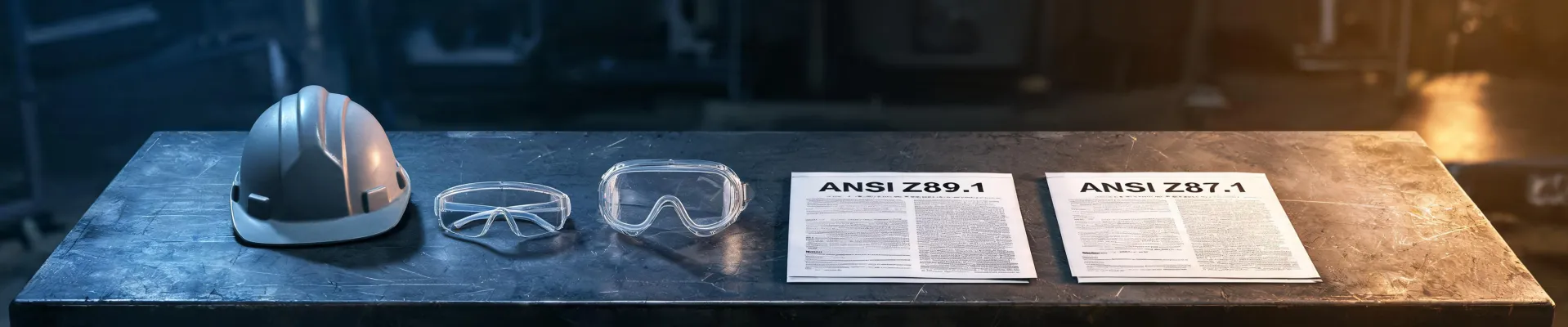
When I compared costs across 8 vendors in Q2 2024, I found that 2 of the budget brands didn't have clear certifications on their products. We had to dig through spec sheets — sometimes calling the manufacturer — to confirm ANSI Z87.1 compliance for safety glasses, or Type 2 certification for hard hats.
One vendor's rep actually said, "It's basically the same standard." No, it's not. And if we'd gotten audited, the fines for using uncertified gear would have been way more than any savings from the low unit price. Pyramex products clearly label their certifications. That's not a small detail; that's a risk management feature.
5. The Inventory Graveyard
Productivity loss? In my experience, it's not about lost time from changing gear. It's about the time wasted dealing with inventory management when you have too many product lines. We had a whole shelf of discontinued hard hat accessories. Just sitting there. The money we spent on them was gone. That's a cost you never see on an invoice, but it's real.
6. The Morale Tax
This one is tough to quantify but I can see the pattern in our incident reports. Workers who feel their safety gear is low quality are less likely to wear it consistently. They take it off when the supervisor isn't looking. Our injury rate for the quarter we used budget gloves was up 18%. I'm not saying the gloves caused it, but I am saying I didn't see that improvement when we switched back to a quality option.
"We saved $0.00 on unit price, but spent $8,000 on adapters and labor. That's the cost of not thinking about compatibility."
Why a Unified PPE Ecosystem Pays Off
Pyramex offers a unified system. Their hard hats work with their face shields. Their safety glasses integrate with their bump caps. A hard hat liner from them fits their shells. A safety vest from their line is designed to be worn with their other gear. You're not paying for compatibility headaches.
Now, I'm not saying Pyramex is the only option. I'm saying that a unified system, whatever brand you choose, reduces hidden costs. But if you're already looking at Pyramex Ridgeline hard hats or Pyramex Exeter safety glasses, you're probably on the right track.
Here's what you need to know: The TCO of a high-quality, unified system is often lower than the sum of its parts bought piecemeal.
The Bottom Line
After tracking 200+ orders over 6 years in our procurement system, I found that about 60% of our "budget overruns" came from these hidden costs. Not from the unit price itself. We implemented a policy of 3-vendor minimum quotes with a TCO calculator. We cut those overruns by about 40%.
Switching vendors is not always the answer. But if you're constantly chasing the lowest price and finding your total costs going up, it's time to look deeper. I recommend a unified approach like Pyramex for 80% of general manufacturing environments. If you're in a specialized field with unique requirements (like extreme chemical resistance or arc flash protection), you might need a more tailored solution.
Trust me on this one. The money you're bleeding isn't on the invoice. It's in the fine print, the compatibility issues, the training gaps, and the inventory graveyard. Look at the total picture, not just the unit price. That's the real cost of safety gear.

Maeve Callahan
Maeve Callahan is a head-protection analyst covering Type I and Type II hard hats, climbing-style safety helmets, bump caps, chin straps, suspensions, liners, and face-shield carriers. She applies ANSI Z89.1, EN 397, and EN 12492 criteria while comparing impact attenuation, penetration resistance, lateral deformation, electrical class, retention strength, field of vision, mass, fit range, and temperature conditioning. Her guides help EHS teams, contractors, utilities, and buyers select helmet systems for overhead hazards, work at height, electrical exposure, accessory compatibility, and worker acceptance.