The Problem I Thought I Had
Last November, I watched our warehouse lead drag his new leather gloves across a steel pipe by the loading dock. Pulling the leather, twisting it, working it like dough. I asked what he was doing. He said, "They're too tight. Gotta stretch 'em out first." He said it the way you'd explain something obvious.
That was the third time I'd reordered those exact gloves. Same size. Same supplier. Same purchase decision. At the time, I filed it under 'employee habit' and moved on.
I didn't actually pull the order history until a month later. Over the prior two quarters, I'd placed 47 PPE orders. At least 14 of them were replacements—not because anything broke or got lost, but because the previous batch simply didn't work for the people wearing it.
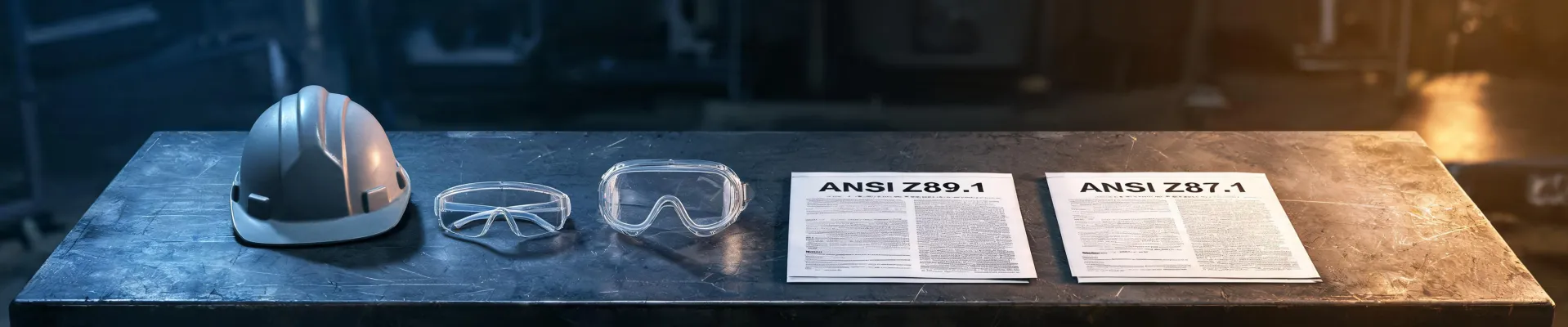
The specs were fine. The safety glasses met ANSI Z87.1. The hard hats met Z89.1. The prices were competitive. What I didn't see was that I was making a correct decision on a purchase form while the people wearing the equipment were living in a reality the form couldn't capture.
The Thing Nobody Tells You: Fit Is a Field, Not a Standard
Open any PPE purchasing form and there's a sizing field. Medium. Large. XL. Hat size 6 7/8 to 8. That field creates the illusion that fit is a measurable number. You measure a head, you match it to a chart, you order, you move on.
It isn't. Fit is an experience. A person with a 7 1/4 head circumference isn't a person with a 7 1/4 head shape. The same person wearing the same hard hat at 8 a.m. and 3 p.m. doesn't feel the same thing—especially if they've been outside or if their hair is different that day. Gloves are worse. A glove that fits perfectly in the morning gets tight after a few hours of gripping and lifting, and most workers won't report a size issue—they'll just figure out how to stretch leather gloves themselves and keep using the same pair until it tears.
Same story with lab safety glasses. The ones I tested looked fine. Z87-rated, anti-fog coating, adjustable temples. But when you're wearing them on a bench for forty minutes and looking up at shelves, they slide. You push them back up. They slide again. After ten pushes, you take them off and set them down, and the scratched pair you've had for three years goes back on your face because at least it stays put.
None of this is a product defect. It's the gap between 'correct on paper' and 'usable in practice.'
Employees Don't Report the Problem—They Route Around It
Here's the part that gets me: they almost never tell you.
When safety glasses don't fit right, they don't email you saying "the nose bridge digs in." They swap back to the old pair. They put them in a locker. They buy their own. When gloves are too tight, they don't request a different size. They stretch them, use them, and toss them when they wear out.
You could argue they should report it. But think about it from their side. You're in the middle of a shift. You've got a job to run. The last thing you want to do is file a form explaining why your PPE is uncomfortable. You fix it yourself or you work around it. Then you forget about it.
Which means the problem never surfaces as a complaint. It surfaces as reorders, compliance gaps, and a line item in your budget that keeps growing without anyone being able to point to why.
What This Actually Costs
When I ran the numbers, this is roughly what I found:
- Direct waste: About $4,600 in PPE I ordered, that got issued, and that never actually got used—mostly wrong-fit gloves and the lab safety eyewear that slid off people's faces.
- Compensating purchases: Those repeat orders accounted for roughly 18% of my annual PPE spend. Budget that was allocated for one set per person was going to 1.3 sets per person, and nobody noticed.
- Compliance exposure: PPE that isn't worn doesn't protect anyone. If a safety walkthrough happens and half the team has swapped back to their own equipment, that's a finding you don't want on record.
- Trust: The most expensive one. When your team stops believing the gear you buy is actually for them, they stop asking you for things. They solve problems on their own. And then you're no longer doing procurement—you're processing paperwork while people work around you.
What I Do Differently Now
I stopped buying in bulk and started buying in samples.
Instead of placing a full order, I send four or five different options to a team lead, one per role. They wear it for a week. They tell me what worked and what didn't. Not whether it 'met spec'—nobody cares about that on the floor—but whether it stayed on their face, whether their hands felt okay after a shift, whether the vents actually let air through.
We ran Pyramex hard hats through that trial process alongside a few others. Their suspension system held up better than most at the angles people actually wear a hat at—not the angle on the spec sheet. Same with the Pyramex safety full face shield. It isn't about being "the best." It's about the adjustable strap actually accommodating different face shapes instead of pretending they're all the same.
Mens work boots went through the same process, which I hadn't done before. I used to treat boots as a checkbox—order a size, call it done. Turns out a ten-hour standing shift is a different test than a catalog spec, and the wrong heel width will get noticed on day one.
And I let the people using the gear pick from a short list. Not everything—just the real variables. Because the equation doesn't work when the person making the purchase never touches the product.
Here's the honest truth: when I looked at my order history, the vendors I'd rotated through weren't the issue. I was. I was optimizing for price per unit and volume discounts while the actual measure of success—whether people kept wearing the thing—was invisible to me.
Buying safety gear isn't a procurement problem. It's a fit problem. And you can't solve a fit problem from a spreadsheet.

Maeve Callahan
Maeve Callahan is a head-protection analyst covering Type I and Type II hard hats, climbing-style safety helmets, bump caps, chin straps, suspensions, liners, and face-shield carriers. She applies ANSI Z89.1, EN 397, and EN 12492 criteria while comparing impact attenuation, penetration resistance, lateral deformation, electrical class, retention strength, field of vision, mass, fit range, and temperature conditioning. Her guides help EHS teams, contractors, utilities, and buyers select helmet systems for overhead hazards, work at height, electrical exposure, accessory compatibility, and worker acceptance.