I've been handling PPE and safety supply orders for 9 years. I've personally made and documented 11 significant mistakes, totaling roughly $42,000 in wasted budget. Now I maintain our team's pre-check list to prevent others from repeating my errors.
In 2022, I approved a 480-unit hard hat order because the unit price was $3.20 lower than our previous vendor. I felt like a hero for about three weeks. Then the rain came. Then the sun. Then the accessory requests. That order taught me more about total cost than any spreadsheet ever did.
The problem you think you have: you're paying too much for safety gear
Most PPE buyers start with a simple question: how do we lower the unit price? That question is not wrong. Budgets are real. Safety managers get pressure from finance. Procurement gets measured on savings. Everyone wants to look responsible.
But when PPE is treated like copy paper, the savings are often imaginary. The invoice goes down. The total cost goes up. I have watched this happen with hard hats, safety glasses, boots, gloves, and earplugs. The pattern is boringly consistent.
The deeper problem: PPE is not a commodity
Here is the part I did not understand early on. PPE is not just a product. It is a system: the item, the fit, the accessories, the replacement cycle, the training, and the worker's willingness to keep it on. If any part of that system fails, the cheapest unit price becomes irrelevant.
OSHA's PPE standard (1910.132) requires employers to assess hazards, select PPE that fits, and train workers on use and care. It does not say 'buy the cheapest item that passes the spec.'
That word 'fits' is doing a lot of work. A hard hat that slides off, safety glasses that fog, or boots that hurt after four hours are not protection in practice. They are inventory.
Fit and compatibility beat spec sheets
We had standardized on a cap-style hard hat because the price was good. Then we put crews on open sites in July. They needed full-brim coverage, face shields, and better rain runoff. Our cap-style platform could accept some accessories, but not the way we needed.
We ended up buying Pyramex full brim hard hat accessories separately, plus different suspensions and adapter kits. The original order saved about $1,536. The reorder and admin time came to roughly $2,900. I'm not exaggerating when I say that I spent two Saturdays fixing a decision that took ten minutes to make.
The lesson was not 'always buy full brim.' The lesson was to check the accessory ecosystem before the bulk order. If you run mixed sites, the hard hat platform is a compatibility decision, not just a head protection decision.
Comfort is a compliance tool
Eye protection gave me the same slap in the face. We approved Pyramex Safety Glasses Intruder for general plant use. They met the impact standard and the price was reasonable. So I ordered mostly clear lenses.
Then I walked an outdoor job at 2 p.m. Half the crew had their glasses pushed up on their foreheads. The clear lenses were fine indoors. Under bright sun, they were miserable. Compliance dropped. No one was being lazy. They were being human.
We tested other options. HeatWave safety glasses were one of the models we trialed for hot, humid outdoor work. Some workers liked them. Some did not. That is exactly why a sample kit matters. In my opinion, a 30-day wear trial is cheaper than a year of corrective action.
Boots are the same story with higher stakes. I bought a budget work boot that met the written spec. Four months later, half the crew had foot pain. Several guys bought their own Doc Martens work boots because they could wear them for a ten-hour shift without misery. Some Doc Martens work boots meet ASTM F2413 for safety toe footwear; some do not. Check the specific model. But the broader point stands: if the boot is not comfortable, the spec sheet does not matter.
Hearing protection has a comfort angle too, and sometimes it spills outside the jobsite. During a night-shift safety review, one worker asked, 'Can you sleep with earplugs?' It sounds like a wellness question. It is also a PPE adoption question. If someone cannot recover because their dorm or neighborhood is noisy, they show up tired. Tired workers make mistakes. We started including sleep earplugs in a comfort kit while keeping OSHA-compliant hearing protection for the floor. Different problem, same rule: if nobody uses it, it is not protection.
What the cheap route actually costs
Let me put some real numbers on it. These are from our own records, not a vendor brochure.
- Hard hat accessory reorder: about $2,900 in parts, shipping, and staff time after a $1,536 'savings' on the original order.
- Safety glasses compliance drop: we had to re-train two crews and replace 180 pairs of clear lenses with tinted and anti-fog options. Roughly $1,200.
- Boot replacement: the budget boots failed early. Replacing them with better work boots and dealing with foot-pain complaints cost us about $4,800 over six months.
- Earplug misuse: cheap disposables were used wrong or not at all. After a hearing conservation review, we spent $650 on fit-testing and training.
Total damage from those four 'savings' decisions: just over $9,500. That does not include the injury risk, the morale hit, or the time I spent explaining why we were buying the same thing twice.
In my experience managing PPE orders over nine years, the lowest quote has cost us more in about 60% of cases. Not every time. But often enough that I no longer treat unit price as the first number I look at.
The pre-check list I wish I'd had in 2017
I do not mean to make this sound complicated. The fix is mostly discipline. Here is the short version.
- Run a 30-day wear trial. Put samples in the hands of the people who will actually wear them. Ask about heat, sweat, fog, pressure points, and noise.
- Price the full system. Include accessories, replacement lenses, suspensions, batteries, cleaning supplies, and training. The unit price is only the entry fee.
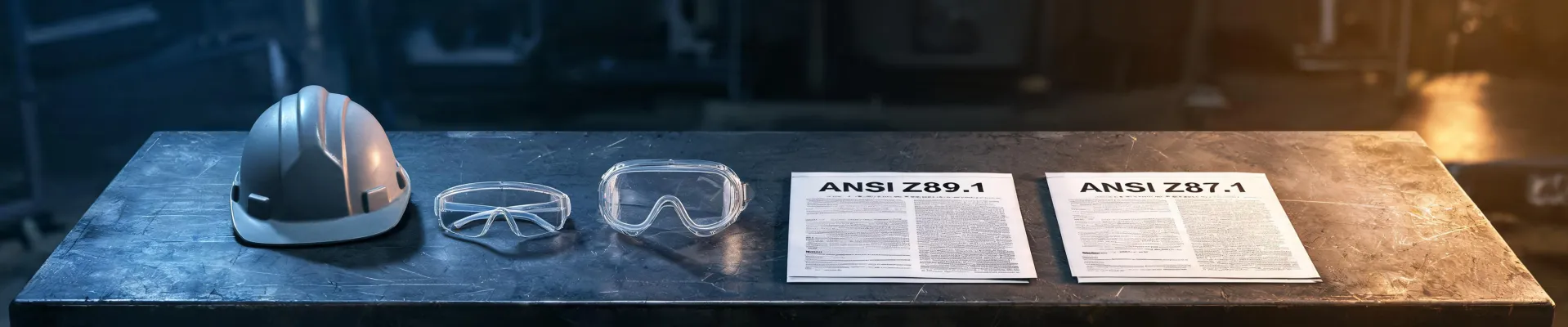
- Check the standard that matters. Eye protection should meet ANSI/ISEA Z87.1. Safety toe boots should meet ASTM F2413. Hearing protection programs fall under OSHA 1910.95. Do not assume that a low price means the standard is covered.
- Ask what workers will actually wear. A product that stays in the locker is a donation to the vendor. Compliance is a comfort feature.
- Calculate total cost of ownership. Purchase price plus replacement plus downtime plus rework plus admin time. That number is the real quote.
A short note on brands and boundaries
I have mixed feelings about standardizing to one brand. On one hand, it simplifies training and inventory. On the other, redundancy saved us during a supply chain crunch. I compromise with a primary plus backup system, and I keep a small sample library for trials.
Pyramex is part of our approved mix because they cover a wide range of head-to-toe PPE and have the accessory ecosystem we need for different sites. That does not mean every Pyramex product is right for every crew. It means we check the specific model, the standard, and the fit before we commit.
This worked for us, but we're a 150-person industrial contractor with predictable ordering patterns. If you're a seasonal business with demand spikes, the calculus might be different. I can only speak to domestic operations. If you're dealing with international logistics, there are probably factors I'm not aware of.
I'm not 100% sure why some cheap boots failed so fast while others lasted. My best guess is materials and stitching quality. If someone has better data, I'd love to hear it.
Looking back, I should have paid for wear trials before bulk orders. At the time, I was under pressure to close the budget. That was a bad trade. The cheapest PPE is not cheap. It just sends the bill later. Simple.

Maeve Callahan
Maeve Callahan is a head-protection analyst covering Type I and Type II hard hats, climbing-style safety helmets, bump caps, chin straps, suspensions, liners, and face-shield carriers. She applies ANSI Z89.1, EN 397, and EN 12492 criteria while comparing impact attenuation, penetration resistance, lateral deformation, electrical class, retention strength, field of vision, mass, fit range, and temperature conditioning. Her guides help EHS teams, contractors, utilities, and buyers select helmet systems for overhead hazards, work at height, electrical exposure, accessory compatibility, and worker acceptance.