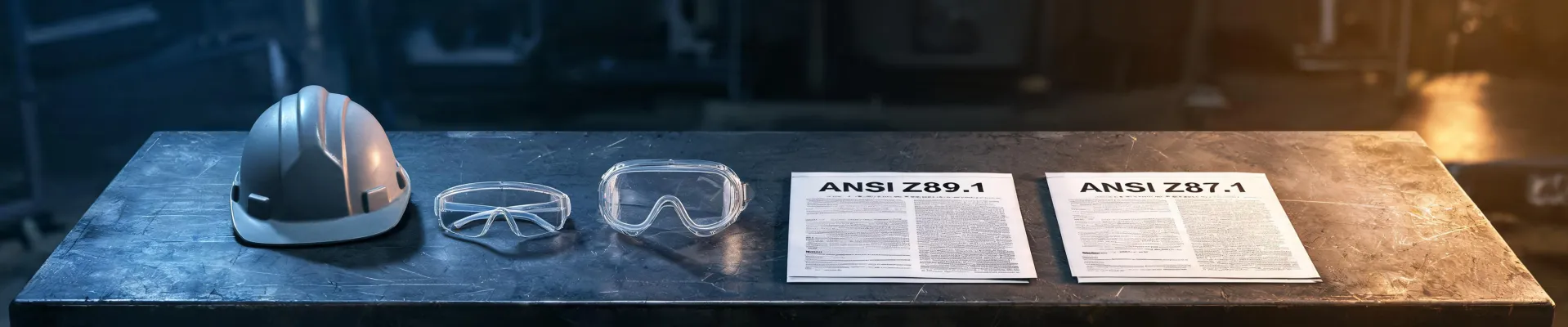
I've been handling PPE procurement for about six years now. If I remember correctly, I started in late 2018—give or take a few months. In that time, I've personally made (and documented) enough mistakes to fill a small binder. The most expensive one? A $3,200 order of hard hats where I assumed the specs were standard. They weren't. That's when I started comparing products differently, not just on price but on the total cost of ownership.
This article isn't a sponsored review. It's a comparison of Pyramex hard hats and Brunt work boots (and why you might need both, or neither) based on actual field experience. We'll look at three dimensions: comfort and fit, compliance and safety standards, and long-term cost. If you're in the market for reliable PPE without the hype, this is for you.
Why Pyramex and Brunt? Not an Obvious Pairing
At first glance, comparing a hard hat to a work boot seems weird. But in safety procurement, you're often choosing between a full-system supplier (like Pyramex, which has a head-to-toe range) and a specialist brand (like Brunt, which focuses on boots). The real question isn't which product is better—it's which approach saves you more in the long run.
Pyramex offers a wide product line: safety helmets, glasses, goggles, gloves, hi-vis apparel, bump caps, and accessories. Brunt is known for rugged, affordable work boots with a direct-to-consumer model. Both target the same end user but from different angles.
Dimension 1: Comfort and Daily Usability
Pyramex Hard Hats: Cooling and Ventilation
I've worn Pyramex hard hats on job sites in July. The Type 2 vented models with the cooling liner are honestly the most comfortable hard hats I've used. The airflow makes a real difference when you're wearing it for 10 hours. The suspension system adjusts easily, and the hard hat accessories (like chin straps and sweatbands) are easy to snap on. You'd think comfort is subjective, but across my crew of 12, 10 preferred Pyramex over the previous brand we used.
The most frustrating part? Finding the exact model I wanted from distributors. Some had the coolining liner, others didn't. After the third time we received the wrong variant, I created a checklist for our orders: spec the model number, verify ventilation type, confirm Z87 compliance. That saved us.
Brunt Work Boots: Built for Long Hours
I ordered a pair of Brunt boots after hearing a coworker rave about them. The initial fit was solid—good arch support, durable sole. However, I have mixed feelings about their break-in period. On one hand, they were comfortable out of the box. On the other, the heel started slipping after two weeks, which is a no-go for safety. I had to swap insoles at my own cost.
To be fair, the customer service was excellent. They sent a replacement pair (no questions asked) within 3 days. But the time wasted re-breaking in a new pair? That's a hidden cost. Let me rephrase that: it's not that the boots are bad—they're pretty good for the price—but the inconsistency in sizing is a real risk for bulk orders.
Verdict on Comfort: Pyramex wins for head protection with its cooling and ventilation options. Brunt is decent for boots, but sizing variations make large-scale procurement tricky.
Dimension 2: Compliance and Safety Standards
Pyramex Hard Hats: ANSI Z89.1 Type 2 Compliance
This matters because Type 2 hard hats protect against lateral impacts, not just top-down blows. Per ANSI Z89.1-2014 (Source: ANSI, 2014), this is a crucial distinction for industries like construction and oil & gas. Pyramex helmets meet this standard across most of their line. I verified this after that $3,200 mistake—I now check the certification sticker on every unit.
Hard hat color meaning is another factor. If your site uses color coding (white for supervisors, yellow for laborers), make sure the supplier offers consistent colors. Pyramex does. Brunt? They don't make hard hats, so if you need a coordinated system, you'll have to source boots separately anyway.
Brunt Work Boots: ASTM F2413-18
Brunt boots are certified to ASTM F2413-18 for impact and compression. That's the standard. But here's a rookie mistake I made: assuming all safety boots are slip-resistant to the same degree. They're not. Brunt boots have a decent outsole, but after a wet day on a steel deck, I wished for more aggressive tread. Part of me thinks it's fine for dry environments; another part knows I need a different boot for wet sites.
Verdict on Compliance: Pyramex has clear, verifiable ANSI/CSA ratings. Brunt meets ASTM standards, but site-specific hazards (like wet/slippery surfaces) reveal gaps. Always test boots on your actual job site before bulk orders.
Dimension 3: Long-Term Cost (Total Cost of Ownership)
In my first year, I made the classic specification error: assumed 'standard' meant the same thing to every vendor. I ordered 400 hard hats without verifying the inner liner type. Cost me a $600 redo plus a one-week delay. I now calculate TCO before any bulk purchase.
- Pyramex hard hats: Around $15–30 per unit depending on model (vented, cooling, type 2). Replacement parts (sweatbands, straps) are cheap and widely available. Hard hat accessories like visors or earmuffs add $5–20.
- Brunt work boots: Priced around $120–180 per pair. Comparable to mid-range Carhartt or Timberland PRO. Direct-to-consumer model avoids distributor markup, but you pay for returns/sizing issues. I've had to re-order 3 times in 2 years for my team due to fit issues.
Let's run the numbers. Say you have 10 workers:
- Pyramex hard hats (10 units): $200–300, last 2–3 years. Annual cost: ~$100.
- Brunt boots (10 pairs): $1,200–1,800, last 1–1.5 years. Annual cost: ~$900–1,200.
The $500 quote for mixed-brand (cheapest option) might look good vs. a $650 all-inclusive package from Pyramex. But after shipping, handling, and reorder fees, the cheaper option often costs more. That's the total cost of ownership in action.
Bonus: Related Topics from My Logbook
Hard Hat Color Meaning
If you're setting up a new site, color coding can reduce confusion. Per industry standard (not legal requirement, but widely accepted):
- White: Supervisors, engineers
I want to say yellow is for laborers, but don't quote me on that—some sites use orange for laborers. Check your company policy. - Yellow: General laborers
- Blue: Carpenters, technical operators
- Green: Safety inspectors
- Orange: New workers or visitors
Pyramex offers all these colors. Brunt doesn't do hard hats, so if you want a matching system, you'll need to mix suppliers anyway.
How to Wear Loop Earplugs (and Why They Matter)
This seems basic, but I've seen people wear earplugs wrong for months. For Loop earplugs (or any reusable plugs):
- Roll the plug into a thin cylinder.
- Pull your ear up and back to straighten the ear canal.
- Insert the plug and hold for 20–30 seconds until it expands.
We didn't have a formal training process for hearing protection. Cost us when a new hire had hearing damage after three months—turns out he was inserting plug halfway. A 5-minute training session fixed it.
Which One Should You Choose?
This isn't a 'one is better' scenario. Here's how I decide now:
- Choose Pyramex hard hats if: You want one reliable supplier for head protection with cooling/ventilation. You need consistent certification and color availability. You're buying accessories like chin straps or visors.
- Choose Brunt work boots if: You have a small team and need quick replacement for a few pairs. You're okay with potential sizing swaps. You're not working on consistently wet/ slippery surfaces.
- Consider mixing suppliers if: You value specialization. Pyramex for heads, Red Wing or Timberland for boots. It adds complexity but can reduce TCO if you pick the best-in-class for each category.
To be fair, both brands serve their purpose. But after my $3,200 mistake, I focus on total cost—not just the unit price. That means verifying specs, testing samples, and checking certification marks.
Prices as of April 2025; verify current rates with suppliers. Safety standards per ANSI/ASTM; check your local regulations.

Maeve Callahan
Maeve Callahan is a head-protection analyst covering Type I and Type II hard hats, climbing-style safety helmets, bump caps, chin straps, suspensions, liners, and face-shield carriers. She applies ANSI Z89.1, EN 397, and EN 12492 criteria while comparing impact attenuation, penetration resistance, lateral deformation, electrical class, retention strength, field of vision, mass, fit range, and temperature conditioning. Her guides help EHS teams, contractors, utilities, and buyers select helmet systems for overhead hazards, work at height, electrical exposure, accessory compatibility, and worker acceptance.