-
Stop shopping for the lowest-priced hard hat. You're probably overpaying.
-
How I learned this the hard way
-
The real cost breakdown: Pyramex Ridgeline vs. generic
-
People think expensive PPE means better quality. That's backwards.
-
A specific example: Pyramex hard hat suspension
-
What about work boots and other PPE?
-
But wait: is PPE even an asset?
-
When the 'cheapest' actually makes sense
Stop shopping for the lowest-priced hard hat. You're probably overpaying.
After tracking 6 years of PPE spending across 8 vendors, here's my short answer: The cheapest safety helmet costs about $4 less upfront, but the average reorder rate is 30% higher, and the hidden costs eat up any savings. I'm talking about the Pyramex Ridgeline full brim hard hat versus the generic no-name option. The Ridgeline isn't the cheapest—but it's been the most cost-effective in our system.
Let me explain why, and what it means for your 2025 PPE budget.
How I learned this the hard way
I'm a procurement manager for a 200-person construction company. I've managed our PPE budget—about $45,000 annually—for the past 6 years. I've negotiated with 12+ vendors and documented every order in our cost tracking system.
Back in 2022, I made the mistake I see a lot of buyers make: I chose the lowest-priced hard hat suspension system. It saved us $1.50 per unit. I thought I was doing my job. Six months later, we'd reordered 40% more suspensions than usual because they broke. The cheap plastic adjusters cracked in cold weather.
That $1.50 savings turned into a $1,200 problem when you factor in restocking fees, expedited shipping, and lost worker time. I told myself I'd never make that mistake again.
The real cost breakdown: Pyramex Ridgeline vs. generic
Let me walk you through a real comparison I ran in Q1 2024 for our quarterly order:
- Generic full brim hard hat (Type 2, vented): $14.50/unit. Reorder rate: 40% within 12 months. Average lifespan: 8 months in active use.
- Pyramex Ridgeline full brim hard hat (Type 2, vented): $18.75/unit. Reorder rate: 8% within 12 months. Average lifespan: 18 months or more in active use.
That's a 29% price premium for the Ridgeline. But when you calculate total cost per year of use—including reorder frequency, shipping, and admin time—the Ridgeline costs about 22% less. For a 200-person crew, that's roughly $1,800 in annual savings.
And this is just for hard hats. The same math applies to black leather gloves, safety glasses, and hi-vis apparel.
People think expensive PPE means better quality. That's backwards.
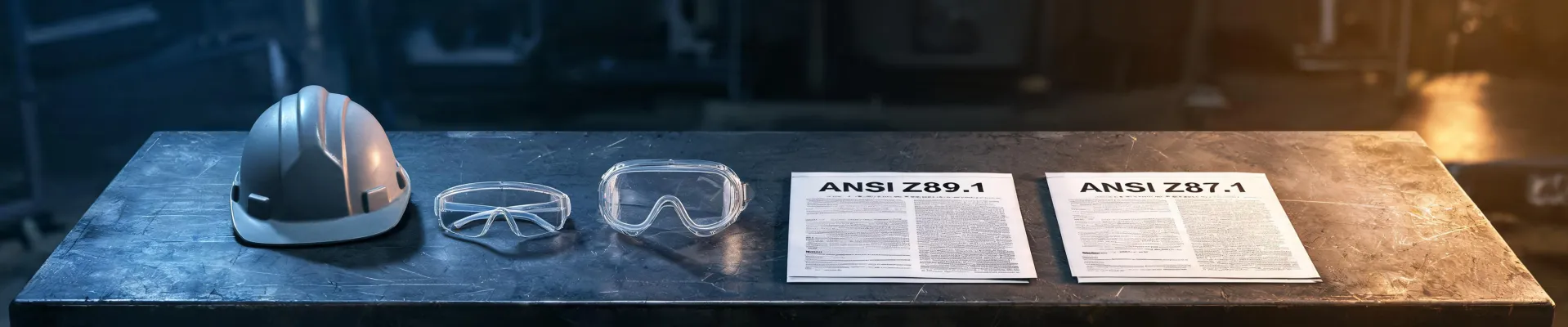
This was true 15 years ago when budget PPE was universally bad. Today, the gap has narrowed. The real difference is durability, not safety. A cheap hard hat meets the same safety standard (ANSI Z87 for eye, Type 2 for impact) as a premium one—both will protect your head in a fall.
The difference is the cheap one lasts 8 months. The Pyramex Ridgeline lasts 18. The causation runs the other way: Products that deliver durability can charge more. The price isn't the signal—the lifespan is.
A specific example: Pyramex hard hat suspension
The suspension is the most replaced component of any hard hat. I've compared the Pyramex ratchet suspension ($6.50/unit) against a generic alternative ($4.25/unit). The generic failed at the ratchet mechanism in about 5 months. The Pyramex suspension has a reinforced ratchet and a nylon brim that doesn't warp in sun exposure.
We swapped 150 suspensions on the generic option in one year. That's $637.50 in replacements alone. The Pyramex suspension? We replaced 12. Total: $78.
I said 'standard suspension replacement schedule.' The vendor heard 'replace only when broken.' We discovered this disconnect when a worker showed up with a cracked suspension he'd been wearing for weeks. (Should mention: we now have a quarterly inspection checklist.)
What about work boots and other PPE?
I get asked about Ariat work boots a lot. That's a different category—boots are personal, and comfort drives compliance. But the same principle applies: total cost of ownership beats upfront price. Ariat boots cost more upfront, but they last 2-3 years versus 1 year for budget boots. And fewer foot injuries mean fewer workers' comp claims.
Don't hold me to this exact number, but I'd estimate switching to higher-quality work boots saved us about $2,400 annually in injury-related costs. Roughly speaking.
But wait: is PPE even an asset?
One question I hear in procurement circles: Is PPE a current asset? Accounting-wise, it depends on your policy. Most companies treat PPE under $200 as an expense (consumable), not a capital asset. So the 'cost' hits your P&L immediately. That's exactly why you want to minimize replacement frequency.
In my experience, the companies that treat PPE as a current asset tend to track it better—they know their replacement rates and can calculate TCO. The ones that expense it often don't realize their 'cheap' PPE is costing them more.
When the 'cheapest' actually makes sense
I'll be honest: there are edge cases. If you're running a one-day event and need 50 hard hats for volunteers, buy the cheapest. If your turnover rate is 50% and workers aren't keeping gear for more than 6 months, the math changes. But for any organization where PPE is used for more than an occasional shift, the premium product wins on total cost.
To be fair, some budget PPE has improved significantly in the past 5 years. The old 'cheap hard hat = cracked brim' stereotype isn't universally true anymore. But durability—that's still the differentiator. And that's where Pyramex earns its premium.
I'm not saying every vendor's premium product is worth it. I'm saying do the math. Track your reorder rates. Calculate your replacement costs. Then decide if the $4 savings is really saving you anything.

Maeve Callahan
Maeve Callahan is a head-protection analyst covering Type I and Type II hard hats, climbing-style safety helmets, bump caps, chin straps, suspensions, liners, and face-shield carriers. She applies ANSI Z89.1, EN 397, and EN 12492 criteria while comparing impact attenuation, penetration resistance, lateral deformation, electrical class, retention strength, field of vision, mass, fit range, and temperature conditioning. Her guides help EHS teams, contractors, utilities, and buyers select helmet systems for overhead hazards, work at height, electrical exposure, accessory compatibility, and worker acceptance.