Let's be honest. If you search for 'the best Pyramex hard hat', you'll get a lot of generic advice. 'Get one that fits.' 'Get one that's comfortable.' That's like saying the best car is the one with four wheels. It's technically true, but completely useless.
The real question isn't about comfort. It's about where you're wearing it. I've been managing PPE purchasing for our team since 2021, and I've seen the same mistake over and over: buying the cool-looking hard hat, then realizing it's a nightmare for the actual job site.
There is no single 'best' Pyramex hard hat. There's only the best hard hat for your environment. So let's break it down.
The Two Main Types: Full Brim vs. Front Brim
First, a quick primer. Pyramex makes two primary styles of hard hats:
- Full Brim (often called 'cowboy hard hats'): These have a brim that extends all the way around, like a traditional cowboy hat.
- Front Brim (often called 'cap' style): These have a brim only at the front, similar to a baseball cap. The popular Pyramex Vented Hard Hat is often a front-brim style.
Which one is right for you? It depends entirely on what you're doing. Here are the three most common scenarios I've encountered.
Scenario A: You Work Outdoors (Construction, Road Work, Solar)
If you're outside, under the sun, in the rain, or dealing with falling debris from above, the answer is almost always a full brim.
I remember an installation crew we managed in the summer of 2023. They were doing solar panel installs on a flat roof in Texas. The safety officer bought a batch of the sleek, front-brim V-Gard style hats. They looked professional. But after one week, every single guy had a sunburn on the back of their neck. The front brim blocked the sun from their eyes, but the back of the neck? Completely exposed.
The full brim is your shield. It protects your neck from the sun, keeps rain from running down your collar, and deflects debris that might fall from scaffolding above. For outdoor work, it's not just a preference; it's a functional necessity.
Pay attention to ventilation. Pyramex has the Type 2 Vented Hard Hat (often a full brim design) which has slots for airflow. (Should mention: we buy these specifically for our outdoor crew in 2024 because the Texas heat is no joke.) The vents make a surprising difference in comfort.
Scenario B: You Work in Tight Spaces (Confined Spaces, Warehouses, Under Vehicles)
Now, flip the scenario. What if you're not in an open field? What if you're working in a warehouse with low ceilings, under a car, or in a manhole? That wide, full brim becomes a liability.
Early in my career—back in 2019—I ordered a full brim for a mechanic working on a tire rack. The brim kept hitting the lift bar above him. He had to tilt his head uncomfortably just to move, and it was a safety hazard. A front brim (or 'cap style') hat slides up into the space better. It doesn't catch on things.
In these environments, the Pyramex Cowboy Hard Hat look is actually counter-productive. Look for a low-profile front brim model. They are lighter and won't get snagged. It's the difference between a hat that helps you and a hat that hinders you.
Scenario C: You Are the Buyer (For a Mixed-Use Facility)
This is the hardest one. You're the administrative buyer, like me. Your team has outdoor guys, indoor guys, and everything in between. You want one size fits all. You want a single SKU to manage inventory. Don't make this mistake.
In 2022, I tried to standardize on a single, 'best' front brim model. I saved roughly $2 per unit by buying 200 of them in bulk. The outdoor crew complained. They wore them grudgingly. The indoor crew was fine. The result? I had to do a secondary buy of 50 full brim hats anyway. Net savings on the bulk buy? Gone. Plus the hassle of managing two SKUs anyway, and the frustration from the crew who felt like no one listened to them.
If you manage a mixed environment, buy both. It's a tiny inventory split compared to the productivity and morale cost of forcing the wrong hat on your people. The Pyramex range is wide enough to accommodate both needs without breaking the bank.
Beyond the Brim: The Key Features to Check (ANSI Z89.1)
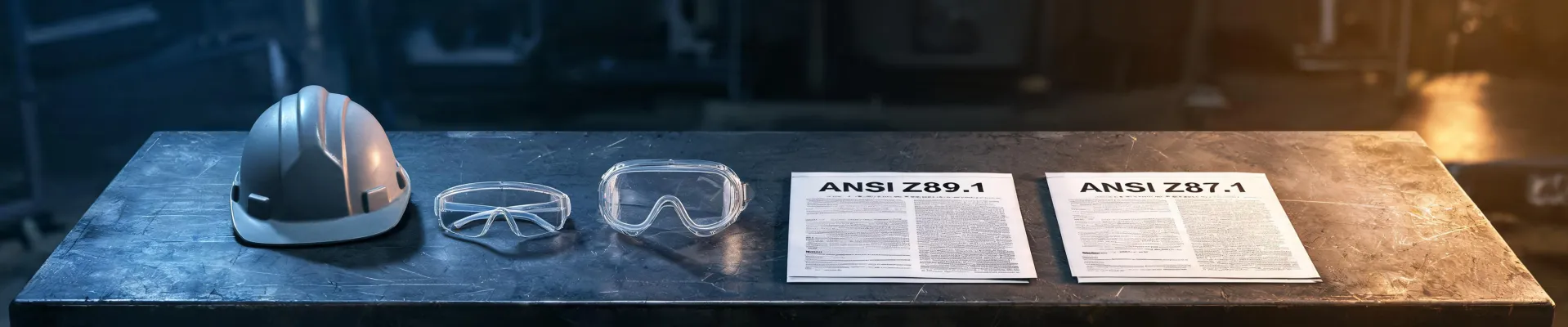
So you've picked your style. Now, regardless of your choice, there are standards. According to ANSI Z89.1 Type 2 (which is the relevant safety standard), your hard hat must pass lateral impact tests. A full brim or front brim doesn't change the core protection. What changes is the accessory slot.
Look for models that have a standard accessory slot on the front. This allows you to attach a safety visor or earmuffs. Most Pyramex models have this, but always verify. Also, check the suspension system. A 4-point or 6-point suspension is more comfortable than a 2-point one, especially for all-day wear.
How To Decide Right Now
If you're still unsure, ask yourself these two questions:
- Is the sun on my neck? If yes, full brim.
- Am I crawling under things? If yes, front brim.
It really is that simple. Don't overthink it. Don't let a 'cool' look drive a safety decision. Buy the tool that fits the job. You'll save time, money, and—most importantly—your team will actually wear the thing you bought them.
(Prices as of April 2025; verify current rates with your distributor.)

Maeve Callahan
Maeve Callahan is a head-protection analyst covering Type I and Type II hard hats, climbing-style safety helmets, bump caps, chin straps, suspensions, liners, and face-shield carriers. She applies ANSI Z89.1, EN 397, and EN 12492 criteria while comparing impact attenuation, penetration resistance, lateral deformation, electrical class, retention strength, field of vision, mass, fit range, and temperature conditioning. Her guides help EHS teams, contractors, utilities, and buyers select helmet systems for overhead hazards, work at height, electrical exposure, accessory compatibility, and worker acceptance.