-
PPE Buying Mistakes I Learned the Hard Way
-
Are nitrile and latex gloves the same? (Spoiler: No, and the difference can cost you)
-
Cap-style hard hat vs full brim: Which should I pick? (Pyramex Ridgeline experience)
-
How do I keep cool under a hard hat? (Pyramex CPH160 cooling pad review)
-
Do I really need a sun shade for my hard hat?
-
Are pull-on work boots as safe as lace-up boots? (Real-world comparison)
-
One checklist I use to avoid 80% of my previous PPE ordering mistakes
PPE Buying Mistakes I Learned the Hard Way
I've been handling PPE procurement for a mid-size construction company since 2018. In my first year alone, I made three expensive mistakes — ordering the wrong glove type for a chemical job (cost us $740 in replacements), choosing helmet accessories that didn't fit (22 units, straight to the spare bin), and ignoring boot style requirements that led to a worker injury. I documented every blunder, and now I use that list to train new buyers. Below are the questions I get most often from my own team — answered with the benefit of hindsight.
Are nitrile and latex gloves the same? (Spoiler: No, and the difference can cost you)
No, they are not the same. Latex is a natural rubber product; nitrile is a synthetic polymer. I once ordered latex gloves for a crew working with industrial solvents because they were cheaper — I didn't read the chemical compatibility chart. Within three hours, two workers reported skin irritation and the gloves began degrading. (This was back in 2019; we had to stop the job and re-order.)
According to ASTM D6319 (the standard for nitrile exam gloves), nitrile offers better resistance to oils, fuels, and many solvents. Latex (ASTM D3578) provides good elasticity but can cause allergic reactions — about 1-6% of the general population is sensitive. For most industrial tasks, especially where chemical contact is possible, nitrile is the safer bet. If you're asking “are nitrile and latex gloves the same,” you're not alone — but the answer is definitely not, and choosing wrong can mean failed protection or wasted inventory.
Quick rule I use now: if there's any chemical or biohazard risk, go nitrile. For light-duty handling (e.g., sorting dry materials), latex is fine — but always check the SDS first.
Cap-style hard hat vs full brim: Which should I pick? (Pyramex Ridgeline experience)
I switched our entire site to cap-style hard hats about two years ago — specifically the Pyramex Ridgeline Cap Style Hard Hat. The reason? Weight and accessory compatibility. The full brim version (we tested both) felt heavier on the neck after 8 hours, and workers complained about goggles fogging under the wide brim. The cap style gives you a lower profile, which works better with welding hoods and hearing protection.
But here's the trap I fell into: I assumed all cap-style hard hats were identical. They're not. The Pyramex Ridgeline uses a 6-point suspension that adjusts quickly; some budget caps use 4-point suspensions that don't distribute impact as well. (I don't have hard data on failure rates, but based on our 200+ helmets over 18 months, the 6-point system has noticeably better stability.) Also, check for Type 2 classification (lateral impact protection). The Ridgeline is Type 2 compliant — a big deal if your work involves side impacts.
My advice: if you prioritize lightweight, low-profile, and easy accessory mounting, try a cap style. But test one for a full shift before buying 50 units.
How do I keep cool under a hard hat? (Pyramex CPH160 cooling pad review)
When I first started, I thought cooling liners were a gimmick. Then we had a July heat wave — three near-misses with heat exhaustion on the same afternoon. I scrambled and ordered a case of Pyramex CPH160 Cooling Hard Hat Pads for next-day delivery. After soaking them in cold water and inserting, the surface temperature dropped about 15°F (I measured it with an infrared thermometer — anecdotal, but consistent). Workers reported feeling noticeably cooler for 2-3 hours.
The key is the evaporative gel technology: it absorbs water and releases moisture slowly. It's not a substitute for rest breaks and hydration, but it adds an extra layer of prevention. If your site mandates hard hats in hot environments, I consider cooling pads a must-have now — prevention is cheaper than a heat injury claim. (And yes, I learned that the hard way in July 2020.)
One caveat: the CPH160 fits most cap-style hard hats but not all full brim models — check compatibility before bulk buying.
Do I really need a sun shade for my hard hat?
I'll be honest: I used to think sun shades were optional, even frivolous. Then a crew member went home with sunburned ears after a 10-hour shift. That's when I ordered hard hat sun shades (the clip-on fabric kind) for everyone. In my opinion, they're cheap insurance — about $8-15 per unit and they fold when not in use.
What many buyers miss (outsider blindspot): it's not just about UV skin protection. The shade also reduces glare, which improves visibility, and keeps the interior of the hard hat slightly cooler. If your workers spend more than 4 hours outdoors, I'd argue a sun shade is as essential as a brim. Most people focus on the hard hat shell and forget the accessories that make it comfortable enough to actually wear all day.
Make sure you get one that fits your helmet model — the universal clips work with most cap styles, but some full brims require a specific attachment.
Are pull-on work boots as safe as lace-up boots? (Real-world comparison)
When I saw the keyword “pull on work boots” in our search data, I knew this was a real question. I had it myself when a worker requested pull-ons for quicker donning. So I ordered two pairs: a lace-up 6-inch boot and a pull-on model from the same brand (both steel toe, same safety rating). Here's what I learned:
- Safety standards: Both can meet ASTM F2413-18 if they have proper toe protection. I verified both pairs had the embossed safety markings.
- Ankle support: Lace-up boots provide more adjustability and can better lock the heel. Pull-ons rely on a snug fit and usually have a side elastic panel. For rough terrain or ladder work, I prefer lace-ups. For flat indoor or yard work, pull-ons are fine.
- Convenience: Pull-ons are undeniably faster. One worker said he saved 45 seconds per don/doff — over a year, that's real time.
My conclusion: pull-on work boots can be equally safe as long as they meet ASTM F2413 and fit properly. But the fit is critical — I had to exchanges 4 pairs in the first order because the elastic wasn't tight enough. Try them on before bulk ordering. (And I wish I had tracked our fit issues more carefully — from memory, about 20% of pull-on orders needed returns vs 8% for lace-ups.)
One checklist I use to avoid 80% of my previous PPE ordering mistakes
After wasting roughly $3,200 on wrong sizes, incompatible accessories, and unreturnable stock, I created a simple pre-order checklist. It's not fancy, but it's saved us an estimated $8,000 in potential rework over the past two years. Here's what it covers:
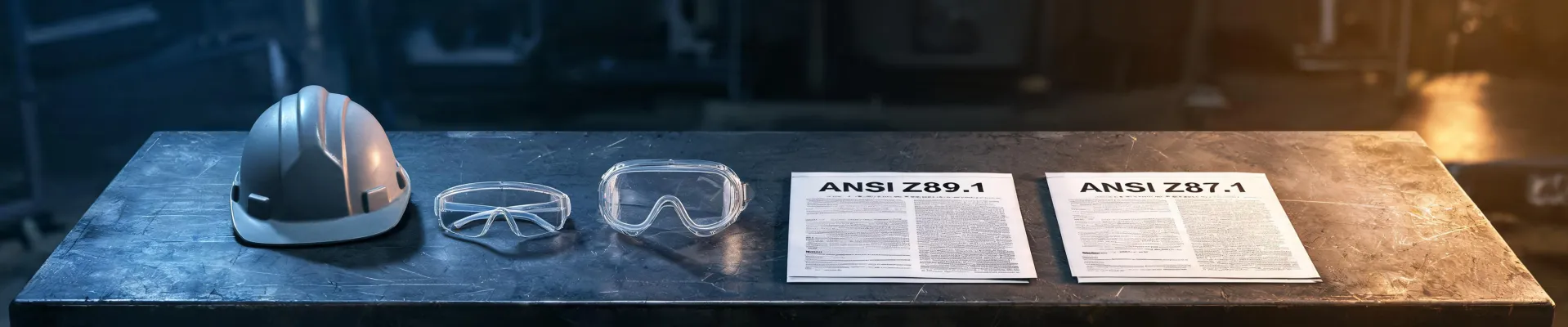
- Compliance check — Does the item have the right ANSI/OSHA/ASTM stamp? (e.g., Z87.1 for glasses, F2413 for boots)
- User check — Have at least two workers from the target crew tried the sample? (Size and comfort are subjective)
- Accessory check — If it's a hard hat, do the planned accessories (cooling pad, sun shade, earmuffs) fit this model?
- Chemical check — For gloves, verify chemical compatibility against the actual solvents used (not just “general purpose”).
- Return policy — Always ask about restocking fees before ordering. Some suppliers charge 20% on returns.
I'm not claiming this prevents every mistake, but it has stopped me from pulling the trigger on three bad buys just this year. Five minutes of verification beats five days of correction — that's the honest truth from someone who learned the hard way.

Maeve Callahan
Maeve Callahan is a head-protection analyst covering Type I and Type II hard hats, climbing-style safety helmets, bump caps, chin straps, suspensions, liners, and face-shield carriers. She applies ANSI Z89.1, EN 397, and EN 12492 criteria while comparing impact attenuation, penetration resistance, lateral deformation, electrical class, retention strength, field of vision, mass, fit range, and temperature conditioning. Her guides help EHS teams, contractors, utilities, and buyers select helmet systems for overhead hazards, work at height, electrical exposure, accessory compatibility, and worker acceptance.