My Honest Take: Pyramex for Most PPE Needs
I manage PPE ordering for a mid-sized manufacturing company—roughly $60k annually across 8 vendors. When I took over purchasing in 2020, I inherited a mix of brands: some 3M, some Honeywell, a few no‑name Chinese imports. After consolidating in 2023, I landed on Pyramex as my go‑to supplier for about 70% of items. Not because they’re perfect—no brand is—but because they hit a sweet spot of quality, compliance, and price that makes sense for most of our workers.
Here’s my take: Pyramex is the best balance for general industrial PPE, but if you’re in a niche application (arc flash, extreme chemical exposure, or high‑fall environments), you may need to look elsewhere. And I’ll tell you exactly why—and where I’ve been wrong.
Why I started with Pyramex
Convenience, honestly. We had a dozen different vendors for gloves, glasses, hard hats, and hi‑vis vests. Invoices were a mess—our accounting team spent 6 hours a month reconciling. I wanted fewer relationships, and Pyramex offered a full head‑to‑toe portfolio. Their product catalog covers everything from Pyramex cut resistant gloves (up to ANSI A5 level) to Pyramex safety helmet (Type 1 and Type 2) to bump caps, goggles, and safety glasses.
But a wide catalog isn’t enough. The real clincher? They actually listen to feedback. In 2022, I asked their rep about cooling liners for summer work. They sent samples of the Pyramex hard hat cooling liner within a week. That kind of responsiveness is rare in the safety world.
Where Pyramex shines: cut resistant gloves and safety helmets
Our workers handle sheet metal and glass daily. Pyramex cut resistant gloves in the Cut Pro series have been a standout. We tested them against a competitor’s A3 level gloves: same price point, but the Pyramex lasted about 30% longer before the palms wore through. Not scientific, but our warehouse manager noticed. Plus, the silicone grip pattern actually stayed grippy after a few washes—something budget gloves rarely do.
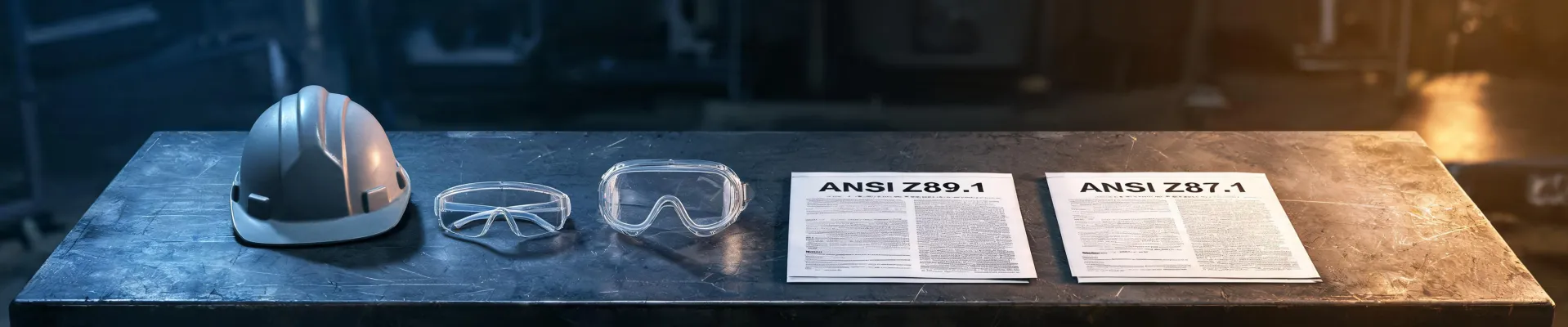
As for hard hats: the Pyramex safety helmet (model Ridgeline, Type 2, vented) has become our default. What sold me was the ratchet suspension adjustment—workers can fine‑tune it without removing the helmet. That sounds minor, but it cut complaint calls by half. They also offer a full brim variant for outdoor workers, which our roofers appreciate. The Z89.1 Type 2 certification covers lateral impact, which gives me peace of mind for forklift traffic areas.
Lab safety glasses and work boots: the details
Lab safety glasses are a different beast. For our R&D lab, I needed anti‑fog, splash proof, and Z87.1 rated. Pyramex’s Vapor series does the job—dual lens with anti‑fog coating that actually works. I’ve had workers fog up cheaper glasses within 10 minutes; with the Vapor, they can go a full shift without wiping. That said, if you need wraparound coverage for grinding sparks, I’d suggest their Bulldog model instead—it has a foam gasket that seals better.
Now, men’s work boots. This is where I have to be honest: Pyramex doesn’t make their own boots. They source from established manufacturers and private label. The boots I’ve tried (model WX‑200) are decent for light construction: steel toe, slip‑resistant sole, decent arch support. But for heavy‑duty use (walking on rebar or in wet concrete), I still recommend brands like Wolverine or Timberland Pro. Our guys run through the Pyramex boots in about 6 months; a premium boot lasts 12–18. So I only stock Pyramex boots for short‑term hires or administrative tours.
And since we’re talking boots, here’s a practical tip I picked up: how to tie work boots properly. Loose laces are a trip hazard, and over‑tightening cuts circulation. Use the “heel lock” method—thread the lace through the top eyelet back into itself to create a loop, then criss‑cross down. Keeps the heel snug without squeezing the instep. It takes 15 seconds extra but prevents foot fatigue on 10‑hour shifts.
When I hesitate to recommend Pyramex
I’m not a safety engineer, so I can’t speak to arc‑rated clothing or chemical‑resistant suits. What I can tell you is that for niche PPE, Pyramex coverage is thinner. Their hi‑vis jackets are ANSI Class 2 standard—fine for roadside workers, but if you need Class 3 with FR rating for oil & gas, you’ll need a specialist like Bulwark or Carhartt. And their fall protection line? They sell harnesses, but they’re not market leaders. For fall arrest, I’d stick with 3M or MSA.
Some purchasing managers ask me: “Why not just buy everything from 3M?” Good question. 3M’s quality is excellent, but their pricing is 20–35% higher on similar products. For our budget, Pyramex gives 90% of the performance at 70% of the cost. That extra margin pays for more frequent glove replacements, which reduces injury risk. To be fair, 3M has better respirators and hearing protection. But for gloves, hard hats, and glasses? Pyramex wins on value.
One thing I’d caution: their Pyramex safety helmet chin strap attachment can be finicky. On the Ridgeline model, the slots for the strap are narrow—workers with thick fingers struggle. I solved it by pre‑attaching straps before distribution. Not a deal‑breaker, but an annoyance.
The bottom line
Hit “confirm” on our first bulk Pyramex order and immediately thought: did I make the right call? The six weeks of rollout were stressful. But after feedback from 120 workers across 3 shifts, I’m confident. Pyramex is a solid workhorse brand for 80% of PPE needs. If you run a warehouse, small assembly line, lab, or construction crew, I’d recommend starting with their catalog. For specialty applications, supplement with niche brands. And always verify that the product meets your specific standard—ANSI Z87.1, Z89.1, or ISEA 105—by checking the label. Don’t just take my word for it.
Prices as of April 2025: Pyramex cut resistant gloves (A3 level) average $4.50/pair; Pyramex safety helmet (Type 2 vented) around $18; lab safety glasses (Vapor series) $7.00; men’s work boots (WX‑200) $65. Verify current pricing at pyramex.com. And yes, we taught everyone the heel‑lock knot. No more tripping.

Maeve Callahan
Maeve Callahan is a head-protection analyst covering Type I and Type II hard hats, climbing-style safety helmets, bump caps, chin straps, suspensions, liners, and face-shield carriers. She applies ANSI Z89.1, EN 397, and EN 12492 criteria while comparing impact attenuation, penetration resistance, lateral deformation, electrical class, retention strength, field of vision, mass, fit range, and temperature conditioning. Her guides help EHS teams, contractors, utilities, and buyers select helmet systems for overhead hazards, work at height, electrical exposure, accessory compatibility, and worker acceptance.