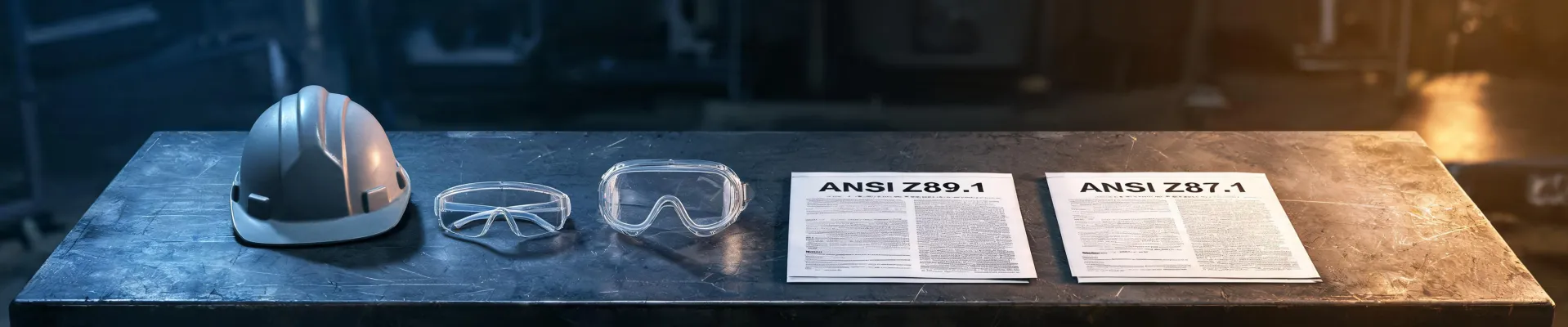
When I took over purchasing for our 40-person field services company in 2020, I treated PPE like office supplies: pick a decent product, get a fair price, set up a reorder. Hard hats, gloves, glasses, boots. Nothing to overthink.
Until the complaints started.
The outdoor crew complained about sun baking the back of their necks. The people near grinders and backup alarms kept leaving their ear muffs on the tool bench. One installation team treated our plain white hard hats as disposable - we replaced seven in a single quarter.
That's when it hit me: I wasn't buying the wrong hard hat. I was buying one kind of hard hat for everyone.
Pyramex makes a wide range of head protection for a reason. Different crews have different problems, and the right helmet usually fixes a specific problem. Since there's no one-size-fits-all answer, this guide breaks down the three Pyramex hard hat setups I actually order: cowboy-style full brims, slotted shells with ear muffs, and hydro dipped patterns. I'll also cover the boot-lacing note we send to new hires.
Start with the workday, not the sticker price
The mistake I made early on was standardizing on one hat because it made my purchasing life easier. Uniformity feels efficient until you realize a $13 hard hat that lives on a passenger seat isn't protecting anyone.
Now I split our employees into rough groups based on their normal workday:
- People who work outside most of the day.
- People who work in consistently noisy areas.
- People who won't keep track of plain, identical gear.
Most teams fit one of those categories. Some fit two. Once you figure out which one applies, the buying decision gets clearer.
Outdoor work: Pyramex cowboy hat hard hat
I'll admit, when I first saw a cowboy-style full brim in a safety catalog, I assumed it was a novelty. It isn't.
Full brim designs extend all the way around the shell. That extra coverage does two useful things for outdoor crews: it shades the neck and ears during long afternoon sun, and it keeps rain from running down the back of someone's collar.
In May 2024, we replaced cap-style helmets for our utility crew with Pyramex cowboy hat hard hats before a summer of highway work. That sounds like a small change, but the crew noticed. One lead hand in Texas told me it was the first hard hat he didn't want to pull off during break. When you hear that from a guy who usually hates PPE, you're onto something.
Here's where I used to get it wrong: I thought a cap-style shell plus a clip-on sun shade would be the flexible option. In practice, the add-ons got lost and workers skipped them. A one-piece brim is harder to forget. If you search for Pyramex cowboy hat hard hat and worry about compliance, verify the specific model's standards label against your hazard assessment. Most full-brim Pyramex models meet ANSI/ISEA Z89.1, but check the exact shell you're ordering.
Noisy work: Pyramex hard hat ear muffs
The second scenario is noise.
Our shop crew didn't need hearing protection all day. They needed it around grinders, cutting, and forklift horns, then they needed to hear a supervisor the moment the noise stopped. Separate ear muffs didn't work for us because they lived on a shelf next to the door. Out of sight, out of mind.
What stuck was a slotted hard hat shell with Pyramex hard hat ear muffs attached. The muffs lock into the shell's accessory slots. When a worker walks into a quieter area, they can rotate the muffs out of the way without taking the helmet off. When the noise starts again, the muffs go back over the ears.
A few things I learned from ordering mistakes:
- Make sure the shell has the slots. Some cap-style hard hats don't, and the product photos can be misleading. Confirm before you buy 30.
- Match the noise reduction rating (NRR) to your noise assessment. If you don't know the exposure level, get a basic noise survey before guessing.
- Order spare ear muffs. They take more abuse mounted on a hard hat than they do in a drawer.
One more thing: when delivery timing matters, pay attention to it. In early 2024 we had a job start with a client safety plan that required hearing protection. Standard shipping was eight business days. I paid $120 extra to get the slotted shells and Pyramex hard hat ear muffs in three. A few people called that wasted money. It wasn't. The alternative was the crew waiting on the ground for a day, which would have cost more than the freight and annoyed the client more than the invoice line item.
The buy-in problem: Pyramex hydro dipped hard hats
The third scenario is harder to see. It doesn't show up in a noise survey or a weather report. It shows up as gear that keeps getting lost.
If your crew sees a hard hat as a disposable company object, just another white helmet in a stack, they treat it that way. We replaced seven hats in one quarter for a 12-person installation crew. That wasn't a hardware problem. It was a respect problem.
Around that time, I came across Pyramex hydro dipped hard hats in a distributor catalog. Hydro dipping puts a full-shell pattern on the helmet, camo, wood grain, flag designs, that kind of thing. I ordered a few for the crew that kept losing hats.
The result surprised me. They started claiming their helmets by pattern. Nobody grabbed the wrong one, and since they had a look they liked, they kept track of it. Did it solve every PPE behavior issue? No. Did it cut our replacement rate? Noticeably.
I don't have a study to quote on this. What I have is an observation: people take better care of equipment they like. If you're dealing with low compliance instead of a specific hazard, a Pyramex hydro dipped hard hat can be cheaper than the plain white hats you'll keep replacing.
Below the neck: safety shoes and how to lace work boots
Once the head protection is sorted, look at footwear. Safety shoes create the same debate: do you buy one standard model for everyone, or let people pick what fits their work?
One model only works when everyone has the same hazard. In reality, warehouse crews need impact protection, maintenance teams need slip resistance, and anyone near live electrical parts needs an EH-rated footwear assessment. If the shoes are uncomfortable or the heel slips, workers find ways to avoid wearing them.
Since lacing problems cause more foot complaints than most people expect, here is our quick how to lace work boots guide for new hires:
- Lace the boot normally to the second-from-top eyelet.
- At the top eyelet, push each lace end straight down into the same-side eyelet to create a small loop.
- Cross the ends and push each one through the opposite loop.
- Pull the ends tight to lock the heel, then tie the bow as usual.
That heel-lock method cut foot complaints on our crews faster than any premium insole we tried. Not a scientific study, just a practical one.
Which Pyramex hard hat should you order?
Run your team through this quick checklist:
- Direct sun or rain most of the day? Order a Pyramex full brim, cowboy-style hard hat.
- Noise is part of their routine? Choose a slotted shell and add Pyramex hard hat ear muffs.
- Crew members ignore or lose plain white hats? Offer Pyramex hydro dipped hard hats in patterns they want to wear.
If you answered yes to more than one, buy for each work group instead of forcing one style on everyone. It feels less efficient on paper, but it usually costs less over a full year. I stopped asking which Pyramex hard hat is best and started asking what problem my crew has today.
And once the order is placed, confirm the exact arrival date. If the job starts Monday and the helmets show up Thursday, a low price doesn't mean much. In an urgent situation, guaranteed delivery is not an upsell. It's the cheapest insurance you'll buy all quarter.

Maeve Callahan
Maeve Callahan is a head-protection analyst covering Type I and Type II hard hats, climbing-style safety helmets, bump caps, chin straps, suspensions, liners, and face-shield carriers. She applies ANSI Z89.1, EN 397, and EN 12492 criteria while comparing impact attenuation, penetration resistance, lateral deformation, electrical class, retention strength, field of vision, mass, fit range, and temperature conditioning. Her guides help EHS teams, contractors, utilities, and buyers select helmet systems for overhead hazards, work at height, electrical exposure, accessory compatibility, and worker acceptance.