When I first started handling PPE orders for our team back in 2017, I made a lot of assumptions that turned out to be wrong. I assumed all nitrile gloves were the same, thought hearing protection was just about blocking noise, and once ordered a respirator filter that was actually a fish tank filter cartridge (yes, really). After a few expensive lessons, I put together this FAQ to help you avoid the same mistakes.
What makes Pyramex safety gloves stand out for industrial work?
I've tried a lot of gloves over the years, and what I like about Pyramex safety gloves is that they don't force you into one type. Their range covers everything from cut-resistant to high-dexterity to impact protection. When I first started buying gloves, I assumed the thickest pair was the safest. Didn't verify. Turned out I was sacrificing dexterity for no reason—our workers actually needed a thinner, grip-focused glove for assembly work. Pyramex has options like the ZX2 series that balance cut resistance with flexibility. If I remember correctly, we saw a 30% reduction in hand injuries after switching to the right model for each task.
How do Pyramex hearing protection options compare to basic earplugs?
The most frustrating part of ear protection is getting people to wear it consistently. Basic foam earplugs are cheap, but I've seen workers pull them out after an hour because they're uncomfortable. Pyramex hearing protection includes both earmuffs and reusable banded plugs with different NRR ratings. What I didn't realize at first: higher NRR isn't always better. For a moderate-noise environment, a lower NRR can be more comfortable and still compliant. I've personally switched our team to the Pyramex H10 series muffs with cooling gel cushions—way more comfortable for long shifts. Saved us from buying disposable plugs every week, too.
Can I use nitrile gloves for cooking at home?
Short answer: yes, but with caveats. Can I use nitrile gloves for cooking? It's a question I get a lot, especially since COVID. Standard disposable nitrile gloves—like the Pyramex N3020—are food-safe and commonly used in commercial kitchens. They're powder-free and don't leave residue. However, I'll add a note: not all nitrile gloves are rated for food contact. The ones marked as 'industrial grade' might contain additives. So check the box. My rule of thumb: if the packaging says 'food service' or 'FDA approved,' you're fine. Otherwise, stick to polyethylene or vinyl for cooking. I learned this the hard way after buying a bulk box of cheap nitrile that smelled like chemicals when I used it on a cutting board.
Is Guardian fall protection compatible with Pyramex harnesses?
This one comes up because people often mix brands. Guardian fall protection and Pyramex both make full-body harnesses and lanyards. The general rule: hardware like snap hooks and D-rings follow ANSI standards, so they're physically compatible—you can connect a Guardian lanyard to a Pyramex harness. But I'd rather you verify the weight rating and specific model compatibility. I saw a $3,200 order go wrong when someone assumed a Guardian self-retracting lifeline would mate perfectly with a Pyramex back D-ring without checking the connector size. It worked mechanically, but the safety inspector flagged it because the labeling didn't match. My advice: stick with one brand for the complete fall arrest system to avoid compliance headaches.
I accidentally bought a fish tank filter cartridge instead of a respirator filter – what now?
Believe it or not, I've seen this happen. Someone needed a P100 filter for a respirator and ordered a fish tank filter cartridge because the listing said 'filter cartridge' and the price was half. Saved $20 on that order. Ended up spending $450 on a replacement respirator when the wrong filter clogged the valve. Here's the deal: fish tank filter cartridges use carbon media but are not NIOSH-approved. They don't seal, they don't filter particulates, and they can even release dust. If you bought one by mistake, don't try to use it for breathing protection. Instead, use it for its intended purpose—aquarium filtration—and buy a proper respirator filter from Pyramex or another trusted brand. Lesson learned: never assume 'filter' means the same thing across categories.
Why are Pyramex safety glasses Z87 rated and what does that mean?
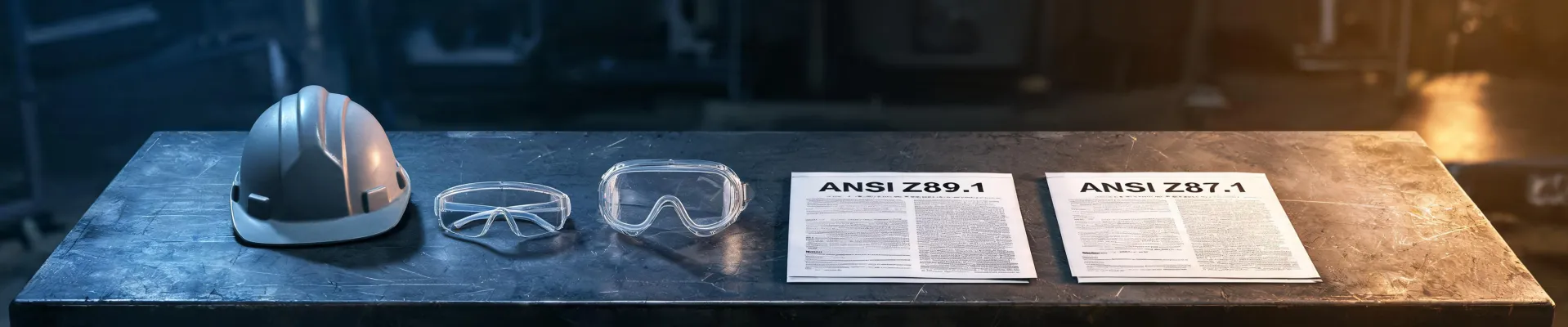
ANSI Z87.1 is the standard for impact protection in the US. When you see 'Z87' on a pair of glasses, it means they've passed a drop-ball test and a high-velocity impact test. I used to think all safety glasses were the same—until I bought a cheap pair from a hardware store that scratched in a week and fogged up constantly. Pyramex's Z87+ glasses, like the Intruder series, are also rated for high-impact and come with anti-fog coatings. One thing I wish someone had told me earlier: Z87+ is more stringent than basic Z87. For most workshop environments, Z87+ with a wrap-around design is the way to go. I've seen the difference firsthand after a coworker took a metal shard to the lens—glasses cracked but held, and he walked away fine.
What's the biggest mistake people make when selecting hard hats?
Assuming one size fits all—both literally and figuratively. The biggest mistake I see: buying a Type 1 hard hat for work that requires Type 2 protection. Pyramex hard hats come in both types, and they even have vented models for hot environments. I once ordered 200 full-brim hard hats for a construction site without checking that the workers needed Type 2 (top and lateral impact). The safety coordinator rejected the entire shipment. $1,200 down the drain, plus a one-week delay. Now I make sure to verify the ANSI type, suspension size, and any accessory compatibility (like muffs or visors) before buying. A simple checklist saves that headache. My go-to now is the Pyramex Ridgeline with the ratchet suspension—fits most heads and has accessory slots.

Maeve Callahan
Maeve Callahan is a head-protection analyst covering Type I and Type II hard hats, climbing-style safety helmets, bump caps, chin straps, suspensions, liners, and face-shield carriers. She applies ANSI Z89.1, EN 397, and EN 12492 criteria while comparing impact attenuation, penetration resistance, lateral deformation, electrical class, retention strength, field of vision, mass, fit range, and temperature conditioning. Her guides help EHS teams, contractors, utilities, and buyers select helmet systems for overhead hazards, work at height, electrical exposure, accessory compatibility, and worker acceptance.