-
What should I look for in Pyramex safety glasses?
-
Are Pyramex safety vests worth the cost?
-
What is a 'PPE oil filter' and do I need one?
-
Do hard hats with chin straps really make a difference?
-
Why is fire alarm blinking red?
-
How do I balance cost and compliance when buying PPE?
-
What's the biggest mistake companies make when switching PPE vendors?
-
How can I make PPE procurement more efficient?
I'm a procurement manager at a 250-person manufacturing company. I've managed our PPE budget ($180,000 annually) for six years, negotiated with 40+ vendors, and documented every order in our cost tracking system. Below are the questions I get from our safety team, new hires, and other procurement folks. My experience is based on about 200 mid-range bulk orders for manufacturing. If you're in construction or healthcare, your experience might differ.
What should I look for in Pyramex safety glasses?
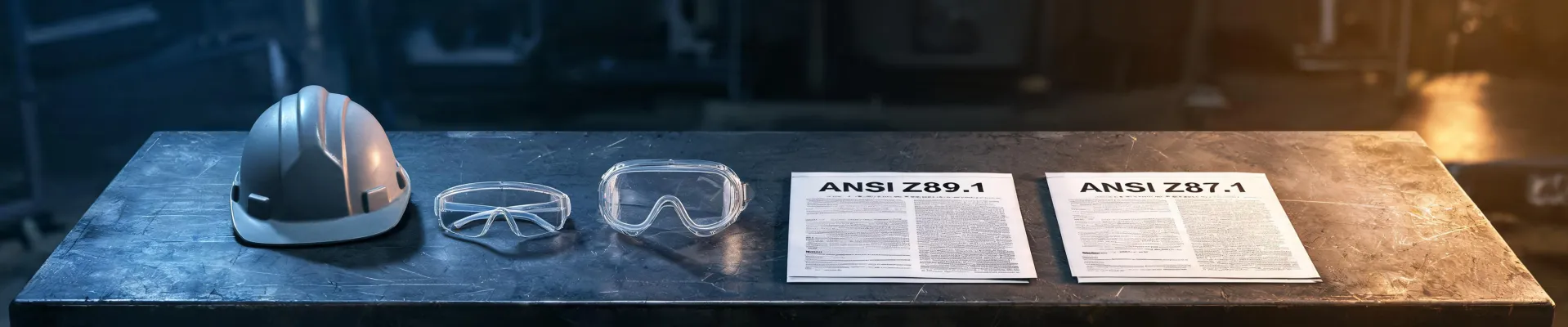
Look, the model matters less than the fit and the lens coating. We've had good luck with the Pyramex SC210C safety glasses. They meet ANSI Z87.1, the frame is lightweight, and the anti-fog coating actually holds up in our humid plant. But here's the thing: no single pair works for everyone. I've found that workers with narrower faces often prefer the SC210C, while those with wider faces need a different frame. The key specs are impact resistance (Z87.1), UV protection, and whether the lenses are replaceable. In my opinion, the extra $3-5 per pair for anti-fog is worth it. We saved $80 by trying a cheaper brand once. Ended up spending $400 on replacements because the lenses scratched within two weeks. That's a classic penny-wise, pound-foolish move.
Are Pyramex safety vests worth the cost?
I've bought a lot of safety vests. Pyramex safety vests are typically in the mid-range—not the cheapest, not the most expensive. For our warehouse crew, they've been solid. The reflective tape holds up after multiple washes, and the sizing is accurate. But if you need flame-resistant vests, you'll have to look elsewhere; Pyramex's standard vests don't have that rating. We pay around $12-15 per vest in bulk. The cheap $6 vests we tried faded after three washes and the tape peeled. So yes, worth it if you want them to last. But I can't speak to high-visibility requirements for road work—that's a different standard (ANSI Class 2/3). Check the spec sheet.
What is a 'PPE oil filter' and do I need one?
I had a new hire ask for a 'PPE oil filter' last year. I'm not 100% sure what they meant, but I think they confused two things. There is no such thing as a PPE oil filter in the ANSI sense. PPE is personal protective equipment—gloves, glasses, hard hats. An oil filter is a machine part. If you're doing oil changes, you need nitrile gloves, safety glasses, and maybe a face shield for splashes. The oil filter itself is not PPE. If you meant a filter for your shop's air system, that's not PPE either. So before you order, clarify with your safety team. We wasted $200 on the wrong filters once because someone used the wrong term.
Do hard hats with chin straps really make a difference?
Yes, if you have fall hazards or high winds. We switched to hard hats with chin straps for our tower work and high-bay warehouse. The difference is retention. A standard hard hat can fly off in a fall or a strong gust. A Type 2 hard hat with a chin strap stays on. Pyramex makes a few models that are comfortable and don't feel like a cage. Cost is usually $5-10 more per hat. Looking back, I should have paid for expedited shipping on our first order—we waited three weeks and had to borrow hats from another department. At the time, standard delivery seemed safe. It wasn't. Now we keep a buffer stock.
Why is fire alarm blinking red?
This comes up at least once a quarter. A red light on a fire alarm can mean a few things. On a smoke detector, a red LED blinking every few seconds is usually normal—it means the device has power. If it's blinking rapidly or solid red, it could be an alarm condition or a trouble signal. On a fire alarm panel, a blinking red light typically indicates an active alarm or a supervisory condition. Check your panel's manual. NFPA 72 is the standard for fire alarm systems. Don't ignore it. We had a false alarm cost us $2,000 in downtime because no one knew the difference between normal blinking and alarm blinking. If you're unsure, call your monitoring company. Better to annoy them than to ignore a real alarm.
How do I balance cost and compliance when buying PPE?
What I mean is that the 'cheapest' option isn't just about the sticker price—it's about the total cost including your time spent managing issues, the risk of delays, and the potential need for redos. We use a TCO spreadsheet. For safety glasses, we factor in replacement frequency. A $2 pair that lasts two weeks costs the same as a $6 pair that lasts six weeks, but the $6 pair has fewer complaints and better compliance. We also track injury-related costs. In my opinion, compliance is non-negotiable. If it doesn't meet ANSI or your local OSHA rules, it doesn't matter how cheap it is. But within compliant options, you can still optimize. For example, our Pyramex SC210C order saved us $8,400 annually compared to the previous brand because we replaced them less often.
What's the biggest mistake companies make when switching PPE vendors?
Not testing samples with actual workers. We did a trial with 20 workers for a month before switching to Pyramex for our eye protection. The 'cheap' option failed—guys hated the fit and left them off. The Pyramex option held up and they actually wore them. Another mistake: not having a formal approval chain for rush orders. We didn't have one. Cost us when an unauthorized rush fee showed up on the invoice. Now we have a checklist. Also, don't ignore worker feedback. If they don't wear it, you lose money on both the PPE and the injury. I'd argue that's the most expensive mistake of all.
How can I make PPE procurement more efficient?
We moved to an online portal with pre-approved items. Cut order processing from 5 days to 2 days. Automated inventory alerts. The digital process eliminated the data entry errors we used to have. But for custom items, we still call our rep. So it's hybrid. Efficiency isn't about replacing people; it's about removing friction. The automated process usually works for standard items like Pyramex safety glasses or vests. For hard hats with chin straps, we still verify sizing because returns are a pain. If you ask me, the biggest efficiency gain is a well-maintained approved items list. It prevents maverick spending and reduces the number of quotes you need. Take this with a grain of salt: what works for a 250-person plant might not work for a 50-person shop. But the principle holds—standardize where you can, customize where you must.

Maeve Callahan
Maeve Callahan is a head-protection analyst covering Type I and Type II hard hats, climbing-style safety helmets, bump caps, chin straps, suspensions, liners, and face-shield carriers. She applies ANSI Z89.1, EN 397, and EN 12492 criteria while comparing impact attenuation, penetration resistance, lateral deformation, electrical class, retention strength, field of vision, mass, fit range, and temperature conditioning. Her guides help EHS teams, contractors, utilities, and buyers select helmet systems for overhead hazards, work at height, electrical exposure, accessory compatibility, and worker acceptance.