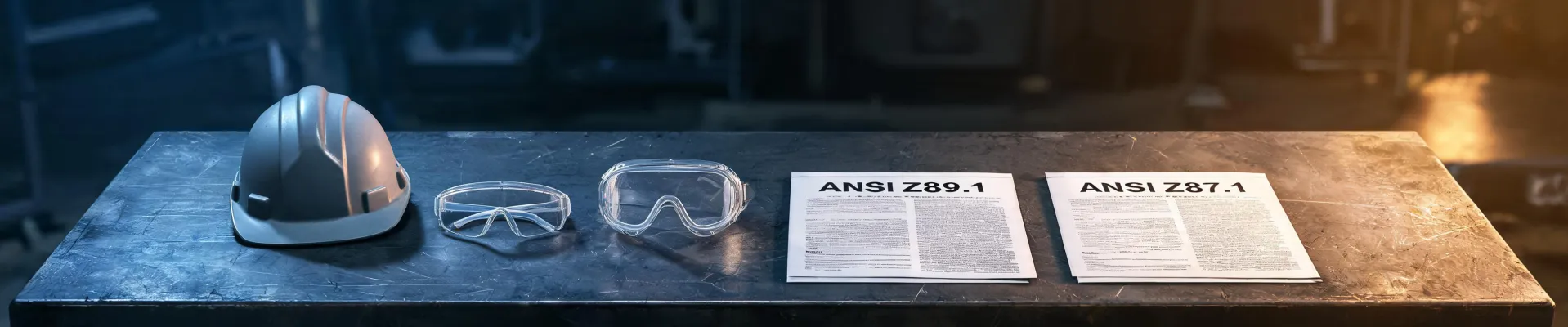
The Comparison I Wish I'd Done Two Years Ago
I've been handling safety equipment orders for eight years. In that time, I've personally made—and documented—15 significant mistakes, totaling roughly $12,000 in wasted budget. About two-thirds of those mistakes trace back to one root cause: assuming a "one-stop" supplier is the smart choice.
This isn't a brand comparison. It's an honest side-by-side of two approaches:
- Going with a one-stop supplier (broad catalog, sells everything from safety glasses to black fencing materials)
- Going with a specialist (narrower focus, deeper expertise in one category)
I've done both. Here's how they actually compare.
Knowledge Depth: Where the First Mistake Happened
In March 2022, we needed gloves for a lab expansion. I found a one-stop supplier whose catalog lumped latex vs nitrile gloves into a single dropdown filter. Seemed convenient. I ordered latex.
The gloves arrived. They fit fine. Three weeks later, two people on the line called in with skin reactions. We had to pull the entire batch—80 boxes, $640 worth—and switch to nitrile overnight. The production delay cost us another three days.
Here's what burns me: nobody at that supplier ever asked what the gloves were for. Not once. Latex vs nitrile gloves aren't interchangeable—they serve different environments. Any half-competent safety supplier should know that.
Later, I tried a specialist. When I told them the application, they asked three questions: What's the exposure? Any known allergies on your team? How long is the wear session? Thirty seconds. Then they recommended nitrile and told me exactly why.
Comparison result: The specialist wins this one clearly. But that's an easy call—gloves are their job. The harder question is whether the same holds true for products where you'd expect the one-stop shop to have an edge.
Product Range and the "We Don't Do That" Response
When I searched for work boots near me and found the same one-stop supplier carried them, plus black fence panels, plus safety glasses, I thought I'd hit the jackpot. One PO, one delivery, one invoice. Convenient, right?
Except convenience masked how shallow every category was. Their safety eyewear catalog? Twelve models, buried between pages of fencing and footwear listings. I needed a specific lens tint for outdoor work. They didn't carry it.
I switched to a specialist for eyewear—a supplier whose entire business is safety glasses. Their edge eyewear catalog alone had 40+ models with lens specs, frame materials, and real-world application notes. And when I asked if they could also supply boots? They said, "Honestly, that's not our strength. Go to a footwear specialist."
That response earned my trust for everything else. The vendor who says this isn't our thing is telling you exactly where their expertise ends—which means you can actually believe them when they say they're good at something.
Comparison result: The counterintuitive part is that the specialist isn't narrower in a meaningful way. They're deeper. The one-stop shop's "range" is an illusion—lots of categories, shallow in all of them.
The Compliance Gap: When a Logo Actually Matters
I used to think branding was irrelevant for safety gear. That was until we had an audit in October 2021.
We'd been supplying generic safety glasses—passed all the required standards testing. But workers kept leaving them in drawers. Turned out the frames felt flimsy and the nose pieces were uncomfortable. Compliance was 61%.
Before the next audit, our new procurement lead switched to Edge eyewear. Same standard compliance, slightly higher unit cost. But that little edge eyewear logo on the arm? Workers recognized it. They trusted it. Compliance jumped to 89% in one quarter.
The glasses weren't objectively safer. But the brand recognition changed behavior—and behavior is what actually prevents injuries.
Comparison result: The specialist wins again, but for a different reason. A focused brand like Edge builds recognition with the people who wear the gear. That recognition translates to compliance, and compliance is the entire point.
Total Cost: The Number That Surprised Me
I ran the math on two orders from 2023. Same category—safety glasses—two different suppliers.
Order A (one-stop supplier): 250 pairs at $4.80 = $1,200. Over 12 months, 73 pairs needed replacing due to frame cracks and lens scratches. Replacement cost: $350. Worker downtime during replacements: roughly 16 hours. One incident where a pair failed during a key task led to a $1,800 injury claim. Total cost: ~$3,350.
Order B (specialist): 250 pairs at $7.90 = $1,975. Replacements: 11 pairs ($87). Downtime: negligible. No incidents. Total cost: ~$2,100.
The cheap supplier cost me $1,250 more in the first year. I'd been optimizing the wrong number the entire time.
Comparison result: Not even close once you count replacements, downtime, and risk. The specialist's higher sticker price was actually the cheaper option.
When the One-Stop Shop Still Makes Sense
I'm not saying everyone should abandon one-stop suppliers. Here's where they still work:
- Small reorders with predictable risk. If you need a basic restock and you already know exactly what works, the convenience is real.
- Low-compliance environments. If safety gear isn't regulated tightly where you operate, the quality gap matters less.
- Trial runs. Testing a new product category through a one-stop shop is fine—just don't rely on their advice for the final decision.
For everything else—especially safety-critical purchases—I'd say go specialist. That's been my experience, though I should note our operation is mid-size with predictable monthly orders. If you're dealing with highly seasonal demand or emergency procurement, the calculus might look different.
The Honest Takeaway
I spent about $4,400 learning this comparison the hard way. The specialist wasn't perfect—I've still had delays and a billing dispute—but the knowledge gap, compliance improvement, and total cost numbers made the switch worth it.
Honestly, I'm still not sure why the cheap glasses failed so often. Maybe the frame polymer was a lower grade, or maybe it was the batch QC. If someone's run similar tests, I'd like to hear it.
But here's what I know for certain: when a supplier tells you they can do everything, ask them what they're not good at. The answer—or the lack of one—will tell you more than any catalog ever could.

Maeve Callahan
Maeve Callahan is a head-protection analyst covering Type I and Type II hard hats, climbing-style safety helmets, bump caps, chin straps, suspensions, liners, and face-shield carriers. She applies ANSI Z89.1, EN 397, and EN 12492 criteria while comparing impact attenuation, penetration resistance, lateral deformation, electrical class, retention strength, field of vision, mass, fit range, and temperature conditioning. Her guides help EHS teams, contractors, utilities, and buyers select helmet systems for overhead hazards, work at height, electrical exposure, accessory compatibility, and worker acceptance.