-
Why I Started Tracking Hard Hat Costs
-
The Comparison Framework
-
Dimension 1: Upfront Price vs. Total Cost
-
Dimension 2: Pyramex Hard Hat Accessories vs. Generic Aftermarket
-
Dimension 3: Compliance and Standards
-
Dimension 4: Comfort, Weight, and Worker Acceptance
- Same Logic, Other PPE Categories
-
What Should You Buy?
Why I Started Tracking Hard Hat Costs
I manage PPE purchasing for a 340-person construction services company. Our safety budget runs about $120,000 a year, and I have documented every order since 2019 in a shared spreadsheet. It’s not glamorous. But when the CFO asks why our PPE spend went up 12% in Q2, I can show her exactly where.
The most common request I get from safety managers is simple: “Compare the Pyramex Ridgeline cap style hard hat to the legacy brand we’ve always used.” So I did. Not by reading marketing pages, but by tracking 200+ orders across three years. This isn’t one of those Pyramex Ridgeline cap style hard hat reviews that just lists features. It’s the kind that reads invoices.
The Comparison Framework
I compared the Pyramex Ridgeline cap-style hard hat against the premium hard hat we used for years. I looked at three things: total cost, accessory compatibility, and worker acceptance. I didn’t look at emotional brand loyalty. In our business, a hard hat is a tool, not a status symbol.
Before I get into the details, the standard caveat: your jobsite may be different. My focus is general construction. If your work involves electrical exposure, lateral impact, or extreme heat, check the spec sheet against your hazard assessment.
Dimension 1: Upfront Price vs. Total Cost
The first quote we got for the legacy hard hat was lower than the Pyramex Ridgeline. Actually, that’s not entirely true—the list prices were close. But the legacy quote had line items for “suspension adjustment,” “accessory installation,” and “minimum order processing.” (Surprise, surprise.) By the time we added freight, the legacy option was about 18% higher than the Pyramex quote.
Here’s the thing: I don’t care about the sticker price. I care about what shows up in the cost tracking system. Pyramex’s distributor gave us one number and that was it. No “you’ll need this add-on later.” No discovery of hidden fees after the PO was signed. That’s the kind of transparency I’ve learned to value.
“I’ve learned to ask what’s NOT included before asking what’s the price. The vendor who lists all fees upfront—even if the total looks higher—usually costs less in the end.”
In Q2 2024, we switched a 180-unit order to Pyramex and saved $2,840 compared to the “premium” quote. That’s 11% of our quarterly PPE budget. Not bad for a hard hat.
Dimension 2: Pyramex Hard Hat Accessories vs. Generic Aftermarket
You can buy a cheap universal sweatband for $3. Or you can buy Pyramex hard hat accessories designed for the Ridgeline’s slot system. The price difference isn’t huge. The performance difference is.
We tested both. The generic winter liner moved around and made the hard hat sit high. Workers complained. We replaced them. The Pyramex-facing accessories clicked in and stayed put. Sounds minor, but when a worker on a scaffold is adjusting an ill-fitting liner, that’s a distraction. Distractions on site are never minor.
I also saw the hidden cost of cheap accessories. We lost a few “universal” clip-on ear muffs and had to reorder them twice. In hindsight, I should have bought the compatible versions from the beginning. But with a safety audit coming up, I made a rushed decision. (Not my proudest procurement moment.)
If you’re comparing Pyramex hard hat accessories to generic ones, run the math on replacement frequency, not just the unit price. The OEM accessory lasted about three times longer in our trial. Better than nothing isn’t the same as good enough.
Dimension 3: Compliance and Standards
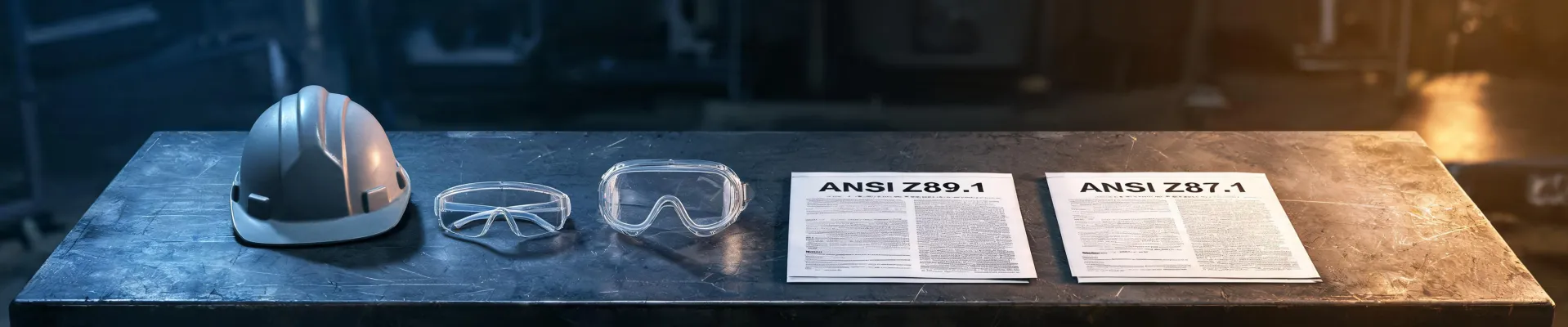
Hard hats are regulated. OSHA references ANSI Z89.1, and every helmet we buy needs a spec sheet in the safety file. The legacy vendor had a rep who would email us the certificate after I called and asked. Twice. Pyramex had the documentation on the product page. I downloaded it in 90 seconds.
When I audited our 2023 PPE spending, I found that compliance verification was eating about six hours of my time every quarter. That’s not a huge number, but it’s real. Procurement time is money. I now put “documentation access” in every vendor comparison.
One important note: if you need a Type II hard hat (lateral impact protection), don’t assume any cap-style model is Type II. Check the label. The Ridgeline we use meets the standard we need for general construction; for the few tasks that require lateral impact, we use a different model. That’s not a knock on Pyramex—it’s a reminder that PPE selection starts with the hazard assessment.
Dimension 4: Comfort, Weight, and Worker Acceptance
Here’s where my experience goes against the conventional wisdom. Everything I’d read said premium hard hats are more comfortable. In practice, our workers rated the Pyramex Ridgeline higher than the premium alternative. We surveyed 23 workers after a 90-day trial: 19 preferred the Ridgeline’s lower profile and ratchet adjustment. Two had no strong opinion. Two missed the full-brim version on sunny days.
The cap style is lighter and sits closer to your head. That matters when you’re wearing it for 10 hours. It also fits under a welding hood better. The premium brand’s cap-style equivalent was fine, but we didn’t find any comfort advantage worth a 25% price premium.
Does that mean Pyramex is “the best”? No. It means for our crews, the Ridgeline is the best value. Your workers might prefer something else. Let them try both and vote. (We actually do vote, and I record the results in the procurement file.)
Same Logic, Other PPE Categories
Once I started comparing total cost instead of sticker price, I applied the same lens to everything. Here are three examples from our procurement history.
Welding Respirator
A welding respirator is not a hard hat accessory. Don’t treat it like one. It’s respiratory protection, and it needs to be NIOSH-approved. When I compared disposable welding respirators versus reusable elastomeric ones, the reusable option cost more upfront but cut our per-welder annual cost by about 35%—because we replaced filters, not the whole mask.
But don’t buy a welding respirator based only on cost. Filtration needs come from your air sampling data. I learned that after we switched to a cheaper model that didn’t fit under welding hoods. The workers stopped wearing it. That’s a $1,200 training and safety failure, not a $90 purchase.
BOA Work Boots
BOA work boots are another example. The closure system costs a little more than laces. But when I looked at lost time caused by untied laces and trips, the BOA version came out ahead for our crews. We buy them for workers who spend most of the day on their feet. For office-to-site people, laces are fine. It’s not about brand; it’s about fit-for-use.
(I almost skipped the BOA boots because they were $18 more per pair. Then I calculated the cost of a single twisted ankle. The math changed.)
How to Use Safety Harness on Roof
Hidden costs are not only about products. Training is a cost, and skipping it is a bigger cost. The phrase I hear on almost every roofing job is “I know how to put on a harness.” But when I ask supervisors how to use safety harness on roof anchor points, I get blank stares. That scares me.
Under OSHA 1926.503, workers need fall-protection training before they work in a fall zone. A harness that isn’t attached to a rated anchor may as well not exist. We now include a 15-minute hands-on harness check in every new-hire orientation. It’s not a huge expense, and it has directly reduced our self-reported near-misses.
Here’s the thing: a harness is not a hard hat accessory. It’s a life-safety item. The same transparency rule applies: ask what’s not included. For a cheap harness, the “not included” might be proper connectors, anchor straps, and training materials.
What Should You Buy?
If you need a cap-style hard hat for general construction, and you track total cost instead of sticker price, the Pyramex Ridgeline is worth putting on your shortlist. I do not mean to imply Pyramex is perfect. We had to return two units with cracked ratchets last year. The distributor replaced them quickly, but it was a reminder that no supplier is defect-free. What matters is how they respond when something goes wrong.
I can’t tell you it’s the right choice for every company. If you need Type II protection, or your workers require a full brim for sun exposure, choose the model that matches the hazard.
But if you’re like me and you’ve been burned by hidden fees, vague spec sheets, and accessories that don’t fit, the transparent pricing alone is worth a trial order. Buy one, test it, survey your workers, and check the invoice. Then decide.
PPE purchasing is not about loyalty. It’s about making every dollar do its job while workers come home safe. That’s a calculation I’m happy to defend.

Maeve Callahan
Maeve Callahan is a head-protection analyst covering Type I and Type II hard hats, climbing-style safety helmets, bump caps, chin straps, suspensions, liners, and face-shield carriers. She applies ANSI Z89.1, EN 397, and EN 12492 criteria while comparing impact attenuation, penetration resistance, lateral deformation, electrical class, retention strength, field of vision, mass, fit range, and temperature conditioning. Her guides help EHS teams, contractors, utilities, and buyers select helmet systems for overhead hazards, work at height, electrical exposure, accessory compatibility, and worker acceptance.