-
Why the Pyramex XS3 Plus (SB4620STP) Gets Worn—and That's the Point
-
The Pyramex Exeter Safety Glasses: Style as Part of the Safety Solution
-
The Cowboy Hat Hard Hat: Not Just a Gimmick (But Check the Rating)
-
A Lesson Beyond Eyewear: Glass Deck Railing and Environmental Hazards
-
Carbon Monoxide Detector vs Smoke Detector: Critical Distinction
-
When the Premium Price Is Actually Justified
-
What Small Businesses Should Know
The most expensive safety gear is usually the wrong choice. I've processed 200+ emergency PPE orders since 2022, and the most dangerous equipment I see isn't the budget stuff—it's the expensive gear sitting unused in a locker. The root cause is almost never "lazy workers." It's that the gear doesn't match the actual hazard or the actual human wearing it.
In my role coordinating safety equipment for industrial and construction clients, I handle a lot of rush orders—same-day turnarounds for sites facing audits, emergency replacements after an injury, and "we need 50 pairs by tomorrow morning" requests that arrive at 4:30 PM. That kind of time pressure exposes what actually works in the real world. And a pattern comes up again and again: companies buy the wrong category of protection.
They buy a safety glass that's really a splash goggle, or a hard hat that's rated for vertical impact but not angled impact, or a smoke detector when they need a carbon monoxide detector. The brand names are different, but the fundamental error is the same: choosing equipment based on marketing or price rather than a risk assessment.
Why the Pyramex XS3 Plus (SB4620STP) Gets Worn—and That's the Point
Take eye protection. In March 2024, a Dallas machine shop called because their workers were pulling off their safety glasses every time they got close to a welding table. The lenses fogged up. The frames pinched. So the crew just stopped wearing them. The fix wasn't a more expensive brand—it was a better match.
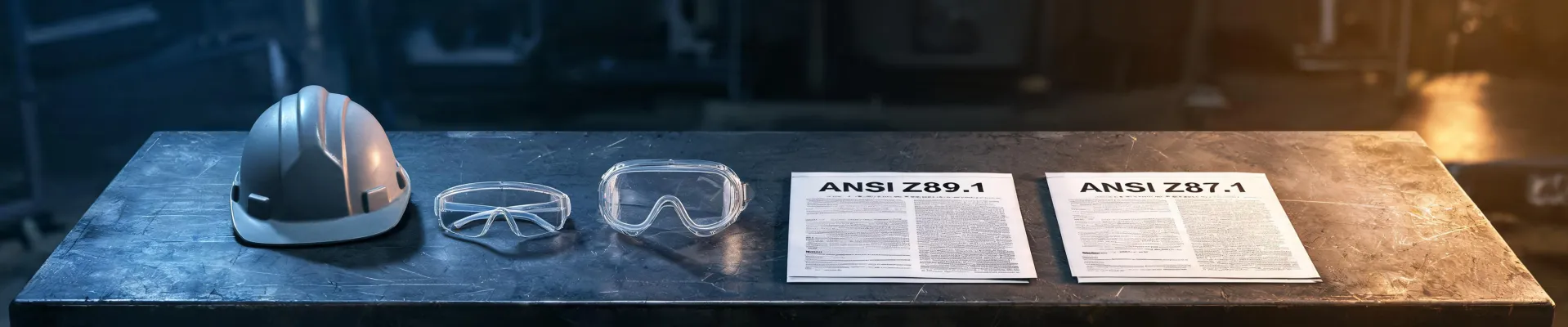
The Pyramex safety glasses XS3 Plus, model SB4620STP, sit in the $10 to $14 range depending on order volume. They meet ANSI Z87.1+ high-impact standards, which means they've passed the high-velocity impact test. What made them work for the shop was the one-piece wrap lens (no frame blocking peripheral vision) and an anti-fog coating that survives real work, not just a climate-controlled office. I shipped 75 pairs; two weeks later, the safety manager called back for another 40.
That follow-up order is the metric I trust. When a shop reorders within two weeks, it means the glasses are going on faces—not into pockets and truck consoles.
The Pyramex Exeter Safety Glasses: Style as Part of the Safety Solution
The Exeter serves a different audience entirely. It's a dual-lens, wrap-around frame that could pass for a pair of $100 athletic sunglasses, and honestly, that's the whole point. For workers who associate industrial safety eyewear with "granny glasses from the 1990s," the Exeter removes the psychological barrier. In my experience, a worker who feels okay looking in the mirror is much more likely to keep the glasses on.
The mirrored-lens version is also bright-sunlight friendly, which matters for crews working on rooftops, loading docks, or around highly reflective environments—think glass curtain walls or glass deck railing on a mezzanine. A lens tint isn't a luxury; it's a hazard control when glare creates blind spots.
The Cowboy Hat Hard Hat: Not Just a Gimmick (But Check the Rating)
The cowboy-style hard hat gets a lot of jokes, but in my order book it's one of the most effective pieces of head protection for agricultural and oil-field work. Pyramex makes one with a wide brim that keeps sun and rain off the neck, and it carries an ANSI Z89.1 rating. For a ranch hand who never wore a traditional hard hat because it felt like wearing a plastic bowl, this design gets them to actually cover their head.
That said, don't buy it for the novelty factor alone. Check the impact type: Type I is rated for vertical impact (things dropped straight down). Type II also covers angled impacts to the top and sides. And consider weight and suspension comfort, because a hat that hurts after two hours is a hat that'll end up hanging on a fence post. (I've seen it.)
A Lesson Beyond Eyewear: Glass Deck Railing and Environmental Hazards
One thing emergency orders have taught me: PPE decisions don't happen in isolation. You can issue the perfect glasses, the perfect hard hat, and still miss serious dangers built into the environment.
During a site walkthrough in October 2023, a client was proud of their new mezzanine with glass deck railing. I had to tell them the glass was annealed, not tempered or laminated. If a heavy tool hit that railing edge, it could break into dangerous shards. They ended up replacing all of it before the inspector ever set foot on site. Costly, yes. But cheaper than the alternative.
The same logic applies to everyday safety gear. If you're working near reflective surfaces, a standard clear lens might create a glare hazard. If you're working around fuel-burning equipment, you need to think about carbon monoxide—not just fire detection.
Carbon Monoxide Detector vs Smoke Detector: Critical Distinction
This is the most common mix-up I see outside industrial settings, but it shows up on job sites too. A smoke detector senses particulate matter—the visible particles of fire. A carbon monoxide detector senses a colorless, odorless gas that comes from incomplete combustion. They are not interchangeable.
If a site or a home only has smoke detectors, a leaking heater, a running forklift, or a truck idling too close to an air intake can produce a dangerous CO buildup with zero warning. Take this with a grain of salt: I'm not a certified safety engineer. But I've seen the aftermath of CO exposure from a lack of proper detection, and it doesn't end with a headache. Install both types. Mount smoke detectors in sleeping areas and common hallways; mount CO detectors near fuel-burning appliances and attached garages. Test them monthly.
When the Premium Price Is Actually Justified
Before you assume this piece is an argument for budget PPE, read this carefully: for some hazards, spending real money is exactly right. If your workers encounter molten metal splashes, chemical sprays, or arc flash, you need sealed goggles, gas-tight respirators, or NFPA 70E-rated face protection. The cheap option in those categories isn't a "choice"—it's a safety violation waiting to happen.
The point isn't "buy cheap." The point is "buy the right category, then choose the most comfortable option within that category that workers will actually use." For 80% of general industrial and construction tasks, that means a solid mid-tier product like the Pyramex XS3 Plus or Exeter—not the $40 designer frames with the logo on the arm.
What Small Businesses Should Know
One quick note for smaller operations: you don't need to order pallet quantities to get treated well. I've shipped single-unit orders of Pyramex glasses to two-person shops and distributed sample lenses for a crew of three to test for a week. The vendors who took my $200 orders seriously when I was starting out are the ones I still use today. Small doesn't mean unimportant—it means potential. Don't let a distributor's minimum-order attitude push you into buying gear that doesn't fit your crew or your hazard profile.
And if a distributor insists you don't matter until you're ordering by the case, find a different distributor.

Maeve Callahan
Maeve Callahan is a head-protection analyst covering Type I and Type II hard hats, climbing-style safety helmets, bump caps, chin straps, suspensions, liners, and face-shield carriers. She applies ANSI Z89.1, EN 397, and EN 12492 criteria while comparing impact attenuation, penetration resistance, lateral deformation, electrical class, retention strength, field of vision, mass, fit range, and temperature conditioning. Her guides help EHS teams, contractors, utilities, and buyers select helmet systems for overhead hazards, work at height, electrical exposure, accessory compatibility, and worker acceptance.