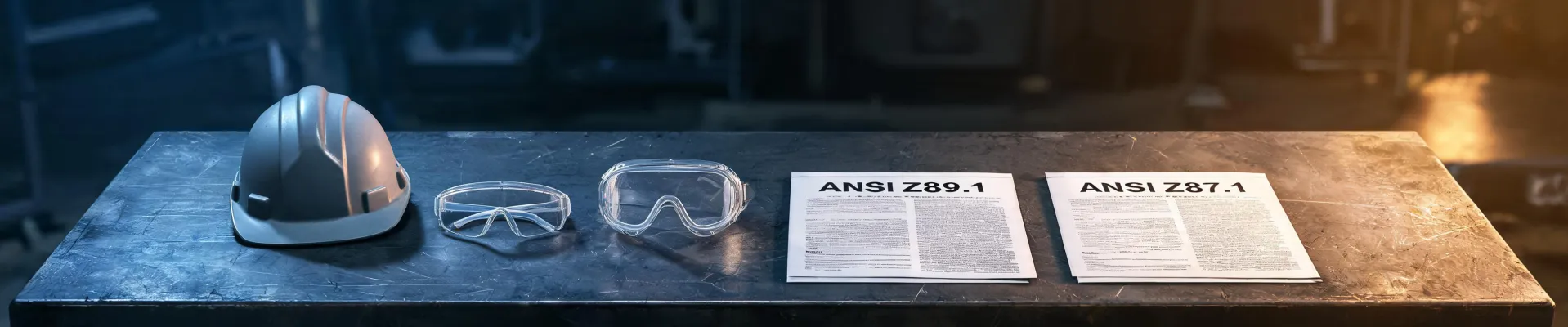
The mistake wasn't the brand. It was the math.
In September 2022, I approved a $6,800 order for Miller fall protection harnesses. The unit price beat two competitors. Six months later, that same order had cost us closer to $9,400.
The problem wasn't Miller's equipment. It was that I treated "fall protection" like a line item instead of a system.
Harnesses, lanyards, anchor points, training, inspection, storage—skip any one of those and the sticker price becomes fiction. I learned that the hard way.
Here's what nine years of buying safety equipment taught me: the cheapest quoted price is almost never the cheapest total cost. And the catalog—even a good one—won't tell you that.
Why I'm qualified to say this (and what it cost)
I've handled PPE procurement for industrial sites for nine years. I've personally made—and documented—five significant mistakes totaling roughly $14,000 in wasted budget. We've used the resulting checklist to catch 47 potential errors in the past 18 months.
That September 2022 Miller order is the one I keep coming back to. It wasn't a quality issue. I checked the Miller fall protection website first—the spec sheet met ANSI Z359.1 requirements, the sizing chart looked clear, the lead time was reasonable. I felt confident.
Then reality hit.
Four workers needed different sizes than our measurements suggested. That's $340 in replacement e-harnesses. Our crew needed a formal competency training session before the new equipment could go on site—$1,200 we hadn't budgeted for. Two harnesses failed inspection after six months, not because of defects, but because they were stored in a damp area near our perimeter black metal fence line. Replacement cost: $480. And because of the sizing delay, we had to expedite a second order. Shipping: $260.
Total unexpected cost: roughly $2,600. On a $6,800 order. That's a 38% premium—not because of Miller, but because I didn't factor in the system around the equipment.
I didn't fully understand the value of total-cost planning until I compared two orders side by side: one that looked cheap upfront, and one that cost more on paper but included training, proper storage guidance, and a clear inspection schedule. Same brand. Very different outcomes.
What I ask before any fall protection order now
Three questions. Simple ones. But they've saved us money and weekend stress calls.
1. "What's NOT included in this quote?"
This one question changed my entire approach. Setup, training, expediting, replacement parts, inspection schedules—ask upfront. If the vendor can't answer clearly, that's information too.
I've learned to ask "what's not included" before I ask "what's the price." It feels counterintuitive. It isn't. The vendor who lists every fee upfront—even if the total looks higher—usually costs less in the end. The one who quotes low and adds later is the one who creates $2,600 surprises.
This is true whether you're buying from Miller or anyone else. Transparency isn't a brand feature. It's a process feature. You have to ask for it.
2. "Do we have the storage and inspection process set up?"
Miller harnesses—and any fall protection equipment—have specific storage requirements. Humidity, UV exposure, and physical damage all affect lifespan. ANSI Z359.1 and OSHA 1926.502 both address inspection requirements, but neither will save you from a damp storage room.
If you're storing harnesses in a poorly ventilated warehouse near a loading dock or a black metal fence line (like we were), you're shortening their life. A harness that should last two years might fail inspection in six months. That's not a defect. That's a storage problem.
Our fix: a dry cabinet, a written inspection log, and a monthly 10-minute check. Total cost: $180. It's saved us at least two harness replacements since 2023.
3. "Is this the right PPE category for the hazard?"
This sounds obvious. It isn't.
Someone on our team once asked, "Which PPE can protect you from liquid chemicals?" Good question. Important question. But it's the wrong question for a fall protection order. A Miller harness won't shield a worker from a chemical splash. Neither will a hard hat or steel-toe boots. Different hazards need different equipment.
Most buyers focus on getting the best price on the equipment they've already decided to buy. The question they should ask is whether that equipment actually matches the hazard they're facing. Fall protection, chemical protection, electrical protection—these are separate categories. The best harness in the world won't help a worker who needs a chemical suit.
And speaking of gear: good work boots matter. Most of our crew wears Tecovas work boots on site—solid, comfortable, supportive. But boots won't stop a fall. They might help you recover your footing. They won't help if you're hanging in a harness. A $250 pair of boots doesn't replace a $500 harness system. They're complementary, not interchangeable.
The black metal fence around your site? It's not PPE. It's a barrier. If workers need to access it—for maintenance, for perimeter checks—you need fall protection for that scenario, not just high-visibility vests. Match the equipment to the actual task, not the general job description.
When Miller might not be the right call
I'm not saying Miller is always the answer. It isn't.
Here's where I'd look elsewhere:
- Tiny crews with limited budgets: If you're buying for two or three workers and your fall risk is minimal (no elevation work above four feet, no leading edges), a full Miller system might be overkill. A simpler lanyard-and-anchor setup may suffice.
- Specialized applications: Confined space entry, high-angle rescue, permanent anchor systems—these may need specialists beyond Miller's standard catalog. The Honeywell Miller fall protection page on their website lists core capabilities. If your job falls outside what their site documents clearly, call them directly and ask. Better to wait a day for an answer than find out later you bought the wrong system.
- Training-only needs: If you already have equipment and just need a refresher, you don't need a product order. Miller offers training separately, but local providers may have better availability and lower cost.
One more boundary condition: if your site's biggest risk isn't falling but something else—chemical exposure, electric shock, struck-by hazards—then fall protection is only one part of your PPE plan. Don't let a harness order distract you from the hazard assessment that should come first.
What I'd tell a first-time buyer
I spent $14,000 on mistakes across nine years. Most of that wasn't bad equipment—it was bad process.
The three-question checklist has saved us money and, I'd argue, prevented at least two near-misses. Not because the equipment changed, but because we got better at understanding what we were actually buying.
Ask what's not included. Confirm your storage and inspection plan. Match the PPE to the hazard—whether that's a fall risk, a liquid chemical, or a perimeter fence that looks safe until someone leans on it.
That's the part most catalogs leave out. It's also the part that matters most.
Rodrigo Salazar
Rodrigo Salazar is a fall-protection analyst specializing in full-body harnesses, energy-absorbing lanyards, self-retracting lifelines, anchorage connectors, rope grabs, horizontal lifelines, and rescue kits. He applies ANSI Z359.11, ANSI Z359.14, EN 361, and EN 360 while evaluating arrest force, clearance, free-fall distance, deceleration distance, gate strength, connector compatibility, user capacity, leading-edge performance, inspection criteria, and rescue time. His guides help construction managers, tower crews, utilities, engineers, and buyers design complete systems around anchor location, mobility, swing-fall exposure, equipment compatibility, inspection burden, and post-arrest recovery.