-
The Comparison Framework That Actually Matters
-
Dimension 1: Pyramex Hard Hat Insert vs. Universal Suspension
-
Dimension 2: Safety Glasses Pyramex Offers vs. Cheap Imports
-
Dimension 3: Loop Earplugs vs. Industrial-Ready Earplugs
-
Dimension 4: Georgia Work Boots vs. Discount Work Boots
-
What Is the Best Welding Helmet?
-
The Bottom Line: Spend Where It Shapes Perception and Safety
I coordinate PPE for an industrial safety distributor, which means I get the 4:30 p.m. call when a plant needs 60 hard hats by Monday. I've managed around 200 rush orders in the last six years—maybe 180, I'd have to check the system—and it took me a few years to understand that the real cost of PPE isn't the purchase price. It's the total cost of wearing, replacing, and being judged by that gear.
When you compare a $10 hard hat to a $30 one, the difference isn't just compliance. It's how long it lasts, how much your crew actually wears it, and how it looks when a client walks through the facility. That last one matters more than most safety managers want to admit.
The Comparison Framework That Actually Matters
When I'm triaging a rush order, I compare four things: standards compliance, comfort retention, durability, and brand perception. The standards part is non-negotiable. Comfort and durability determine whether the PPE is used at all. And perception determines whether your company looks like a professional operation or a discount bin.
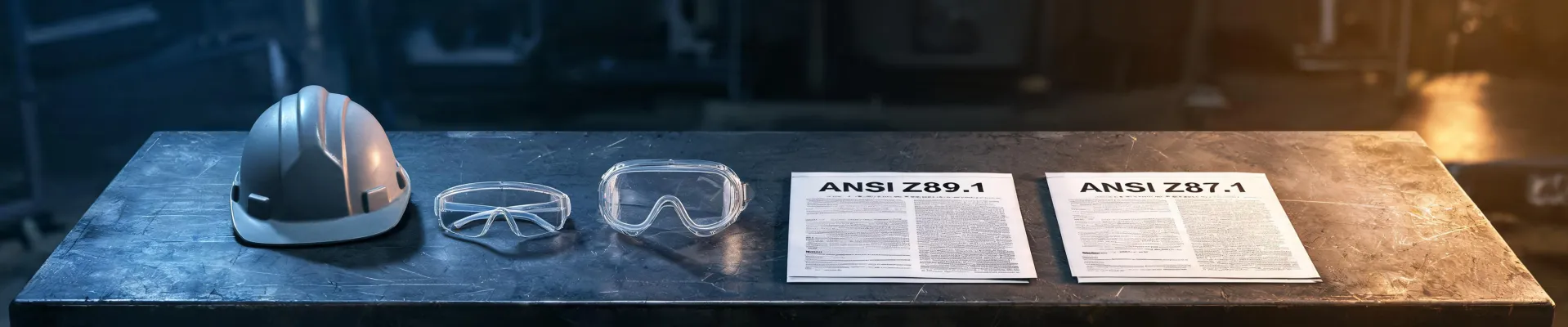
- Standards: ANSI Z89.1 for hard hats, ANSI Z87.1 for eyewear and welding helmets, ASTM F2413 for boots, and the NRR for hearing protection.
- Comfort: Uncomfortable PPE ends up on a shelf or in a truck, not on a worker.
- Durability: A $50 replacement after two months is worse than a $70 option that lasts a year.
- Perception: The crew's gear is the visible part of your safety culture.
As of January 2025, OSHA still requires employers to provide PPE that fits and to train workers on when to use it. The specific standards can be verified at osha.gov, but that list is where I start.
Dimension 1: Pyramex Hard Hat Insert vs. Universal Suspension
One thing I've learned: buyers focus on the hard hat shell and completely miss the suspension. The shell stops the impact, but the insert—the ratchet, the cradle, the sweatband—is what keeps the helmet on a head and keeps it comfortable for 10 hours. When I compared two identical-looking hard hats side by side, same shell, different inserts, I finally understood why the insert matters.
The Pyramex hard hat insert is one of the better ones I've tested. It adjusts easily, wicks sweat, and doesn't dig into the forehead. A universal insert can save a few dollars per helmet, but it usually means a looser fit and more pressure points.
Here's the emergency-specialist example: in March 2024, a client called at 2 p.m. needing 60 hard hats for an audit 36 hours later. The shells were in stock, but the replacement inserts were the wrong fit. Normal lead time was five days. We found a supplier two states away, paid $210 in overnight freight on top of the $1,100 order (which, honestly, felt excessive), and the hats landed at 9 a.m. the next day. Missing that deadline would have meant a $45,000 penalty clause. The lesson wasn't just about expediting. It was that the insert is the part nobody budgets for until it fails.
If your crew wears hard hats all day, spend on the suspension. A $4 upgrade per helmet is cheap compared to a helmet that gets carried instead of worn.
Also check the label: ANSI Z89.1 Type 1 or Type 2. That's the baseline. The insert is where the comfort gains are.
Dimension 2: Safety Glasses Pyramex Offers vs. Cheap Imports
The question everyone asks about eye protection is 'Are they impact rated?' The better question is 'Will they still be clear at hour six?' Cheap lenses scratch, fog, and end up on the workbench. Safety glasses Pyramex offers—especially models with anti-fog and UV coatings—tend to stay on a face because they are comfortable and actually hold up.
To be fair, some $3 glasses are surprisingly comfortable. But the coatings degrade after a few washes, and on a hot job site, fogging is a real safety issue. A worker who can't see clearly takes the glasses off. That's when a particle hits the eye.
My rule: if the frames are for a guest or a one-day audit, budget glasses with an ANSI Z87.1 marking are fine. If they're for daily welding, grinding, or material handling, buy anti-fog lenses from a brand you can get replacements for. In my opinion, that's the first upgrade to make.
As of January 2025, OSHA's 29 CFR 1910.133 requires eye protection with side shields when flying objects are a hazard. That's the floor. Anti-fog is the ceiling.
Dimension 3: Loop Earplugs vs. Industrial-Ready Earplugs
I get why Loop earplugs keep coming up in searches. They're comfortable, they look good, and they work well for sleep and concerts. But on a job site, the comparison is not lifestyle brand vs. generic foam. It's NRR vs. real-world fit.
OSHA's 29 CFR 1910.95 requires employers to provide hearing protectors that get noise exposure down to an acceptable level. Every hearing protector sold for work has a Noise Reduction Rating on the package. If a pair of Loop earplugs doesn't carry an NRR that covers your noise map, they are not PPE for that environment.
That's not a knock on Loop. I'd rather see a worker wear a comfortable, correctly fitted earplug with a verified NRR than a foam plug shoved in halfway. But comfort doesn't replace attenuation. If you're comparing Loop earplugs against work-issued plugs, compare the numbers first, then the fit.
Granted, earplugs are small and easy to ignore. They're also the easiest form of PPE to get wrong. Give your crew options, but make the final call based on the NRR and the noise hazard, not on what looks cooler.
Dimension 4: Georgia Work Boots vs. Discount Work Boots
Georgia work boots aren't made by Pyramex, but they're part of a complete head-to-toe PPE conversation. A steel-toe pair with electrical hazard rating and an ASTM F2413 marking costs more upfront than a $40 warehouse special. Over a 12-hour shift, the difference shows up in knees, back, and the way the crew walks onto a client's site.
In 2023, one customer lost a $15,000 contract partly because the client toured the facility and noticed cracked, mismatched boots. It wasn't in the audit checklist, but it was in the client's head. Quality perception is real. If your company's brand is 'we take safety seriously,' your footwear should match that message.
I'm not saying everyone needs custom orthotics. I'm saying that buying the cheapest boot every three months is more expensive than buying a solid boot every year. For your own crew, Georgia work boots are a reasonable benchmark. For a one-day event, any ASTM-marked boot that fits is fine. Just don't let a two-day rental become a permanent habit.
What Is the Best Welding Helmet?
If you're searching 'what is the best welding helmet,' the answer isn't one model. It's the one that fits your face, meets ANSI Z87.1, and has a lens technology that matches your welding frequency. For a professional who welds every day, that usually means auto-darkening. For someone who welds twice a month, a passive lens is fine and costs a lot less.
Pyramex makes auto-darkening welding helmets that are popular in job shops because the large viewing area makes weld starts easier. They're not the most expensive option, and they're not the absolute best optics on the market, but they're reliable. If you want the best for yourself, compare lens switching speed, shade range, and headgear comfort before looking at price.
To me, the best welding helmet is the one you'll actually pick up. A $500 helmet left in the truck doesn't protect anyone. A $200 helmet that fits and is comfortable will get used every shift.
The Bottom Line: Spend Where It Shapes Perception and Safety
After a couple hundred rush orders, the pattern is clear: cheap PPE costs more in the long run. At least, that's been my experience with deadline-critical projects. Not because it fails catastrophically, but because it gets replaced sooner, worn less, and noticed in the wrong way.
Here's my practical recommendation:
- If you're equipping a temp crew for a one-day job, budget gear with the right ANSI or OSHA marking is acceptable—as long as it fits.
- If you're equipping your own crew for daily work, spend on the layers that touch skin and eyes: a better Pyramex hard hat insert, anti-fog safety glasses, NRR-rated hearing protection, solid Georgia work boots, and a welding helmet that fits.
When a client sees clean, comfortable, properly fitted PPE, they assume the rest of your operations are just as controlled. That assumption is worth more than the $5 you'd save on a generic insert. Or the $40 you'd save on boots that hurt all day.
And next time you're about to email me for an emergency replacement of a Pyramex hard hat insert, remember: the best PPE is the one you've already tested, stocked, and fit-tested before the deadline showed up. (Not that I recommend waiting until Friday afternoon to order PPE.)

Maeve Callahan
Maeve Callahan is a head-protection analyst covering Type I and Type II hard hats, climbing-style safety helmets, bump caps, chin straps, suspensions, liners, and face-shield carriers. She applies ANSI Z89.1, EN 397, and EN 12492 criteria while comparing impact attenuation, penetration resistance, lateral deformation, electrical class, retention strength, field of vision, mass, fit range, and temperature conditioning. Her guides help EHS teams, contractors, utilities, and buyers select helmet systems for overhead hazards, work at height, electrical exposure, accessory compatibility, and worker acceptance.