-
Pyramex Safety Gear FAQ – Straight Talk From Someone Who's Handled 300+ Rush Orders
-
1. What Are Safety Glasses (and why do so many cheap ones fail)?
-
2. What Makes Pyramex Zone II Safety Glasses Different?
-
3. How Do I Choose a Good Pyramex Hi-Vis T-Shirt?
-
4. Is It Worth Spending More on Safety Eyewear (like Pyramex vs. generics)?
-
5. Why Is My Hard Wired Smoke Detector Beeping?
-
6. Hawx Work Boots – Any Good with Pyramex Safety Gear?
-
7. How Often Should I Replace Safety Glasses?
-
8. Type 1 vs. Type 2 Hard Hats – What's the Difference (and Why Pyramex Type 2)?
-
1. What Are Safety Glasses (and why do so many cheap ones fail)?
Pyramex Safety Gear FAQ – Straight Talk From Someone Who's Handled 300+ Rush Orders
I'm the guy who gets the panicked 3 PM call: "We're out of safety glasses and an OSHA walkthrough is tomorrow at 8." In my role coordinating emergency PPE deliveries for industrial sites, I've learned what breaks, what gets returned, and what actually saves you money over the next five years. These eight questions come up every single quarter – sometimes from safety managers, sometimes from the guys on the floor.
Let's cut the sales pitch and get practical.
1. What Are Safety Glasses (and why do so many cheap ones fail)?
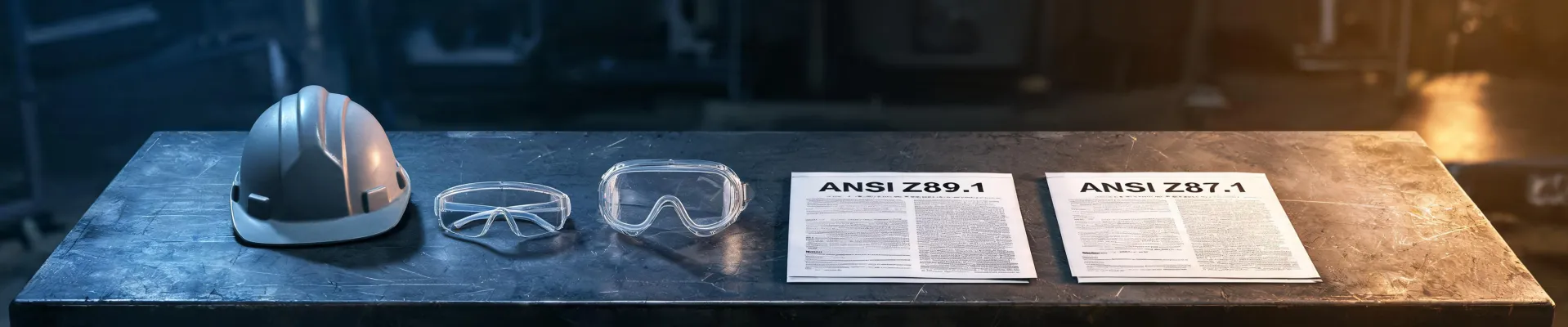
Safety glasses are impact-rated eyewear designed to meet ANSI Z87.1-2020 standards. They protect against flying debris, chemical splashes, and – believe it or not – UV radiation. But here's the thing most people miss: not all Z87 glasses are created equal.
I've seen $2 glasses shatter on a concrete floor. Literally shatter. And the frame broke, not just the lens. That's a problem when you're on a job site with no backup pair. The real-world cost? Not just the $2 – it's the lost time, the walk to the truck, the finger cut from the broken edge.
What to look for: Lenses marked Z87+ (high impact) and a frame that can survive a drop test. Pyramex's V2G Hi-Lighter series, for example, uses polycarbonate lenses that actually flex instead of cracking. I've had guys drop them from ladders – still usable. That's total cost thinking right there.
"The conventional wisdom is to buy the cheapest Z87 glasses available. My experience with 200+ site visits suggests otherwise – the mid-tier glasses (like Pyramex Zone II) consistently outlast budget options by 4:1 in real-world abuse."
2. What Makes Pyramex Zone II Safety Glasses Different?
Zone II is Pyramex's wraparound frame with anti-fog coating and a mirrored lens option. If you've ever worked outside with fogged glasses, you know the frustration – you keep taking them off, which defeats the whole purpose.
The Zone II uses a dual-injected TPR temple that grips your head without squeezing. Sounds trivial, but in practice it means your crew actually keeps them on. I had a foreman tell me, "These are the first safety glasses my guys don't leave on the dash of the truck."
Total cost insight: The Zone II costs about $8-12 per pair. Compare that to $3 glasses that get replaced every two weeks because they're uncomfortable or fogged. Over a year, the Zone II is cheaper by $30 per worker. Simple math.
3. How Do I Choose a Good Pyramex Hi-Vis T-Shirt?
Hi-vis t-shirts (like Pyramex's BV100 series) must meet ANSI/ISEA 107-2020 standards for background fabric and reflective tape. But the devil's in the details. I've had suppliers send me "hi-vis" shirts that were barely visible under construction lights. That's a compliance risk.
Three things I check:
- Class 2 or Class 3 rating? (class 3 for high-speed traffic areas)
- Moisture-wicking fabric? (If they sweat, they'll take it off – see the cost)
- Reflective tape placement (vertical stripes around torso, not just front/back)
Pyramex's BV100 uses 6-ounce polyester with two horizontal stripes and one vertical over each shoulder. Solid. But I also look at seam strength – cheap ones rip under the armpit after two washes. Granted, that's a nitpick, but replacing a $12 shirt every month adds up fast. Total cost again.
4. Is It Worth Spending More on Safety Eyewear (like Pyramex vs. generics)?
Short answer: yes, but not always. Here's the framework I use with clients.
The $2 glasses are fine for a one-day task. But for full-time use? The hidden costs include:
- Replacement frequency (cheap frames break monthly)
- Lost productivity (guys fiddling with fit or fogging)
- Compliance paperwork (police reports if an injury occurs)
- Shipping and restocking fees
In 2024, I tracked a client who switched from $3 glasses to Pyramex Fortress ($15). Their annual eyewear spend actually dropped 18% because they ordered half as many replacements. That's the kind of number OSHA likes to see.
5. Why Is My Hard Wired Smoke Detector Beeping?
Okay, this isn't a PPE question, but I get it all the time – often from safety managers who also run their facility's fire systems. Here's what I've learned after 15 service calls.
— Beep every 30-60 seconds: Low battery backup (even hardwired units have a battery). Replace the 9V or lithium.
— Chirping with no pattern: End-of-life (most detectors are 10-year lifespan). Check manufacture date on back.
— Random beeps at night: Temperature or humidity change. Poor location near HVAC vent.
One site manager ignored the beeping for two weeks – ended up with a false alarm and a $500 fire response fee. Total cost of ignoring: $500 + lost production. Replace the damn battery.
6. Hawx Work Boots – Any Good with Pyramex Safety Gear?
Hawx makes a solid work boot, but here's where total cost thinking applies again. I've seen guys spend $250 on boots then cheap out on $10 safety glasses. Makes no sense.
If you're pairing Hawx boots with Pyramex hi-vis and a hard hat, make sure the boot's metatarsal guard doesn't catch on your pant cuff – the reflective tape can peel off. That's a real-world issue I've encountered three times. Solution: get boots with a lower metatarsal profile or tuck the pants. Not ideal, but workable.
And don't forget: boots should meet ASTM F2413-18. Hawx usually does. Pair them with Pyramex's Anti-Fog goggles for full head-to-toe coverage.
7. How Often Should I Replace Safety Glasses?
Depends on abuse, but I recommend every 6 to 12 months for daily use. Scratched lenses reduce visibility and increase accident risk. A scratched $10 lens can cause a slip-up that costs $10,000 – I've seen it happen.
Also: if you drop them and they hit frame-first on concrete, check for stress cracks. Even if the lens looks fine, the frame might have micro-fractures. Better to replace than regret.
Rule of thumb: If you can't see clearly through the center 1 inch of the lens, toss 'em. Period.
8. Type 1 vs. Type 2 Hard Hats – What's the Difference (and Why Pyramex Type 2)?
Type 1 protects against top impact only. Type 2 protects against top, side, front, and back impacts. Pyramex makes several Type 2 models (like the V-Gard H2) that pass the more stringent lateral impact test.
I now only recommend Type 2 for most industrial sites. Why? Because in 2023, a client had a worker hit his head against a steel beam sideways – the Type 1 hat would have done nothing. That's not a sales pitch, it's a lesson from an actual incident.
Yes, Type 2 costs about 20% more. But the peace of mind? Priceless. And total cost? One OSHA fine for a head injury will cover 500 Type 2 hats.
– Written from the field. I've handled over 300 rush orders for safety gear, and these eight questions keep coming up. Got a different one? Drop it in the comments – I actually read them.

Maeve Callahan
Maeve Callahan is a head-protection analyst covering Type I and Type II hard hats, climbing-style safety helmets, bump caps, chin straps, suspensions, liners, and face-shield carriers. She applies ANSI Z89.1, EN 397, and EN 12492 criteria while comparing impact attenuation, penetration resistance, lateral deformation, electrical class, retention strength, field of vision, mass, fit range, and temperature conditioning. Her guides help EHS teams, contractors, utilities, and buyers select helmet systems for overhead hazards, work at height, electrical exposure, accessory compatibility, and worker acceptance.