-
1. Check the Pyramex SL series cap style hard hat from the inside out
-
2. Match the Pyramex hi vis jacket to the hazard, not the catalog
-
3. Buy bifocal safety glasses that actually get worn
-
4. Inspect leather welding gloves beyond the leather
-
5. How to clean loop earplugs without ruining them
-
6. Verify the standards label, not the marketing page
-
Quick warnings before you upload the PO
If you sign off on PPE orders—safety manager, shop owner, purchasing lead—this checklist is for you. It's the same six points I run before I approve any Pyramex order for our crew. I've been reviewing safety gear full-time for about four years, roughly 200+ unique items a year, and I've learned that the lowest bid in the catalog is rarely the lowest cost once the gear reaches the worksite.
This isn't a product pitch. It's a process. Use it before you place the next purchase order.
1. Check the Pyramex SL series cap style hard hat from the inside out
Most people inspect the shell. Cracks, dents, fading—fine. But the suspension is the real safety component. I've rejected hard hats with flawless shells and a suspension that was cracked, stiff, or popped out of its slots. The shell is the second line of defense. The suspension is the first.
If you're ordering the Pyramex SL series cap style hard hat, run these checks:
- Look at the suspension style before the shell color. Pin-lock is cheaper. Ratchet fits better. If your crew wears hard hats all day, the ratchet version pays off in compliance and comfort.
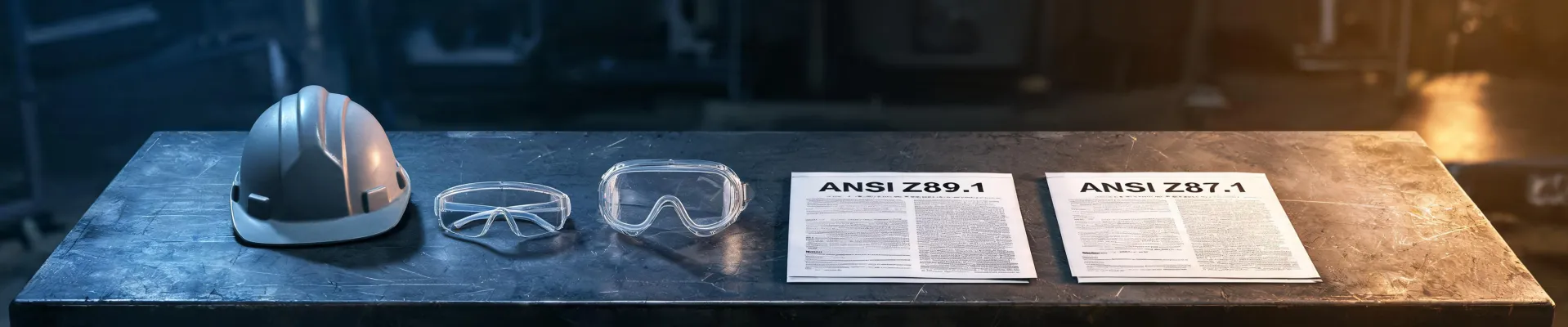
- Check the label. The inside label should show a standard like ANSI/ISEA Z89.1 Type 1, plus the date or edition of the standard. If the standard isn't clear, treat it as unverified.
- Order replacement suspension upfront. This is the detail most buyers skip. Suspension wears out well before the shell. If you wait until after the deadline, you'll pay rush shipping for a $4 part.
A cap style (like the SL) gives better clearance in tight spaces; a full brim gives more weather protection. Pick for the worksite, not for branding.
2. Match the Pyramex hi vis jacket to the hazard, not the catalog
The Pyramex hi vis jacket lineup covers different ANSI/ISEA 107 classes, and the right class depends on where and when the crew works. Class 1 is for low-risk, off-road areas. Class 2 is for most daytime road work. Class 3 is for high-speed or nighttime work. Still, I see two opposite mistakes constantly:
First, buyers order Class 2 for everyone because they don't know the difference. Second, safety managers order Class 3 for everyone because “more visibility is always better.” Both approaches ignore the job site. In my first year, I made the second mistake. I ordered top-spec hi-vis for every outdoor worker, and the crew hated it—too hot, too heavy, and the extra reflective trim snagged on everything. The jackets ended up in the truck, which meant nobody had any protection.
Besides the class, check the arm coverage. A hi-vis vest is not the same as a jacket with sleeves. If the workers are lifting their arms, the upper-body background coverage matters for visibility from the side. Most people skip this detail.
I also add a fit warning: verify sizing with winter layers in mind. If a large jacket can't close over a thick sweatshirt, the reflective tape sits at the wrong height and the whole standard compliance comes into question.
3. Buy bifocal safety glasses that actually get worn
You can buy the cheapest ANSI Z87 glasses in every bin and pass a spot check. But if workers take them off every time they need to read a label or a dial, you're not running a compliant site. You're running a documentation exercise. This is one of the largest gaps I've seen at job sites: 50+ workers that need reading help, but nobody orders the right eye protection.
Bifocal safety glasses solve this. Pyramex makes a bifocal line with diopters typically labeled as +1.5, +2.0, +2.5. The problem? Most buyers pick a random diopter without asking who will actually wear them.
Do a simple test: have the worker hold a measurement tape or a phone at their usual reading distance. Find the magnification where the numbers become sharp. It's a minute per worker and pays off in long-term compliance.
And check that the marking on the lens says Z87+ when you receive them. In practice, I make sure the anti-fog coating is not optional. I've seen a $3 pair of glasses fail because the lenses fog every time the worker walks from a cold break room to a warm shop. The crew then conveniently forgets them. The slightly more expensive pair with anti-fog? Those get worn. That's not a per-unit cost decision; it's a total cost decision.
4. Inspect leather welding gloves beyond the leather
Not all leather welding gloves are equal. I've opened shipments where the gloves looked perfect from the outside and the seams inside were barely tacked down. That doesn't show up until a few sessions of MIG work when the thumb starts separating.
When I review a leather welding glove order, I check three things:
- Seam placement. Seams on the inside burn and wear faster. Lapped or external seams survive more abuse.
- Cuff length. For most stick and MIG work, a short cuff puts your wrist at risk. A 4-inch or longer cuff is better than a skimpy 2-inch cuff.
- Thickness across the palm. A consistent palm thickness matters more than the glove's “leather cowhide” label. You want the layers in the palm and thumb to be substantial.
If you're ordering a universal welding glove, pause. Is the crew doing TIG, MIG, or stick welding? A single glove model can't serve all of them well. It's better to buy two models than to treat “welding glove” as one category.
5. How to clean loop earplugs without ruining them
Earplugs are the most boring part of a PPE budget, yet they cause more frustration than any other item. Over the years I've seen crews throw away reusable earplugs after the first month, not because the earplugs were broken, but because nobody cleaned them properly.
If you use reusable earplugs—the loop-style type with a soft pull loop—here's the cleaning process I recommend:
- Use warm water and a drop of mild dish soap. That's all you need. Mix it in a cup.
- Swirl and gently squeeze the earplugs for about ten seconds. Don't scrub aggressively.
- Rinse them in clean water and air dry completely. Put them on a towel, wait until they're fully dry, then store them in the case.
What most people do wrong: they clean them with alcohol wipes or disinfectant spray. Over time, alcohol breaks down the silicone foam or rubber blend. I've seen earplugs go stiff and brittle in three months, and the worker blames the earplugs. Actually, the cleaning method was the culprit.
Replace reusable earplugs when they no longer spring back, become cracked, or feel permanently compressed. That's the overlooked check. You don't wait for a specific date; you watch for the physical failure.
6. Verify the standards label, not the marketing page
This is my final gate before any order gets paid. I don't care what the website says—I check the physical label or the manufacturer's current documentation. Standards don't live in product descriptions; they live in markings.
What to look for:
- Hard hats: a clear ANSI/ISEA Z89.1 Type 1 or Type 2 marking. For the Pyramex SL series cap style hard hat, confirm the exact type and edition before approving.
- Hi-vis: the ANSI/ISEA 107-2020 class printed directly on the garment tag. If the tag says “ANSI Class 2” without a standard, treat it as suspicious.
- Safety glasses: a Z87+ marking on the lens and the frame. Not just Z87—the plus sign indicates high-impact protection, and it matters with grinder debris.
- Welding gloves: look for a heat/flame standard or at least a clear temperature rating for the use case.
And here's my transparency rule, which applies to every vendor: ask what's NOT included in the price. Shipping, replacement suspensions, custom hi-vis printing, restocking fees—these can add 10-20% to a job. I've learned to ask “what's NOT included” before “what's the price.” The vendor who lists all fees upfront—even if the total looks higher—usually costs less in the end. That's a consistent pattern after hundreds of orders.
Pricing and standards information in this article reflect the situation as of Q1 2025. The safety industry updates standards and product lines more often than most people expect, so verify current requirements with the manufacturer before you order.
Quick warnings before you upload the PO
- Don't stock every item from a single lineup just for a volume discount. Hard hats and eyewear are easy to standardize. Hi-vis and gloves are task-specific and need their own spec.
- Don't overspec FR unless you actually need arc flash protection. The price jumps and crews end up sweating in a jacket they didn't need. Read the hazard assessment first.
- Don't buy “PPE kits” blindly. A pre-assembled kit often includes a glove and eyewear type that doesn't match the job. You're paying for convenience, not fit.
- If a hard hat shell has any cracks—even hairline—replace it. If the suspension is cracked, replace it immediately. Whatever the brand.
None of this is complicated. It's just boring, specific review work. Make it part of your purchasing process and it becomes routine.

Maeve Callahan
Maeve Callahan is a head-protection analyst covering Type I and Type II hard hats, climbing-style safety helmets, bump caps, chin straps, suspensions, liners, and face-shield carriers. She applies ANSI Z89.1, EN 397, and EN 12492 criteria while comparing impact attenuation, penetration resistance, lateral deformation, electrical class, retention strength, field of vision, mass, fit range, and temperature conditioning. Her guides help EHS teams, contractors, utilities, and buyers select helmet systems for overhead hazards, work at height, electrical exposure, accessory compatibility, and worker acceptance.