-
Step 1: Confirm Your Standard Before You Confirm the Product
-
Step 2: Match the Hard Hat to the Job—and the Person
-
Step 3: Don't Skip the Bump Cap—or the Insert
-
Step 4: Gloves—Latex vs Nitrile—Make the Call Before Anyone Reacts
-
Step 5: Confirm Stock for Small Orders—and Watch for the Silent "Small Order Sigh"
-
Step 6: Spend on Speed Where It Actually Counts
-
Step 7: Verify on Arrival. Yes, Even When You're Swamped.
-
Things I've Learned That Don't Go on the Packing Slip
I coordinate safety equipment orders for a living. Not the "planning six months ahead" kind—the "client just realized they have zero PPE and the safety audit is Thursday" kind. In my role, I've processed 200+ rush orders over 8 years for industrial and construction clients. Some lessons you only learn when the clock is actually ticking.
This checklist is for when you need Pyramex gear and you need it now—or when the order is small enough that nobody seems to care, but your safety compliance depends on it. It took me about 3 years and roughly 150 orders to understand that most rush-order failures happen before the order is placed. Not in shipping. Not at the warehouse. Right at the product selection stage. So here's the checklist I use now. Seven steps, in order, with the mistakes I've already made so you don't have to repeat them.
Step 1: Confirm Your Standard Before You Confirm the Product
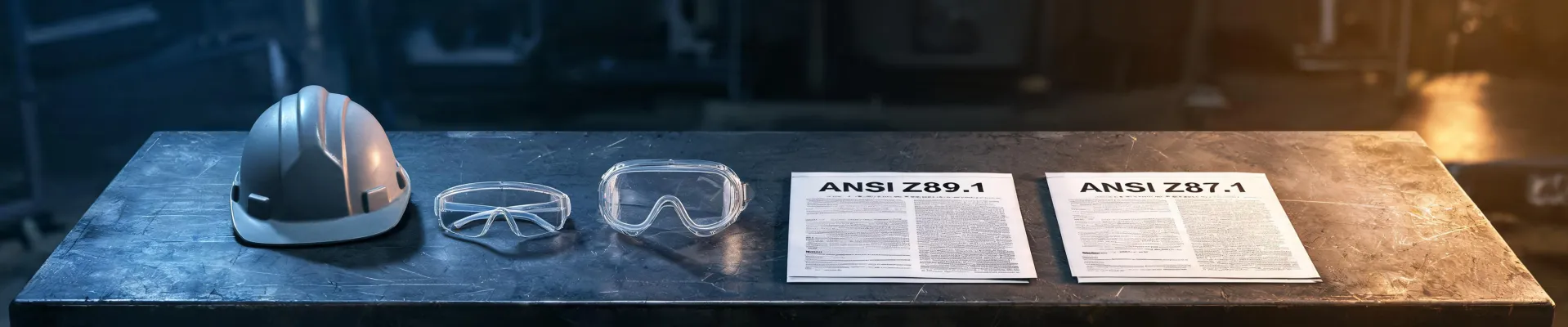
I've seen well-meaning safety managers order "safety glasses" without checking the marking on the lens. The Z87+ mark (that's ANSI Z87.1 under the plus high-impact rating) is the baseline. Pyramex anti fog safety glasses—the vented models, the ones with permanent anti-fog coatings—are stamped for this. But not every "anti-fog" lens is the same. Some have a temporary coating that wears off after a few washes. The permanent coating version costs a bit more, and it's worth it. If your crew moves between cold and warm environments (think walking out of a refrigerated area into a humid loading bay), fogging will drive them crazy, and they'll take the glasses off. That's when eye injuries happen.
For head protection, the question is Type 1 or Type 2 per ANSI Z89.1. Type 1 handles blows to the top of the head. Type 2 adds lateral impact protection. I'll keep this simple: if your people work near low-hanging equipment, protruding steel, or moving load bars, that's a Type 2 conversation. Pyramex makes both, and they make a carbon fiber hard hat that's noticeably lighter than standard fiberglass or HDPE shells. When someone wears a hard hat for 10 hours, half a pound makes a difference. It's not a luxury upgrade—it's fatigue reduction.
Step 2: Match the Hard Hat to the Job—and the Person
Here's something that took me a while to appreciate: workers have strong preferences about their hard hats. I once swapped a requested Green Devil hard hat (bright green, impossible to miss on a job site) for a similar model in yellow because I was in a hurry and yellow was in stock. The crew had specifically asked for the Green Devil. The yellow ones sat unused. I had to reorder and eat the cost. Lesson learned: a hard hat isn't just a safety device to the person wearing it all day. It's their gear. Don't substitute without asking.
Also check the suspension. A hard hat shell might last years, but the suspension wears out—especially in hot environments where sweat and UV get to it. Order replacement suspensions with the hats. It's a cheap add-on and saves a second shipping charge later.
Step 3: Don't Skip the Bump Cap—or the Insert
Bump caps are not hard hats. They don't meet ANSI Z89.1, and they won't protect anyone from falling objects. They're for scenarios where workers need to protect their heads from bumps and scrapes—under machinery, in crawl spaces, in warehouses with low racking. If your hazard assessment says bump caps are acceptable, fine. Just understand what you're buying.
The part that gets forgotten is the bump cap insert. The insert is what actually absorbs impact, and it degrades over time. Foam compresses, plastic fatigues, sweat breaks it down. If the outer shell looks fine but the insert has seen two years of daily use, replace the insert. And check model compatibility—bump cap inserts aren't universal between brands, or even between different styles from the same brand. I've had an order go sideways because the insert looked right, but the clip geometry didn't match the shell. (Ugh, that was a fun phone call to explain.)
Step 4: Gloves—Latex vs Nitrile—Make the Call Before Anyone Reacts
This is the question I get more than any other when clients are restocking in a panic: latex vs nitrile gloves, which ones do I need?
Here's the short version. Latex gloves stretch well, feel thin, and offer good dexterity. The catch is protein-based allergies. Even with powder-free and low-protein options, you can't guarantee zero reaction across your crew. Nitrile gloves are synthetic, more puncture-resistant, and have better chemical resistance for many common industrial materials. They cost slightly more per box, but the gap has narrowed a lot in recent years.
My rule: if there's any uncertainty about latex allergies on site, buy nitrile. The extra cost is pennies per pair compared to the cost of an allergic reaction on your floor.
If someone on the crew has ever had any kind of allergic reaction to rubber, nitrile isn't a preference—it's a requirement. You don't want to be the person who finds out mid-shift that a worker is sensitive to latex.
Step 5: Confirm Stock for Small Orders—and Watch for the Silent "Small Order Sigh"
I'm going to be direct about this because it's been a theme in my career. Some suppliers treat a 25-pair safety glasses order like it's a nuisance. I've been on the buying side with a $300 budget, and I've felt the energy change on the phone. It's real.
Here's my position: small orders are not a favor. They're the beginning of a relationship, and any vendor that understands that will get the larger order later. In 2019, I placed a small trial order for Pyramex safety glasses with a distributor because they were the only ones who returned my call within an hour. Five years later, they've earned six figures worth of my business. Small doesn't mean unimportant—it means potential.
If you're placing a small Pyramex order and need it fast, ask these three questions:
- "Is it in stock at the ship-from location?"
- "What's the cut-off time for same-day dispatch?"
- "Can I get a tracking number within 2 hours of the order?"
If the vendor hesitates on any of these, they're not set up for speed. Find someone who is—even if it costs $20 more.
Step 6: Spend on Speed Where It Actually Counts
Upgrading to overnight shipping feels like the obvious move, but it's often the wrong one. The bottleneck isn't the truck—it's the warehouse. If the vendor misses the daily 3 PM carrier cut-off, overnight shipping just means the package sits in the depot until the next pickup.
Example from March 2024: a client called at 2 PM needing 60 pairs of Pyramex anti fog safety glasses for a plant walkthrough the following morning. Normal ground shipping was 5 days. We found a distributor with a 4 PM same-day dispatch, paid a $35 rush handling fee plus regular freight, and the glasses arrived before 9 AM. Meanwhile, a different client that same week paid $85 for overnight shipping from another vendor—and the package sat in the warehouse because their order came in after the cut-off. $85 lost to a cut-off time that nobody thought to ask about.
The questions that actually save you: "When is your cut-off?" and "Do you have late pickup?" Ask them before you pay for any shipping upgrade.
Step 7: Verify on Arrival. Yes, Even When You're Swamped.
When an order arrives and the packing slip looks right, the instinct is to move on. Fight it.
I skipped this once in 2021. I accepted a shipment of hard hats without opening more than one box. Turned out the supplier had mixed two suspension types—both the right model, but one box had the wrong size for the shells. It wasn't visible until someone tried to fit them. We caught it before the client did, but it was close, and it was entirely avoidable.
Check the actual items against the packing slip. If you ordered bump cap inserts, take one out and click it into a shell. If you ordered anti-fog glasses, open one pair and confirm the lens coating is actually there—you can tell by the way water beads off the surface. Ten minutes of verification beats a week of explaining what went wrong.
Things I've Learned That Don't Go on the Packing Slip
- If in doubt on gloves, go nitrile. The allergy risk of latex isn't worth pennies per pair.
- Anti-fog coating quality matters more than frame style. Trust me on this one.
- The carbon fiber hard hat upgrade is worth the price if your crew works long shifts.
- Bump cap inserts are consumables. Treat them like batteries—keep spares stocked.
- Small orders deserve the same rigor as big ones. Today's 25-pair order is next year's 5,000-pair contract.
Rush orders are always going to be stressful. But the failures I've seen are rarely caused by the shipping company. They're caused by decisions made in the 15 minutes before the order is placed—a skipped verification, a vague substitution, a standard not checked. Run this checklist, and you'll catch those before they become someone else's story about a job site that wasn't ready.

Maeve Callahan
Maeve Callahan is a head-protection analyst covering Type I and Type II hard hats, climbing-style safety helmets, bump caps, chin straps, suspensions, liners, and face-shield carriers. She applies ANSI Z89.1, EN 397, and EN 12492 criteria while comparing impact attenuation, penetration resistance, lateral deformation, electrical class, retention strength, field of vision, mass, fit range, and temperature conditioning. Her guides help EHS teams, contractors, utilities, and buyers select helmet systems for overhead hazards, work at height, electrical exposure, accessory compatibility, and worker acceptance.