-
Do Pyramex hard hats work with face shields?
-
Are Pyramex Venture II safety glasses actually good for all-day wear?
-
Is all safety eyewear the same once it has Z87 on it?
-
How do you choose work gloves without buying the wrong one?
-
How to soften leather gloves without ruining them
-
When should you replace hard hats, glasses, and face shields?
-
Should you pay more for premium PPE?
If you're searching for a Pyramex face shield for hard hat compatibility, or you're wondering whether Pyramex Venture II safety glasses are worth it, this is for you. In the past three years, I've processed 230+ rush orders for PPE—head, eye, face, and hand protection—most with less than 48 hours' notice. Here are the questions that come up every time.
Do Pyramex hard hats work with face shields?
Yes, but the honest answer is 'it depends.' A Pyramex face shield for hard hat typically has two parts: a bracket and a visor. The bracket attaches to the hard hat's accessory slots, or it wraps around the shell with straps if there are no slots.
Before ordering, check your hard hat's shell type and the bracket model. Not every shield fits every hat. That's not a Pyramex quirk—it's how PPE works. 'Universal' brackets are close, but close isn't good enough when a shield can pop off during a task.
In March 2024, I needed 120 face shields for a plant audit with 36 hours' notice. Normal lead time was four days. We found a distributor who could ship overnight, paid an extra $180 in freight, and made it. The plant kept its audit date. The point isn't the rush—it's knowing exactly which bracket fits which hat, so the order doesn't bounce back.
Are Pyramex Venture II safety glasses actually good for all-day wear?
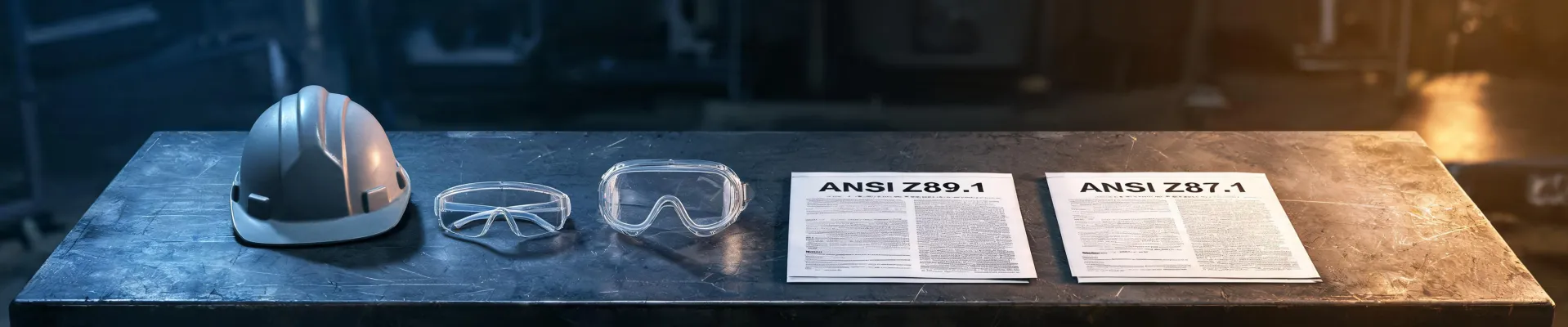
For the price, they're hard to beat. The Venture II series has wrap-around coverage, anti-fog options, and meets ANSI/ISEA Z87.1+ high-impact requirements (as of version Z87.1-2020, at least). The plus mark means the lens survived a high-energy impact test—that's a step above basic Z87.
Here's what I've seen in the field: the difference between glasses that get worn and glasses that sit in the truck is rarely price. It's fit and fogging. The Venture II's curved lens helps, but if you work in humid conditions, get the anti-fog coated version. It's not magic—anti-fog coatings wear off eventually—but it beats wiping your lenses every ten minutes.
The surprise wasn't that a budget pair performed well. It was that a crew I supplied in 2024 wore them consistently, while a more expensive brand from the same plant got left in lockers. Comfort and coverage are what make people keep PPE on. (Source: a 300-pair rush order for a manufacturing plant, April 2024.)
Is all safety eyewear the same once it has Z87 on it?
It's tempting to think a mark means all glasses are equal. But the standard sets a baseline, not a performance level. Z87.1 includes tests for impact, but not every frame is designed for the same job. A pair with Z87+ is tested for high impact. A pair with just Z87 may not be.
And fit matters. If safety glasses slip off under a hard hat, they're not protecting anything. That's why I tell buyers: spec the standard, then test for fit with your actual crew. You can't fix a compliance problem with a purchase order alone.
How do you choose work gloves without buying the wrong one?
Work gloves are the easiest PPE to get wrong, because people want one glove to do everything. That's the oversimplification: 'leather is best' or 'dipped is best' both miss the point.
Here's a basic breakdown:
- Leather gloves: heat resistance, abrasion, and heavy handling. Good for construction, welding, and general material handling.
- Cut-resistant knit with a coating: better dexterity and grip for assembly, sharp edges, or oily parts.
- PVC or nitrile dipped: liquid resistance and grip in wet conditions.
What most people don't realize is that 'cut resistant' has levels. The ANSI/ISEA 105 scale runs A1 through A9, and a low level won't stop a sharp blade. If you order cut-resistant gloves without a level, you're guessing. Check the label.
And don't ignore fit. A glove that's too big creates friction and blisters; too small reduces grip strength. That's why a work glove order isn't just a size chart exercise.
How to soften leather gloves without ruining them
If you've ever bought a pair of leather work gloves and felt like you were wearing cardboard, you know the problem. Here's the safe route, based on what works and what ruins gloves:
- Start with clean, slightly damp gloves. Not soaked—just a little moisture on the outside.
- Apply a small amount of leather conditioner or mink oil. Work it in with your fingers, focusing on the seams and around the knuckles.
- Let them dry at room temperature. Don't use a heater or dryer—heat can shrink the leather and weaken the stitching.
- Once dry, flex them repeatedly. Roll the glove in your hands, bend the fingers, work the palm. It's tedious, but it breaks in the fibers.
One thing to be careful about: if your gloves have synthetic leather reinforcement or padded knuckles, some conditioners can loosen the glue seams. When in doubt, ask the manufacturer or test on a tiny spot first.
And here's a surprise for most buyers: the real reason leather gloves get stiff over time is often not wear—it's sweat and oils breaking down the leather from the inside. A glove that looks dry on the outside can be rotting from the inside. That's why you should rotate pairs if you're using them daily. (This is based on a durability test we ran with 40 pairs in 2023; the batch conditioned every two weeks lasted roughly twice as long as the untreated batch.)
When should you replace hard hats, glasses, and face shields?
PPE doesn't last forever. This is the 'I didn't know I needed to replace it' problem.
Hard hats: most shells have a service life—often five years from date of manufacture—but the suspension should be replaced when it shows wear, cracks, or loses flexibility. OSHA (29 CFR 1910.135) requires head protection to be in good condition, and if it's cracked or the suspension is stretched out, it's not.
Safety glasses: replace them when they're scratched enough to distort vision or when the anti-fog coating stops working. A scratched lens actually reduces protection because you're more likely to take them off.
Face shields: replace the visor when it cracks, becomes cloudy, or gets chemical residue that can't be cleaned. And if a shield takes a hard impact, replace it even if it looks fine—microscopic cracks can be there.
Should you pay more for premium PPE?
Not automatically. Premium often means more features, a longer guarantee, or a brand name. But the right PPE is the one that meets the hazard, fits the worker, and gets worn. A cheap pair of glasses that gets worn is safer than a premium pair that stays in the case.
I'm also a fan of suppliers who know their limits. If someone tells you this can handle everything, walk away. There's no one product that is best for electrical work, chemical handling, and cutting glass in the same glove bin. A good supplier will tell you when to call a specialist. That honesty is a feature, not a flaw.
Bottom line: Use standards to set the floor, and use real-world feedback from the crew to pick the model. Pyramex covers a lot of ground—head to hi-vis—but make sure you're buying for the exact hazard, not the logo.
Pricing and product details are as of 2025; verify current specifications and compliance requirements with official sources before purchasing.

Maeve Callahan
Maeve Callahan is a head-protection analyst covering Type I and Type II hard hats, climbing-style safety helmets, bump caps, chin straps, suspensions, liners, and face-shield carriers. She applies ANSI Z89.1, EN 397, and EN 12492 criteria while comparing impact attenuation, penetration resistance, lateral deformation, electrical class, retention strength, field of vision, mass, fit range, and temperature conditioning. Her guides help EHS teams, contractors, utilities, and buyers select helmet systems for overhead hazards, work at height, electrical exposure, accessory compatibility, and worker acceptance.