-
1. How often should I replace my Pyramex hard hat suspension?
-
2. Are Pyramex Proximity safety glasses worth ordering?
-
3. What Pyramex work gloves should I keep stocked?
-
4. What is a bump cap insert, and why does it matter?
-
5. Can I use nitrile gloves for cooking?
-
6. What should I check before ordering Pyramex hard hats in bulk?
-
7. Are Pyramex safety glasses with anti-fog coating worth it?
I plan and source PPE for industrial distributors, and based on our internal data from 200+ rush jobs, Pyramex comes up a lot when a deadline hits. I've handled same-day hard hat orders, last-minute safety glasses replacements, and more than a few glove rush calls. Here are the Pyramex questions I actually answer, without the sales pitch.
1. How often should I replace my Pyramex hard hat suspension?
If you're asking about a Pyramex hard hat suspension, don't wait until it looks bad. The suspension is what takes the impact, and plastic or nylon can get brittle long before it cracks visibly. I've seen suspensions fail right after a hard hit that didn't damage the shell.
General practice is to replace the suspension at least every 12 months. Replace it sooner after any significant impact, and replace it immediately if you notice cracks, fraying, or a loose fit. Replacement suspension kits are model-specific, so check the number molded into your hard hat before ordering.
OSHA 29 CFR 1910.135 requires head protection to be maintained in good condition. A cracked suspension doesn't count as good condition. If in doubt, replace it. Suspensions are inexpensive compared to a head injury.
2. Are Pyramex Proximity safety glasses worth ordering?
Pyramex Proximity safety glasses are one of my default recommendations for lightweight eye protection. They have a wraparound frame and rubber-tipped cable temples, so they stay put on sweaty or active workers. Most users I've supplied like them better than the flat-lens disposables that slide down your nose.
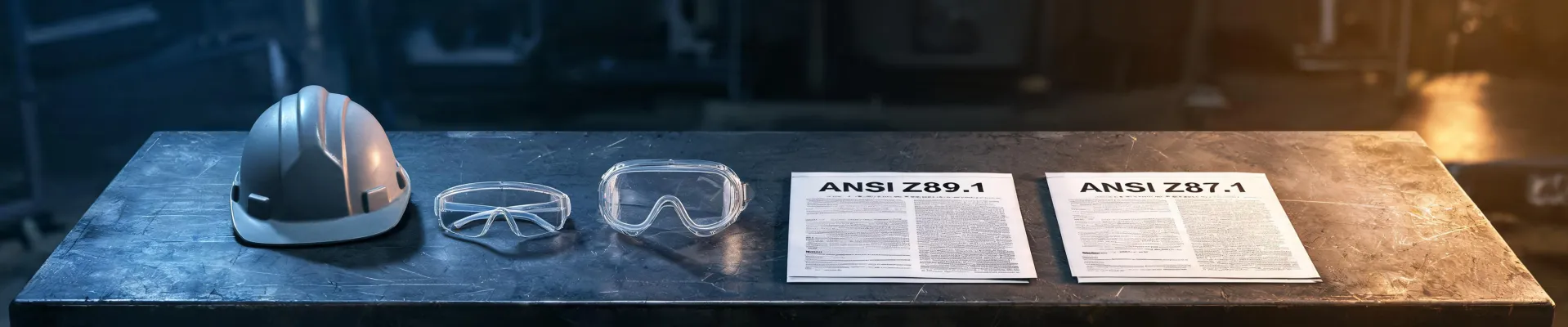
If I remember correctly, the cable temples can feel snug on very wide heads, but the tradeoff is that they don't shift when someone is bent over. They meet ANSI/ISEA Z87.1, which is the standard you need for most industrial eye hazards.
Need to try them first? Order a small batch. Good suppliers don't need a 500-pair order to take you seriously. Today's ten pairs can turn into next year's big order.
3. What Pyramex work gloves should I keep stocked?
For general warehouse and assembly work, keep two types: nitrile-coated dipped gloves for grip in oily or slightly wet conditions, and cut-resistant gloves for handling sharp metal or glass. You don't need fifteen glove styles on the shelf. Start with those two and add based on your actual hazards.
Everything I read early on said buy the highest cut level available and you're set. In practice, a mid-level cut-resistant glove that fits well is safer than a heavy premium glove that workers take off whenever they need to handle small parts. Comfort drives compliance, and compliance drives safety.
Check the gloves' ratings rather than relying on marketing. Cut resistance for work gloves is usually tested under ASTM F2992 and rated by levels in ANSI/ISEA 105. Impact protection for the back of the hand is covered under ANSI/ISEA 138. Match the level to the task.
4. What is a bump cap insert, and why does it matter?
A bump cap insert is the cushioned liner inside a bump cap. It gives the cap a snug fit and absorbs the energy from striking your head on a stationary object, like pipes, low beams, or shelving brackets.
Important: a bump cap is not a hard hat. It doesn't protect against falling objects, and it shouldn't be used where overhead loads exist. For falling tool hazards, choose a Type 1 or Type 2 hard hat that meets ANSI/ISEA Z89.1.
If you have a Pyramex bump cap, inspect the insert just like you'd inspect a hard hat suspension. Sweat and oil flatten the foam over time. When the insert is worn, compressed, or just packed out, replace it. An insert with no cushioning left is just a heavy cap.
5. Can I use nitrile gloves for cooking?
Only if the box says it's food-contact safe. Nitrile gloves is a material category, not a food-safety certification.
I made this mistake early in my career: assumed all nitrile was the same. It isn't. A pair of solvent-resistant nitrile work gloves can have coatings, powders, or other chemistry that isn't approved for food contact. In the US, food-contact materials are regulated under FDA Title 21 of the CFR. If your glove doesn't say food grade, don't use it for direct food handling.
For cooking, look for powder-free foodservice nitrile gloves that are labeled for food handling. They're still latex-free and puncture-resistant, which makes them a decent option at home or in a kitchen. But the label is the deciding factor, not the material.
6. What should I check before ordering Pyramex hard hats in bulk?
When I'm triaging a rush order for hard hats, I ask four questions before I'll approve a quantity:
- Shell style: full-brim vs cap style. Full-brim gives more sun and rain protection; cap style fits better under hoods and welding helmets.
- Suspension: ratchet or pin-lock. Most crews want ratchet because you can adjust it with the hat on and without fumbling.
- Accessories: earmuff slots, visor brackets, chin straps, winter liners. It's easier to order slots now than to drill holes later.
- Standards: ANSI/ISEA Z89.1 Type 1 or Type 2. Type 2 adds lateral impact protection for work around beams and tight spaces.
I once ordered a bulk batch of hard hats based only on shell style. The crew hated the pin-lock suspension because they couldn't tweak it on the fly, and we had to swap suspensions before the audits. Should mention: that's why the first question is always suspension, not color.
7. Are Pyramex safety glasses with anti-fog coating worth it?
For indoor/outdoor work, yes, if you treat the coating right. Anti-fog on Pyramex safety glasses helps keep lenses clear when moving from warm to cold areas, but it's not magic.
I've seen crews wipe anti-fog lenses with rough cloths and industrial wipes, then complain that the coating failed. Clean them with mild soap and water, then gently dry with a soft cloth. That simple habit extends the coating's life a lot.
If you work somewhere constantly foggy or humid, a vented goggle is a better call. But for most jobs, a solid pair of Pyramex safety glasses is enough. Keep a spare pair in the first aid kit if you can. That's one of those little things you'll be glad you did when someone shows up without glasses.

Maeve Callahan
Maeve Callahan is a head-protection analyst covering Type I and Type II hard hats, climbing-style safety helmets, bump caps, chin straps, suspensions, liners, and face-shield carriers. She applies ANSI Z89.1, EN 397, and EN 12492 criteria while comparing impact attenuation, penetration resistance, lateral deformation, electrical class, retention strength, field of vision, mass, fit range, and temperature conditioning. Her guides help EHS teams, contractors, utilities, and buyers select helmet systems for overhead hazards, work at height, electrical exposure, accessory compatibility, and worker acceptance.