-
Pyramex Safety Gear: A Buyer's FAQ (No Marketing Fluff)
-
1. Are Pyramex hard hats and safety eyewear actually good, or just another budget brand?
-
2. Is the Pyramex Ridgeline vented full brim hard hat worth the upgrade over a cap-style?
-
3. Do the Heatwave safety glasses actually work, or is it marketing?
-
4. Full brim or cap-style hard hat—which should I buy?
-
5. Where should I buy work boots near me?
-
6. What's the difference between vented and non-vented hard hats—and when does it matter?
-
7. Can I get Pyramex gear and boots shipped fast when a project lands last-minute?
-
1. Are Pyramex hard hats and safety eyewear actually good, or just another budget brand?
Pyramex Safety Gear: A Buyer's FAQ (No Marketing Fluff)
I'm the guy who signs PPE purchase orders for a 40-person construction crew. Six years of doing this, roughly $180,000 in tracked procurement spending, and I've tested enough safety gear to know what's worth the money and what isn't. This FAQ covers the questions my peers actually ask me about Pyramex hard hats, Heatwave safety glasses, and work boots—answered straight from our cost tracking system.
1. Are Pyramex hard hats and safety eyewear actually good, or just another budget brand?
Look, I get why people ask. The pricing on Pyramex gear sits noticeably below the premium safety brands, so on paper it looks like you're giving up quality. The reality? Our cost-per-shift data says otherwise. We put Pyramex safety eyewear into our truck stock about three years ago, and the breakage rate is about the same as the premium brands we used before—except we're paying way less per pair.
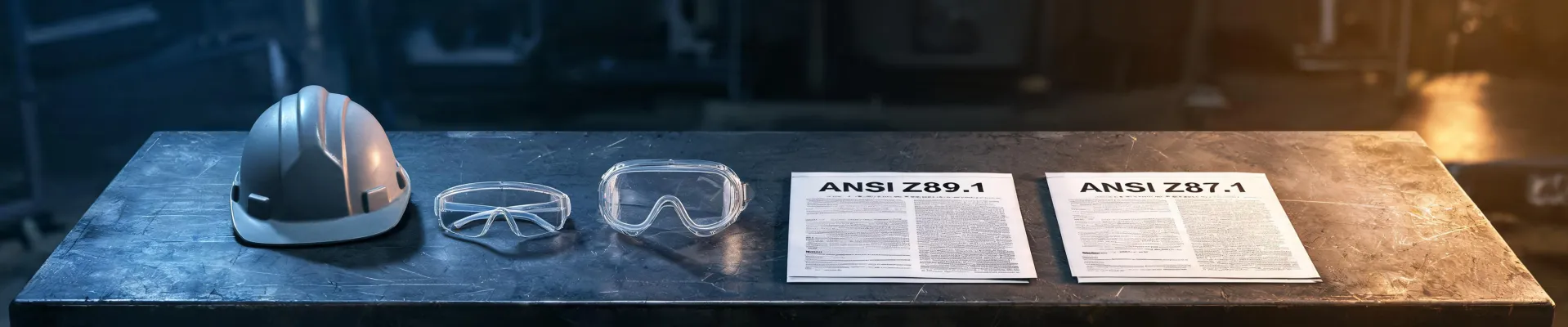
All the glasses meet ANSI Z87.1 impact standards, so the baseline protection is there. And from a worker perspective, nobody complains about fit or comfort. What else can I ask for when I'm buying 60 pairs at a time?
2. Is the Pyramex Ridgeline vented full brim hard hat worth the upgrade over a cap-style?
The Pyramex Ridgeline vented full brim hard hat is the one that keeps showing up in our reorder reports, and there's a reason for that. Yes, it costs more than a basic cap-style hard hat. But the full brim gives real shade—not just a little lip, but actual coverage around the neck and ears. When your crew is outside from 7 AM to 3 PM in direct sun, that matters more than I expected it to.
Plus, the vented design makes a real difference in warm months. We work in a region where July afternoons hit 95°F, so airflow isn't a luxury. The internal vents let heat escape instead of baking your scalp inside a plastic shell. I was skeptical when the vendor first showed me the sample. Six months later I ordered 20 more.
One thing most buyers overlook: the Ridgeline is ANSI Z89.1 Type 2 certified, meaning it's tested for lateral impacts too, not just top impacts. If you work around swinging loads or tight spaces with overhead hazards, that's a meaningful safety upgrade. It doesn't look any more ridiculous than a standard hard hat, but it protects more. That's the kind of spec difference that matters when you're putting your name on the purchase order.
3. Do the Heatwave safety glasses actually work, or is it marketing?
So this is the product I was most skeptical about, honestly. "Heatwave" sounds like a gimmick name. But the numbers changed my mind.
The anti-fog coating genuinely works better than cheap coated glasses—not "never fogs up" (nothing does that), but it lasts way longer and recovers quicker when they do fog. The frame design also has vented zones near the lenses so air moves across the glass as you work. We had a roofer who was throwing away fogged-up glasses every few weeks before we switched him to the Heatwave safety glasses. The complaints stopped.
From a cost view: the Heatwave glasses cost a bit more than basic models, but they stay on workers' faces instead of ending up in a drawer. That's the difference between spending $3 per pair every month and spending $8 per pair twice a year. You can run that math any way you want—the better glasses win.
4. Full brim or cap-style hard hat—which should I buy?
This decision kept me up at night once, not gonna lie. On paper, cap-style hats are lighter, cheaper, and stack better on truck shelves. But my gut said the full brim was the right call for outdoor crews, and the data backed it up.
The shade issue is real. When a worker wears a full brim Ridgeline, their neck and ears stay covered all shift. Cap-style workers end up slathering sunscreen on their necks (or skipping it, which is worse) because the sun hits them from every angle out in the open. That's not a line-item cost you can see, but it shows up in morale and worker retention over time.
My rule of thumb: cap-style if you're working in tight spaces where the brim would get in the way. Full brim if your crew is outdoors in the sun for extended stretches. We keep both in stock, but the full brim Ridgeline is the one we reorder in multiples.
5. Where should I buy work boots near me?
Real talk: boots are the one thing I recommend people buy in person if they can. Sizing is personal, and my workers range from size 8 to size 14 in the same crew. You want brown work boots that actually fit—a bad fit means foot fatigue, blisters, and workers finding excuses to take them off (which is a safety issue in itself).
Local safety supply stores usually carry a decent boot selection, and the staff can measure properly in person. But here's the trick: check online prices on the same boot model while you're standing in the store. More than once, the store matched the online price to keep the sale. And if you're ordering a bunch of Pyramex hard hats and eyewear anyway, most distributors will bundle shipping on a boot order—that's how you get the "where to buy work boots near me" convenience without overpaying.
Boot prices have crept up across the board (as of early 2025, at least), so it's worth confirming current rates before ordering. And if you're buying online, make sure there's a decent exchange policy. We learned that the hard way with a batch of boots that ran a half-size small.
6. What's the difference between vented and non-vented hard hats—and when does it matter?
Vented hard hats like the Ridgeline have internal airflow channels that let heat escape. Non-vented hats are sealed up and trap more heat. If your people are doing physical work in warm weather, vented is the obvious choice—workers feel the difference within an hour, honestly.
But there's a place for non-vented too. If you're working around fine dust, sparks, or molten material, the vents can let stuff in. The general rule in our industry: vented for general construction and outdoor work, non-vented for electrical work or dusty environments where you want a solid shell. That's why we carry both in the truck. You don't want to force one type to do all jobs.
7. Can I get Pyramex gear and boots shipped fast when a project lands last-minute?
This is my biggest lesson from years of procurement: the cost of uncertainty almost always exceeds the cost of speed.
In March 2024, we had a contract start land five days out. Normally I'd shop around and compare quotes for a week. No time for that. I paid roughly $140 extra for expedited shipping on a mixed order of Ridgeline hard hats, Heatwave glasses, and two pairs of boots from a distributor who had everything in stock. The alternative was showing up to the start date without full PPE—which would have meant delaying the crew and losing way more than $140.
That's the thing people miss when they think rush shipping is a rip-off. You're not paying for speed; you're paying for certainty. The "cheap" option that gets there when it gets there is a gamble, and gambling on PPE delivery is how you end up paying a crew to sit in a parking lot doing nothing.
So, if you need gear fast: find a distributor that stocks Pyramex (they're widely available), confirm stock before ordering, and pay for the faster ship method. Then get back to work.

Maeve Callahan
Maeve Callahan is a head-protection analyst covering Type I and Type II hard hats, climbing-style safety helmets, bump caps, chin straps, suspensions, liners, and face-shield carriers. She applies ANSI Z89.1, EN 397, and EN 12492 criteria while comparing impact attenuation, penetration resistance, lateral deformation, electrical class, retention strength, field of vision, mass, fit range, and temperature conditioning. Her guides help EHS teams, contractors, utilities, and buyers select helmet systems for overhead hazards, work at height, electrical exposure, accessory compatibility, and worker acceptance.