If you're still choosing safety gear the same way you did in 2020, you're probably buying the wrong stuff. That sounds harsh, but I've been managing PPE purchasing for a mid-size manufacturing company for the last five years, and the industry has quietly transformed under our feet.
Let me give you some context. I'm the office administrator who handles about $150,000 in annual safety equipment orders across eight vendors. I report to both operations and finance, which means I have to care about compliance and costs in equal measure. When I took over this role in 2020, I thought I had a handle on it. Now I realize I was barely scratching the surface.
My view: if you're still relying on the sourcing playbook from five years ago, you're not just missing out on better gear—you're putting workers at risk and probably wasting money.
Hard hat standards have moved—and so should you
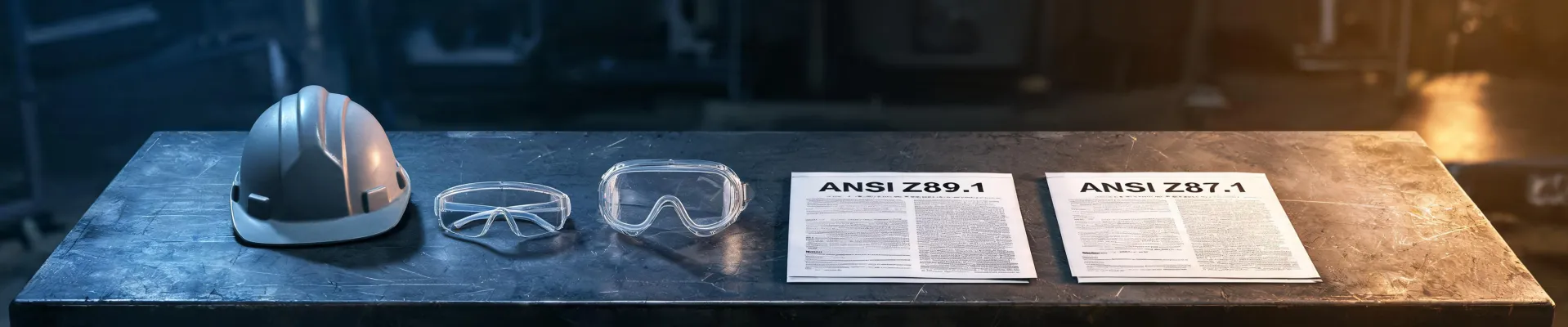
In 2020, if you asked for a hard hat, most buyers defaulted to a Type 1, forward-impact-only helmet. That was the norm. But as of January 2025, the latest ANSI/ISEA Z89.1 standard includes much tougher lateral impact testing for Type 2 helmets. In plain language, Type 2 is no longer a niche or an upgrade—it's becoming the baseline for industrial use.
When we switched our assembly line to the Pyramex SL series hard hat last year, I was skeptical. It's a Type 2 helmet with a vented shell, which seemed like a downgrade in protection (it isn't). The sales rep sent samples, and I tested them by dropping them from a ladder—because that's how I test things. They passed. But the real surprise was adoption. Our workers actually wear these without complaining about sweat or weight. One guy told me it felt lighter than his old cap. It's not; it's just more balanced.
If I'm being honest, I initially judged the SL series on price and name recognition. That was a mistake. The performance difference between old Type 1 and modern Type 2 isn't incremental—it's structural. If you're still specifying Type 1 because “that's what we've always used,” you're living in the past.
Oh, and we saw a measurable drop in minor head bumps—no recordables, but fewer incidents reported to the safety office. That's anecdotal, but it's the kind of data that matters.
Safety glasses aren't a commodity—they're a technology
The other big shift is in eye protection. Five years ago, safety glasses were basically plastic lenses in a frame. You chose based on tint and price. Today, coatings and lens technologies have changed what “performance” means. Anti-fog, anti-scratch, UV absorption—these aren't marketing buzzwords once you've watched a worker take off fogged glasses for the tenth time in an hour and wipe them on a greasy shirt.
We started using Pyramex safety glasses with their anti-fog coating in the machine shop. The difference was visible within a week: fewer complaints, fewer fogged-lens-related near misses. The fogging issue isn't cosmetic. It's a worker who can't see clearly, so they take the glasses off. That's when injuries happen. Most of the time, workers will choose comfort over compliance if you give them a reason.
And it's not just glasses. Face protection has evolved too. I've seen the Uvex Bionic Face Shield used in our grinding area, and honestly, it's a well-engineered piece of gear. I'm not going to pretend we use it everywhere because the price is steep, but it shows how far the category has come. The old bubble shields were clunky and distorted vision. Newer designs, even from other brands, have better optical clarity and ergonomics. The point is: if you're comparing based on 2018 reviews, you're missing the current reality.
Nitrile gloves vs vinyl isn't the right question
Here's a topic I get asked about a lot: nitrile gloves vs vinyl. People assume nitrile is always better because it's thicker and more chemical-resistant. In my experience, that's an oversimplification.
We had a situation in 2022 where we switched from vinyl to nitrile in our packaging area because “nitrile is premium.” Within a month, three workers developed contact dermatitis. If I remember correctly, the first irritation showed up after about two weeks of regular use. Turns out, the job involved dry handling of cardboard, no real chemical exposure, and the tighter-fitting nitrile gloves trapped sweat. We had to switch back to powder-free vinyl for that station. It wasn't a failure of nitrile; it was a failure to match the glove to the task.
But for jobs involving solvents or oils, I wouldn't use anything but nitrile. The latest nitrile formulations have improved flexibility, and some now offer better grip when wet. And while ANSI/ISEA 105-2016 gives you cut and puncture ratings, it doesn't tell you about chemical compatibility—you still have to consult the manufacturer's data. If you're still buying based on “vinyl cheap, nitrile good,” you're missing the nuance. The right question is: what's the hazard, and what performance do you need? That's the kind of PPE performance evaluation that saves both money and injuries.
I should add that I've been burned by making assumptions about glove materials before. Now I ask for chemical compatibility charts and actually test samples with the crew before bulk ordering.
“But our supplier works fine” isn't an excuse
I hear this a lot from other administrators: “We've used the same distributor for years, and they've never let us down.” That's great. But it doesn't mean the products are up to date. Distributors carry what they carry. If you're not actively reviewing new SKUs, you're inheriting their inventory strategy, not making your own.
Another pushback is cost. Someone always says, “Why should I pay more for the new model when the old one meets specs?” The answer is that specs are a floor, not a ceiling. A Type 2 helmet meets a safety standard, but if workers wear it because it's comfortable, you've just lowered your risk of a violation and an injury. That's worth real money. If you only look at unit price, you're ignoring the total cost of compliance, training, and incident investigation.
So here's where I land: the PPE industry is moving faster than most purchasing processes can keep up. The fundamentals—protect the worker, meet the standard—haven't changed. But the execution has. Brands like Pyramex are proof that better design doesn't have to mean a huge premium, and established players like Uvex keep raising the bar for entry-level specs.
I'm not saying every new product is worth switching to. My experience is based on about 800 orders across manufacturing, light assembly, and warehouse settings. If you're in construction or labs, your mileage may vary. But what I am saying is this: if you haven't evaluated your safety gear lineup in the last 24 months, you've probably already fallen behind.
Stop buying on autopilot. Look at the new standards, test a few samples, and ask workers what they think. The industry has evolved—it's time your procurement did too.

Maeve Callahan
Maeve Callahan is a head-protection analyst covering Type I and Type II hard hats, climbing-style safety helmets, bump caps, chin straps, suspensions, liners, and face-shield carriers. She applies ANSI Z89.1, EN 397, and EN 12492 criteria while comparing impact attenuation, penetration resistance, lateral deformation, electrical class, retention strength, field of vision, mass, fit range, and temperature conditioning. Her guides help EHS teams, contractors, utilities, and buyers select helmet systems for overhead hazards, work at height, electrical exposure, accessory compatibility, and worker acceptance.