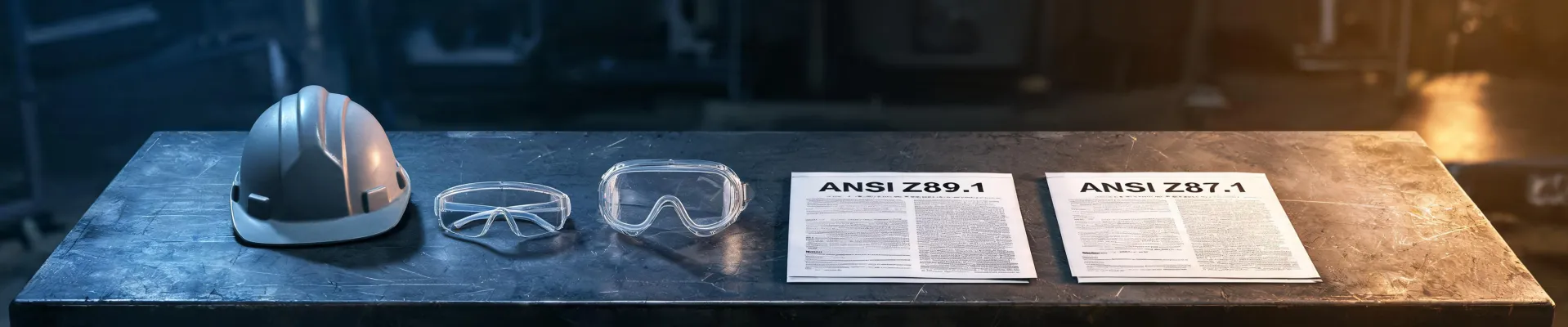
Speed Doesn’t Help If You Order the Wrong Gear
I coordinate emergency orders for an industrial safety supplier. In the last seven years, I’ve processed more than 2,000 “we need it by tomorrow” requests. In March 2024, a plant manager called at 2 PM and asked for 35 full-brim hard hats rated to ANSI Z89.1 by 7 AM the next day. We delivered, but only because he knew exactly what he needed. Most people who get stuck aren’t missing a vendor. They’re missing a category.
This guide doesn’t crown a single “best” Pyramex product. There isn’t one. Pyramex makes hard hats, face shields, goggles, gloves, and high-vis clothing. The right answer depends on the hazard, the work environment, and sometimes even the payment method. So here’s how I break down urgent PPE requests into three scenarios.
Scenario 1: When You Need a Pyramex Safety Full Face Shield
A Pyramex safety full face shield is a solid starting point for splash, flying sparks, and airborne debris. But it is not a substitute for safety glasses. Under OSHA 29 CFR 1910.133, impact and optical radiation hazards require eye protection underneath a face shield. The shield protects the face; the glasses protect the eyes. That distinction saved one of our customers from a citation last year.
When I get a call for a full face shield, the first question I ask is: impact-rated or not? Look for a Z87+ mark on the lens or headgear. If the crew is grinding, chipping, or cutting, get an impact-rated shield and pair it with side-shield safety glasses. If the exposure is mostly chemical splash, focus on seal and anti-fog instead. A shield that fogs up on a humid plant floor will not stay on.
One communication mistake I’ve seen repeated: a customer says “full face shield” and assumes the helmet is included. In our warehouse, we read that as the visor assembly only. When the pallet arrives, the question is, “Where are the helmets?” So now I always confirm whether the order includes headgear, a brow guard, or just the replacement visor. That one clarification has saved us more returns than any product change.
That’s also why Pyramex face shields are good for emergency backup: many of them use a replaceable visor with the same headgear. When a visor gets scratched or splashed, you can buy the lens alone instead of replacing the whole assembly. For a rush order, that means a faster fix and a smaller invoice.
Name the hazard first. Then pick the protection. The brand comes third.
Honest limitation: I would not use a standard full face shield near molten metal or extreme heat. That requires a specialized heat-resistant faceshield, not a general-purpose industrial one.
Scenario 2: Low Light, Hard Hats Pyramex Offers, and the Milwaukee Hard Hat Light
Night work, tunnels, shutdowns, and confined spaces all have one thing in common: workers need light. A few years ago, I watched a crew duct-tape a flashlight to a hard hat. Better than nothing, but not a real solution. Today it’s easier.
One of the most common requests I see is the Milwaukee hard hat light. It’s a solid rechargeable light, but it doesn’t fit every helmet. Some models use a bracket that slides into a front slot. Others use a bite-style mount or a strap. If the hard hat doesn’t have a compatible attachment point, you’ll be back to tape.
The hard hats Pyramex offers come in two general shell styles: full brim and cap style. Full brim gives more shade and rain protection. Cap style is easier to pair with welding hoods and is usually a better base for a front-mount light. If the crew works in low light, I spec cap style first, then verify the light bracket before ordering a large quantity.
Last quarter we kitted a water utility crew with 120 hard hats. Fourteen of them had to be swapped because the light brackets didn’t align with the crown of the shell. The hat was fine—the lighting plan wasn’t. The fix took two days because the crew had the right model number but the wrong bracket version.
So here’s the question to ask your supplier: does this hat have an accessory slot that fits the light mount I want to use? Don’t assume “standard slot” means the same thing to every manufacturer. If you send a photo of the front of the helmet and the back of the light bracket, you’ll get a faster answer.
And if the work involves vertical rescue or confined-space entry, a cap-style hard hat may not be the right starting point at all. A chin-strapped climbing-style helmet is safer. Use the right tool for the task, not the most popular one.
Scenario 3: Nitrile Gloves, FSA Eligibility, and Safety Goggles Drawings
“Are nitrile gloves FSA eligible?” is a real question, not just in clinics but in schools, labs, and cleaning companies. The short answer: sometimes.
Under IRS Publication 502, medical expenses are things that prevent or treat a medical condition. Exam-grade disposable nitrile gloves used for patient care can qualify. Industrial nitrile gloves—the thicker work gloves with textured palms used in chemical handling or maintenance—usually don’t qualify just because they’re made of nitrile. The label and the intended use matter.
When a customer is paying with an FSA/HSA card, I recommend keeping the product packaging and a doctor’s note if there’s any question. That’s not tax advice, but it has saved a lot of reimbursements. If the invoice says “work gloves,” don’t expect an FSA to cover it. If the package says “exam gloves” and there’s a documented medical need, you have a much stronger case.
Now about that odd search: “safety goggles drawing.” I understand why it happens. A facility finds a box of old lenses or frames and wants to match them from a schematic. A drawing shows shape and dimensions, but it doesn’t always tell you the model number. When time is short, take a photo of the temple and look for the Z87 mark or a part number. For common wrap-around goggles, the Pyramex goggle line is usually easier to cross-reference than a generic replacement part from an unknown OEM.
If you need a face shield and goggles on the same hard hat, you can often mount a face shield to the hat and wear the goggles underneath. But check that the goggle frame doesn’t interfere with the face shield’s pivot point. Compatibility matters more than brand matching.
How to Tell Which Scenario You’re In
If you’re not sure, filter your order down to one primary hazard:
- Flying debris, grinding, splash, or projectiles? Start with a Pyramex safety full face shield and add safety glasses underneath.
- Low-light work, night shifts, or tunnels? Start with a compatible hard hat and a light mount like the Milwaukee hard hat light.
- Medical, lab, or biohazard work, with FSA/HSA payment? Start with exam-grade nitrile gloves and keep the packaging.
- Multiple hazards? Choose the primary hazard first, then add the secondary layers. That keeps the order simple and reduces returns.
When I compare the rush orders from 2022 with those from 2024—same warehouse, same brands, but scenario classification before picking—the return rate dropped from roughly 13% to under 2%. The speed didn’t improve because we got faster at shipping. It improved because we got slower at the decision point.
Take the extra five minutes to name the hazard, check the standard, and confirm compatibility. That’s the real difference between a blurry photo of a face shield and the right Pyramex equipment on someone’s head.

Maeve Callahan
Maeve Callahan is a head-protection analyst covering Type I and Type II hard hats, climbing-style safety helmets, bump caps, chin straps, suspensions, liners, and face-shield carriers. She applies ANSI Z89.1, EN 397, and EN 12492 criteria while comparing impact attenuation, penetration resistance, lateral deformation, electrical class, retention strength, field of vision, mass, fit range, and temperature conditioning. Her guides help EHS teams, contractors, utilities, and buyers select helmet systems for overhead hazards, work at height, electrical exposure, accessory compatibility, and worker acceptance.