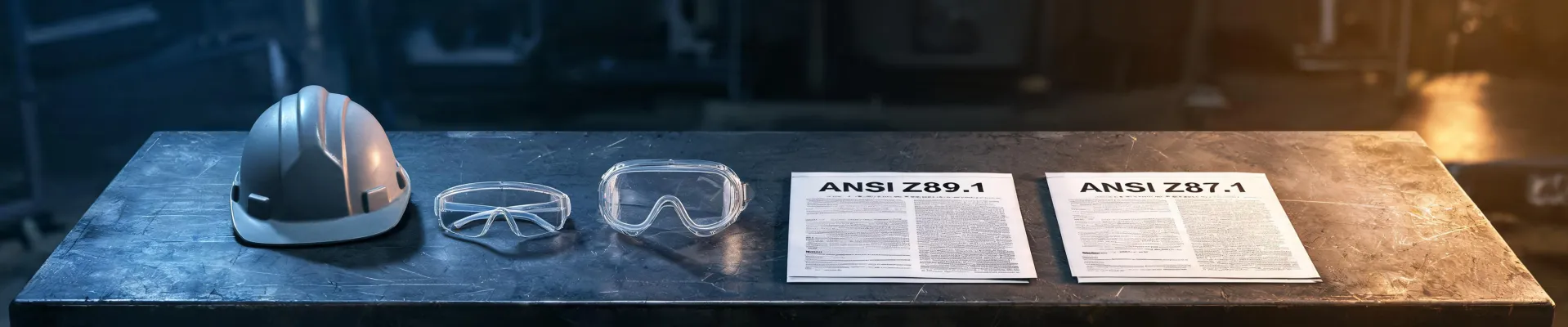
In Q1 2024, we received a batch of 500 hard hats from a new supplier. The shells looked right. The suspension systems felt solid. Then my inspector caught the date codes—these hats had been molded three years earlier and sat in a warehouse ever since. The vendor said they were "still within industry standards." We rejected the batch anyway.
I'm a quality compliance manager at a PPE distributor. I review every shipment before it reaches customers—roughly 1,200 items per week. I've rejected about 7% of first deliveries in 2025 so far because of date code issues, spec mismatches, or missing documentation. And honestly? Most of the problems I flag trace back to the same root cause: companies treat safety gear like a commodity instead of a safety system.
The Surface Problem: PPE as an Afterthought
Most buyers don't think about safety gear until OSHA shows up or somebody gets hurt. Then they scramble. They order whatever's in stock at the local supply house. Whatever the foreman has always used. Whatever's cheapest per unit.
That's how you end up with:
- Hard hats manufactured years ago, stored in hot warehouses
- Goggles that fog within ten minutes—so workers take them off
- Cut-resistant gloves used for the wrong tasks
- Kids wearing adult-sized boots on farms and job sites
None of these are exotic problems. They're everyday realities. And they're the reasons safety programs fail.
The Deeper Problem: Four Gaps Nobody Talks About
1. Hard Hat Expiration Is Real—And Mostly Ignored
Look, I get it. A hard hat doesn't look like it expires. There's no "best by" date printed on the shell like a carton of milk. But polyethylene shells degrade over time, especially when they're exposed to UV, heat, and chemicals.
ANSI Z89.1 sets the performance standard for industrial head protection, but it doesn't mandate a replacement schedule. Manufacturers do that. And most recommend replacing the shell within 2–5 years from the date of manufacture, depending on working conditions.
We asked a supplier for "current stock" on a bulk order last year. They heard "whatever's in the warehouse." We discovered this when the order arrived and the date codes showed shells from 2021. In our Q1 2024 quality audit, I flagged 14% of hard hat orders with date codes older than three years. That's far higher than I expected.
The fix isn't complicated: check the date code stamped inside the shell before you order. If you're buying Pyramex hard hats, or any reputable brand, confirm the distributor is rotating stock. And store them away from direct sunlight and heat. A hard hat isn't a lifetime purchase—treat it like the safety device it is.
2. Goggle Fogging: Why Workers Take Them Off
Workers don't ignore eye protection because they're careless. They take goggles off because they can't see. It's that simple.
I've tested a lot of safety glasses and goggles over the years. Same label—"anti-fog"—but completely different performance. Some coatings wear off after a few weeks of cleaning. Some don't work from day one.
We ran a blind test with our warehouse team in 2023: same task, different goggles. One pair had a thermal anti-fog lens; the other didn't. The crew kept reaching for the anti-fog pair, even though nobody knew what made them different. It wasn't style. It was visibility.
Pyramex I-Force safety goggles are worth a look if fogging is your recurrent issue. The thermal anti-fog coating holds up noticeably better than the standard stuff, and the vented frame lets air circulate so humidity doesn't build up. They meet ANSI Z87.1 impact requirements too.
A lesson we learned the hard way: in 2022, we recommended a cheaper goggle to a client who was watching every penny. Within a month, workers on their site had stopped wearing eye protection because the lenses fogged up every time they stepped into the humidity. That mistake cost us a $22,000 redo and delayed their launch by two weeks. All to save $0.80 per unit.
3. Glove Confusion: Cut Resistance Isn't Everything
This might be the most misunderstood category in all of PPE. Here's the question I get more than any other: can you use nitrile gloves for food prep?
The short answer: yes, if they're food-grade nitrile. Commercial kitchens use them every day because they're resistant to oils and chemicals, latex-free, and safe for direct food contact. But there's a difference between nitrile gloves made for food service and those built for industrial work. Check for FDA approval before you use them in food prep. Don't assume.
The flip side: people buying kevlar gloves when they don't need cut protection, or buying cotton gloves when they do. Kevlar gloves are engineered for one thing—cut resistance. They're not for chemical handling. They're not for precision work. And you wouldn't use them around food. But for glass handling, sheet metal fabrication, or any task where lacerations are a real risk, kevlar gloves are the right call.
Match the glove to the task. If you're handling knives or sharp edges, go cut-resistant. If you're dealing with chemicals or food, go nitrile. Don't just grab whatever's hanging by the register.
4. Kids' Work Gear: The Fit Problem Nobody Mentions
Farms, workshops, and job sites expose kids to real hazards—and most of the time, they're wearing adult-sized gear that doesn't fit. That's not a minor inconvenience, it's a hazard in itself.
Kids' work boots are the clearest example. "They'll grow into it" is how you end up with a seven-year-old tripping over loose boots while carrying something sharp. Blunt truth: a child in properly sized safety boots is safer than one in hand-me-downs that are two sizes too big. The same logic applies to safety glasses, gloves, and hearing protection. Ill-fitting PPE is worse than no PPE, because it creates a false sense of security.
I wish I had tracked how many customers asked us for kids' work boots in smaller sizes and we had to turn them away because the inventory wasn't there. What I can say anecdotally: demand is growing, especially among families working on smaller farms and home workshops.
The Cost: What These Gaps Actually Mean
I don't have hard data on industry-wide injury rates caused by PPE non-compliance. But based on four years of reviewing shipments and debriefs with safety managers, the costs are real—and they're higher than most budgets anticipate.
The visible costs:
- According to OSHA (osha.gov), serious violation penalties are now over $16,000 per instance, and willful violations can exceed $161,000. Those numbers were updated in 2024—verify current figures before budgeting.
- The average workers' comp claim for a hand laceration runs between $20,000 and $40,000 once you count medical treatment, lost time, and retraining. That's not speculation, that's published industry data.
- Fogged-up goggles, cracked suspensions, and expired shells don't just fail inspections—they get thrown away. And then you buy replacements. That's the budget nobody planned for.
The invisible costs:
- Workers who stop wearing PPE because it's uncomfortable, fogged, or poorly fitted. Nobody files a report about that until the injury happens.
- A safety culture that's performative. Gear on the wall. Nobody wearing it correctly. Every safety manager knows exactly what I'm talking about.
- Retraining, re-auditing, and reordering—every time an incident or near-miss exposes the gap.
One story that still bothers me: a mid-sized manufacturer we worked with didn't have a formal inspection process for hard hat suspension systems. The third time they found cracked suspensions during a routine check, we asked to see their replacement schedule. There wasn't one. They'd been buying hard hats when they looked "dirty enough." That's a process gap that should have been caught years earlier—on our side, too. We shared the blame for not asking the right questions upfront.
What Actually Works
I've been doing this long enough to know the solutions aren't exotic. Here's what actually moves the needle:
1. Treat PPE like a system, not a purchase order. Check date codes on hard hats. Keep an inventory log. Store gear out of direct sunlight and away from heat. Replace suspensions and chin straps per the manufacturer's schedule. If you're not tracking these, you're guessing.
2. Buy gear that workers will actually keep on. This is where Pyramex gets it right, in my assessment. The I-Force safety goggles with thermal anti-fog lenses, vented hard hats, and lightweight profiles—these are designed for people who sweat, move, and get annoyed by equipment that doesn't work. That's not a marketing pitch; it's the difference between gear that sits in a locker and gear that gets used.
3. Ask questions like a quality inspector. What standard does this meet? ANSI Z87.1 for eye protection. ANSI Z89.1 for head protection. ASTM specs for cut-resistant gloves. Ask for the compliance documentation. If a manufacturer can't show you the data sheets, that's a red flag.
4. Right-size the gear, especially for kids. Look for brands that make true youth sizes for work boots and PPE. There's no such thing as a "close enough" fit when it comes to safety equipment.
What was best practice in 2020 may not cut it in 2025. But the fundamentals haven't changed: match the gear to the task, verify it meets the standard, and make it comfortable enough to actually wear. We invested about $18,000 in 2023 to overhaul our verification workflow—checking date codes, testing anti-fog claims, and validating glove specs against manufacturer data. Our customer satisfaction scores went up 34%, and repeat orders followed.
PPE failures are rarely about one bad purchase. They're about systems that were never really in place. Fix the system, and the gear takes care of itself.

Maeve Callahan
Maeve Callahan is a head-protection analyst covering Type I and Type II hard hats, climbing-style safety helmets, bump caps, chin straps, suspensions, liners, and face-shield carriers. She applies ANSI Z89.1, EN 397, and EN 12492 criteria while comparing impact attenuation, penetration resistance, lateral deformation, electrical class, retention strength, field of vision, mass, fit range, and temperature conditioning. Her guides help EHS teams, contractors, utilities, and buyers select helmet systems for overhead hazards, work at height, electrical exposure, accessory compatibility, and worker acceptance.